


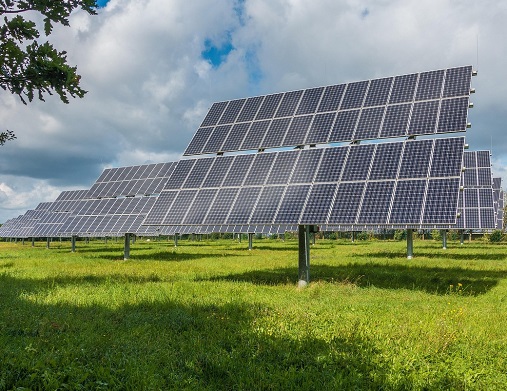
Odisha is moving ahead with floating solar projects on reservoirs and other water bodies as limited land availability restricts the expansion of conventional solar power plants, a senior official from Grid Corporation of Odisha Ltd (GRIDCO) said on Saturday.
Mahesh Das, Chief Project Manager at GRIDCO, said the state faces acute land constraints, with most fertile areas reserved for agriculture and a significant portion classified as forest land or allocated for other uses.
“Odisha has very limited land suitable for ground-mounted solar power plants,” Das said, adding that agricultural and forest priorities leave little scope for large-scale installations on land.
To address this, the state is planning Odisha floating solar projects that will place solar panels on floating platforms anchored on water bodies, allowing power generation without competing with farmland. Odisha has about 185 water bodies, including major, medium and minor reservoirs, that are now being evaluated for such development.
Das said floating solar technology is well established and offers operational advantages, including reduced maintenance. The proximity of water helps cool the panels, improving efficiency and limiting the need for frequent cleaning.
GRIDCO has already issued tenders for around 1,000 megawatts of floating solar capacity at the Rengali reservoir for captive consumption, he said. Additional projects include a 225-megawatt installation at Upper Indravati and a 1.5-gigawatt project planned at the Hirakud reservoir.
“We are looking at developing these floating solar projects in Odisha in a comprehensive and coordinated manner,” Das said.
The expansion of renewable energy is also aimed at lowering carbon emissions in a state that hosts a large share of India’s steel production, he added.
“Reducing carbon dioxide emissions is essential, and that requires strengthening our green energy ecosystem,” Das said, noting that industrial growth must be balanced with cleaner sources of power.




[…] Odisha floating solar projects planned on reservoirs amid land constraints […]