


Generate Capital is exiting its global anaerobic digestion business through two transactions that will transfer all 12 facilities operated under Generate Upcycle to Vanguard Renewables and Pinta Energy, reshaping ownership of a sizeable organic-waste-to-energy portfolio across North America and the UK.
Under the transactions announced on September 21, 2026, Pinta Energy has acquired Generate Upcycle’s seven UK facilities, while Vanguard Renewables has agreed to acquire five facilities in Ontario, Canada, and upstate New York. Vanguard’s transaction is expected to close on October 1, subject to customary closing conditions. Financial terms were not disclosed.
The deal marks the end of Generate Capital’s ownership of Generate Upcycle after the investment firm spent roughly a decade building the platform. Generate said the transactions will allow it to recycle capital towards its strategy of providing reliable power infrastructure to large energy users in increasingly constrained electricity markets.
Generate Upcycle processed 871,000 tonnes of organic waste in 2025
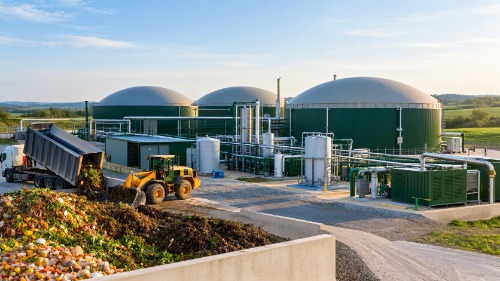
Generate Upcycle had developed into a multi-country anaerobic digestion platform focused on converting food and agricultural waste into renewable natural gas (RNG), renewable electricity and other resource-recovery outputs.
According to Generate Capital, the platform processed more than 871,000 tonnes of food and agricultural waste in 2025. It generated more than 365,000 MWh of renewable energy, including approximately 1.1 billion cubic feet of RNG.
Generate also reported that the platform’s 2025 operations avoided approximately 609,739 metric tonnes of CO₂-equivalent emissions, which the company equated to the annual emissions of about 132,552 gasoline-powered passenger vehicles. That emissions-equivalent figure is a company-reported estimate rather than an independently verified assessment.
Generate said it began investing in anaerobic digestion in 2016 and subsequently expanded Upcycle into a 12-facility platform spanning the United States, Canada and the United Kingdom.
Vanguard to add five North American facilities
Vanguard Renewables’ transaction covers five Generate Upcycle facilities in Ontario and upstate New York.
Following completion, Vanguard expects its North American platform to reach 19 facilities. The company said the acquisition will nearly double its current operating capacity, adding approximately 565,000 tonnes of annual food-waste processing capacity and 1.1 billion cubic feet of annual RNG production.
The transaction will also establish Vanguard’s presence in Canada’s Clean Fuel Regulations market, according to the company. It will expand the company’s ability to handle organic waste streams across the Northeast of the US and Canada while adding further routes for converting those materials into renewable energy.
Vanguard said the assets being acquired include anaerobic digestion and advanced depackaging facilities in New York and Ontario.
Mike O’Laughlin, CEO of Vanguard Renewables, said the combination would expand the company’s recovery pathways for customers and strengthen its position in the Northeast and Canada. He also pointed to increasing demand for organic-waste diversion as landfill constraints, corporate sustainability commitments and organics-diversion policies develop.
Vanguard is a US environmental services company focused on converting food, beverage and agricultural waste through anaerobic digestion into pipeline-ready renewable natural gas. The company is a portfolio company of Global Infrastructure Partners, which is part of BlackRock.
Pinta Energy acquires seven UK facilities
The UK portion of the portfolio is being acquired by Pinta Energy, a UK renewable energy platform within the ABIO Group.
ABIO is described by Generate Capital as a pan-European biogas platform backed by Asterion Industrial Partners. Pinta Energy will take ownership of all seven Generate Upcycle facilities in the UK.
The split between two specialist operators effectively separates Upcycle’s UK and North American businesses, allowing each group of assets to be integrated into regional platforms with existing activity in renewable gas and organic-waste management.
The transactions together represent the transfer of the full 12-site Generate Upcycle platform rather than a partial divestment.
Generate shifts capital towards power infrastructure
For Generate Capital, the transaction is also a portfolio strategy decision.
David Crane, CEO of Generate Capital, said the firm had spent the past decade developing Upcycle and that Vanguard Renewables and Pinta Energy would provide the operating platforms for the businesses’ next phase. Generate intends to recycle the capital into its strategy of delivering reliable power to large energy users.
Generate was founded in 2014 and says it has raised more than $16 billion in capital since inception. Its current strategy places greater emphasis on infrastructure capable of supporting large electricity users, including data centres and other power-intensive facilities, as grid constraints become an increasingly important consideration for new power demand.
The divestment therefore changes Generate’s exposure to the anaerobic digestion sector while leaving the underlying assets with operators whose businesses are more directly focused on organic-waste recovery and renewable gas.
What the transaction means for the RNG and organics market
The deal highlights the growing importance of scale in anaerobic digestion infrastructure. A portfolio processing hundreds of thousands of tonnes of organic material can combine feedstock procurement, waste logistics, depackaging, digestion and energy production within a single operating platform.
For Vanguard, the addition of Generate Upcycle’s North American assets expands both physical infrastructure and access to feedstock markets. The Canadian component is particularly significant because it gives Vanguard an operating position in the country’s Clean Fuel Regulations market.
For the UK assets, Pinta Energy’s acquisition places the seven facilities within ABIO’s broader European biogas platform. The transaction consequently illustrates a wider ownership trend in which established infrastructure and energy platforms consolidate operating assets rather than developing every facility organically.
At the same time, the economics of anaerobic digestion remain dependent on factors including feedstock availability and quality, collection and transportation costs, renewable-fuel policy, RNG offtake arrangements, project operating performance and local waste-management regulations. Ownership scale can address some of these challenges, but it does not eliminate the underlying market and operational requirements.
Bioenergy Business Analysis
Generate Capital’s exit is notable because it separates asset ownership from the long-term growth of the underlying anaerobic digestion businesses. Generate spent around a decade building Upcycle into a 12-site platform, and the assets are now moving to two buyers whose stated strategies are more directly aligned with regional organics recovery and renewable gas operations.
For Vanguard Renewables, the North American acquisition provides an immediate increase in operating scale rather than relying exclusively on greenfield development. The addition of 565,000 tonnes of annual food-waste processing capacity and 1.1 Bcf of RNG production also gives the company a larger platform from which to participate in waste-diversion and low-carbon-fuel markets.
The Canadian component could become particularly relevant as Vanguard enters the Clean Fuel Regulations market, although the commercial value of that position will depend on regulatory conditions, credit economics and the performance of the acquired facilities.
For Generate Capital, meanwhile, the transaction demonstrates a capital-recycling approach: build and scale an energy-transition platform, monetise the assets, and redeploy capital into another infrastructure segment. The immediate significance is therefore broader than an ownership change in the biogas sector. It reflects the increasing segmentation of the energy-transition investment market, with infrastructure investors selectively reallocating capital between renewable fuels, resource recovery and electricity infrastructure.