


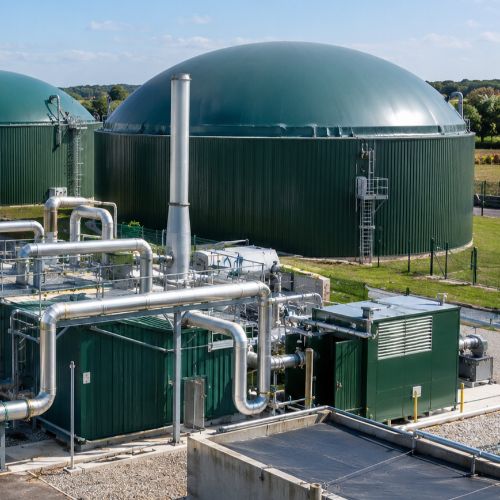
Raipur is advancing plans for a compressed biogas (CBG) plant in Nava Raipur, Chhattisgarh, designed to process 100–150 tonnes of organic waste daily, including wet municipal waste, cow dung and agricultural residues. The project, being developed under an agreement involving Bharat Petroleum Corporation Limited (BPCL), the Raipur Municipal Corporation and the Chhattisgarh Biofuel Development Authority (CBDA), has been relocated from its originally proposed site at Rawabhatha to Village Kurru.
The Raipur Municipal Corporation has clarified that the project has not been cancelled. Work on the boundary wall at the new site is underway, while plant design and other preparatory activities are in progress. However, the available information does not establish a commissioning date or a timeline for the start of commercial operations.
The proposed facility aims to divert organic waste into fuel production and generate liquid fermented manure (LFM) from the residual material. If implemented as planned, it would add a dedicated CBG production facility to the city’s existing solid waste management system.
BPCL to construct and operate the CBG facility
The Raipur Municipal Corporation, CBDA and BPCL have signed a tripartite memorandum of understanding (MoU) to establish the plant. Under the agreement, BPCL is responsible for its construction, operation and maintenance, according to a report by Janta Se Rishta.
The project was initially proposed for Village Rawabhatha before the site was shifted to Village Kurru in Nava Raipur Atal Nagar. The municipal corporation has described the change as a relocation rather than a cancellation of the project.
Preparatory work has begun at the new location. The boundary wall is under construction, a work order has been issued to the agency selected for the main plant’s operation and maintenance, and the facility’s drawings and design are being prepared.
The available reporting does not specify the project’s capital expenditure, the planned CBG production capacity in tonnes or cubic metres, the expected gas offtake arrangements, or the construction completion date.
Plant to process Up to 150 tonnes of organic waste daily
The proposed facility is expected to receive organic waste from Raipur, Nava Raipur and surrounding rural areas.
The material will be processed to produce compressed biogas, a renewable gaseous fuel that can be used in suitable applications as an alternative to conventional natural gas or other fossil fuels.
The proposed daily feedstock intake of 100–150 tonnes represents the quantity of organic waste intended for processing, not the volume or mass of CBG the plant will produce. Actual fuel output will depend on feedstock composition, organic content, process efficiency and plant operating conditions. No verified production estimate is available in the supplied report.
The facility is also expected to produce liquid fermented manure from the organic residue remaining after biogas production. This material could be used as an agricultural input, subject to its quality, nutrient content and applicable standards.
The combined production of fuel and an organic soil input could help recover value from waste streams that would otherwise require treatment or disposal. The extent of those benefits will depend on the plant’s eventual performance and the availability of reliable markets for both outputs.
Raipur reports 750 tonnes of solid waste generation daily
According to figures attributed to the Raipur Municipal Corporation in the source report, the city generates approximately 750 tonnes of solid waste each day.
The corporation also reports that its existing waste management operations produce around 20 tonnes of compost daily and approximately 200 tonnes of refuse-derived fuel (RDF).
Source: Figures attributed to the Raipur Municipal Corporation in the report by Janta Se Rishta. These figures have not been independently verified for this article.
The municipal corporation reportedly sells the compost to a fertiliser company for agricultural use. RDF produced at the existing facility is sent to cement plants, where it can be used as an alternative fuel.
These activities form part of the city’s broader approach to recovering usable materials and energy from municipal waste.
Municipality claims 80–90% waste reuse rate
The Raipur Municipal Corporation reports that 80–90% of the city’s waste is reused. According to the source report, material that cannot be processed is managed through sanitary landfills.
The reported reuse rate provides an indication of the municipality’s stated waste recovery performance. However, the available information does not explain how the rate is calculated, which waste streams are included, or whether the figure measures material collected, processed, recovered or ultimately put to productive use.
A consistent definition and independently verifiable mass-balance data would help establish how much waste is genuinely diverted from disposal and how much is converted into usable products.
The proposed CBG plant could add another route for recovering value from the city’s organic fraction, although its incremental contribution cannot yet be quantified.
Bioenergy Business Analysis
Raipur’s proposed CBG plant illustrates how municipal waste management and renewable fuel production can be integrated into a single infrastructure project. Its significance will depend not simply on the quantity of waste collected, but on how effectively the facility converts that material into commercially usable gas and agricultural by-products.
The proposed intake of 100–150 tonnes of organic waste per day creates a requirement for a consistent, well-segregated feedstock supply. Wet municipal waste, cow dung and agricultural residues can differ substantially in moisture content, organic composition and biogas yield.
The proposed plant’s performance should ultimately be evaluated using measurable indicators, including tonnes of organic waste received, plant availability, CBG output, methane quality, digestate or manure utilisation, residual waste sent to landfill and lifecycle emissions where data are available.
What the project means for the sector
Raipur’s project is a potentially relevant example of municipal infrastructure being developed to produce renewable fuel while recovering value from organic waste. Its progress could offer useful lessons for other cities considering CBG as part of integrated waste management.
For now, the evidence supports describing the facility as a project under preparation rather than an operational source of renewable gas. Construction milestones, commissioning plans, output estimates and confirmed offtake arrangements will be the key developments to monitor next.


