


Oman-founded carbon removal company 44.01 has secured US$11.7 million in carbon-removal offtake agreements through Frontier to permanently store 20,932 tonnes of carbon dioxide (CO₂) between 2028 and 2031, supporting the commercial development of in-situ mineralisation technology.
The agreements represent Frontier’s first carbon removal purchase using in-situ mineralisation, a process that converts dissolved CO₂ into stable solid minerals underground. The project will test the technology through continuous operations, generating data on injection performance, water consumption and operating costs to help assess its commercial scalability.
The purchase was facilitated by Frontier, an advance market commitment for carbon removal backed by corporate buyers including Stripe, Google, Shopify, Autodesk, H&M Group and Workday. The agreements aim to advance the technology beyond short-duration pilot injections towards sustained operations over several years.
For 44.01, the deal marks a step towards commercial deployment of a technology that could expand access to permanent carbon storage in regions where conventional geological storage infrastructure is unavailable or prohibitively expensive.
How 44.01’s In-Situ Mineralisation Technology Works
In-situ mineralisation involves dissolving captured CO₂ in water and injecting the resulting solution through wells into peridotite, a naturally occurring, magnesium-rich rock. The dissolved carbon reacts with minerals in the rock to form stable solid carbonates, locking the carbon underground.
According to 44.01, the mineralisation process can occur within one to three years. The company has demonstrated its technology in Oman and the United Arab Emirates, where exposed peridotite formations provide potentially suitable geological conditions.
The approach differs from conventional geological carbon storage, which generally involves injecting compressed CO₂ into deep underground formations. Instead of relying solely on storing carbon in a gaseous or supercritical state within geological reservoirs, mineralisation converts it into a solid form through natural chemical reactions.
This distinction could be important in locations where suitable sedimentary basins are inaccessible or uneconomical to develop.
Frontier Purchase Targets Commercial-Scale Deployment
The US$11.7 million agreements will support the removal and permanent storage of 20,932 tonnes of CO₂ over the 2028–2031 period. The project is intended to demonstrate whether in-situ mineralisation can operate continuously and economically beyond the pilot stage.
The agreements reflect growing interest in carbon removal approaches that can demonstrate durable storage while addressing the practical constraints of deploying projects at scale.
Hannah Bebbington Valori, head of Frontier, said the technology could broaden the geographical range of locations suitable for permanent carbon storage, particularly where conventional options are difficult to access economically.
“Where we can store CO₂ shouldn’t limit where we can remove it,” she said, explaining that the purchase is intended to help validate the technology and prepare it for commercial-scale deployment.
Google is also participating through Frontier. Ella Hughes, Google’s technical programme manager for carbon removal, confirmed the partnership in a social media post, stating that Google was working with 44.01 through Frontier to advance in-situ mineralisation.
Why Oman’s Geology Matters for Carbon Removal
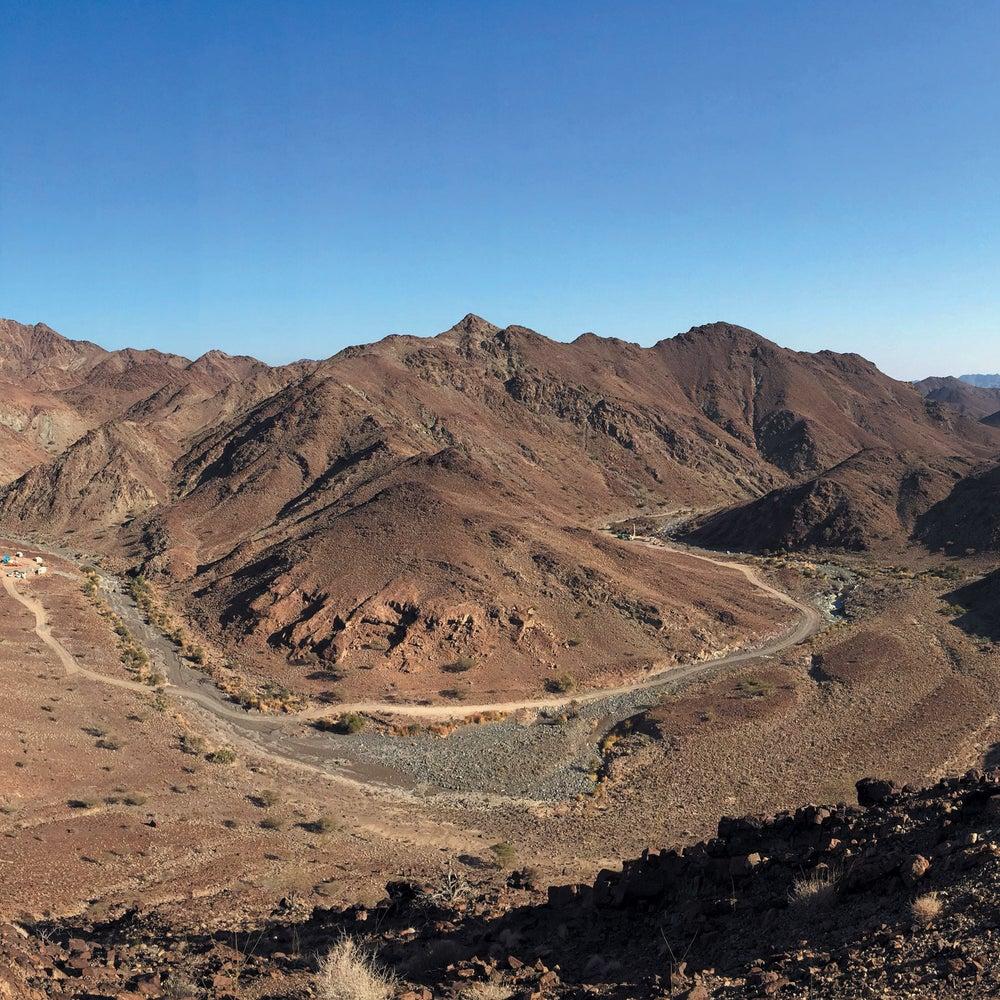
Oman could offer favourable conditions for the technology because of its extensive exposed peridotite formations. These magnesium-rich rocks can react with dissolved CO₂, creating an opportunity to mineralise carbon underground without depending exclusively on conventional storage formations.
44.01 has reported demonstrations of its process in Oman and the UAE. The Frontier-backed agreements are intended to build on that work by generating operational evidence relevant to sustained deployment.
The potential infrastructure implications are significant. If suitable reactive rocks are located near industrial emission sources, in-situ mineralisation could reduce the need to transport captured CO₂ over long distances by pipeline or ship.
However, proximity to suitable geology alone does not establish commercial viability. Project economics will also depend on injection performance, water availability, site conditions, monitoring requirements and the cost of delivering each tonne of durable carbon removal.
Potential Applications in Hard-to-Abate Industries
Industrial sectors such as cement and steel face substantial challenges in reducing emissions because some of their carbon output is linked to production processes as well as energy consumption.
Carbon removal technologies could complement direct emissions-reduction measures where residual emissions remain difficult to eliminate. In-situ mineralisation may provide an additional storage pathway in regions where the geology supports the process but conventional carbon storage infrastructure is limited.
The 44.01 agreements could help determine whether this approach can deliver permanent carbon removal at commercially relevant volumes. The planned operational data will be important in evaluating its performance beyond initial demonstrations.
The project should nevertheless be viewed as a commercial-scale validation effort rather than evidence that the technology has already achieved widespread economic deployment.
Bioenergy Business Analysis
The agreements between 44.01 and Frontier highlight an important question for the carbon removal industry: whether geological mineralisation can move from promising demonstrations to repeatable, cost-effective operations.
The technology’s principal potential advantage is its ability to convert CO₂ into solid minerals underground. In suitable geological settings, this could offer a durable storage pathway without requiring access to the same types of formations used in conventional geological carbon storage. It could also broaden the range of locations where carbon removal projects can be developed.
For Oman, the combination of exposed peridotite formations and demonstrated project activity could create opportunities to develop expertise in mineralisation-based carbon removal. If the approach proves commercially viable, it could support projects serving industrial emitters and carbon removal buyers seeking durable storage solutions.
The 2028–2031 delivery period provides a defined window in which the project is expected to demonstrate sustained performance. The results could help buyers, developers and industrial operators assess whether in-situ mineralisation merits a larger role in carbon removal portfolios.
For the wider energy transition, the significance lies not in replacing emissions reduction, but in potentially adding another durable storage option to the available toolkit. The technology’s longer-term contribution will depend on whether the project can demonstrate reliable operations, transparent carbon accounting and a credible route to lower costs.


