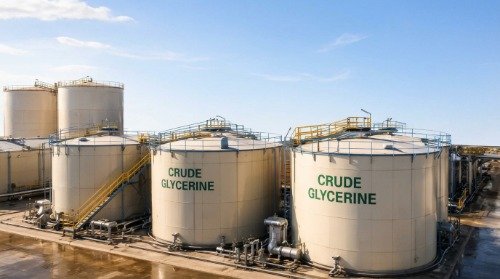
Chevron’s planned restart of its Ralston biodiesel production facility in Iowa could increase the availability of crude glycerine in the United States, adding a potential new source of the biodiesel co-product when the plant returns to operation.
The facility has an annual biodiesel production capacity of nearly 42 million gallons. Based on an industry estimate that biodiesel production generates approximately one pound of glycerine per gallon of fuel, the plant could theoretically produce around 19,000 tonnes of crude glycerine annually at full capacity.
Chevron announced the planned restart on 12 November 2026 through a commercial and operational agreement with Landus Cooperative, a farmer-owned agricultural services company operating a neighbouring soybean processing facility in Ralston. The plant has remained idle since 2024 following a downturn in biodiesel market conditions.
Ralston biodiesel facility to resume operations
The Ralston facility has a biodiesel production capacity of nearly 42 million gallons per year. Chevron said the decision to restart the plant follows improved market conditions and the availability of an integrated feedstock supply chain through its agreement with Landus.
The restart will take place in stages, covering staffing, maintenance, safety checks and operational-readiness activities before production resumes.
Chevron has not provided a definitive date for the return to production. However, reporting by agricultural industry publication DTN, citing a Chevron spokesperson, indicated that the facility could resume operations around mid-2027.
Landus operates a soybean processing facility next to the biodiesel plant and processes more than 28 million bushels of soybeans annually at the Ralston site. The arrangement is expected to support feedstock supply for biodiesel production while providing additional market opportunities for regional soybean growers.
Biodiesel production could generate additional crude glycerine
Glycerine, also known as glycerol, is a co-product of conventional biodiesel production. It is generated during the transesterification process, in which oils or fats react with an alcohol to produce fatty acid methyl esters (biodiesel) and glycerol.
The volume of glycerine generated depends on production volumes, feedstock composition and process efficiency.
The US National Renewable Energy Laboratory’s bioenergy industry reporting identifies approximately one pound of glycerine as a typical co-product yield for each gallon of biodiesel produced. Applying that indicative ratio to Ralston’s 42-million-gallon annual capacity suggests potential crude glycerine output of approximately 19,000 metric tonnes per year. This is a theoretical estimate based on full-capacity operation, not a production figure disclosed by Chevron.
The additional crude glycerine could provide feedstock for refiners producing higher-purity grades, including USP-grade glycerine used in pharmaceutical and personal-care applications. However, crude glycerine requires further processing, purification and quality testing before it can meet these specifications.
US glycerine market assesses potential supply impact
ChemAnalyst’s market assessment published on 23 November identified the Ralston restart as a potential medium-term supply development for the US glycerine market.
The market research company assessed refined USP-grade glycerine, with 99.5% purity, at US$3,050 per tonne on a delivered Illinois basis for the week ending 20 November 2026.
The assessment noted that the plant’s potential return could improve crude glycerine availability and provide refiners with additional feedstock. However, the restart is not expected to affect near-term prices directly because production has not yet resumed.
Any eventual effect on refined glycerine prices will depend on the plant’s actual operating rate, crude glycerine recovery, refining capacity, inventories and demand from downstream industries.
Glycerine is used across several sectors, including pharmaceuticals, personal care, food processing and industrial manufacturing. Its supply is closely connected to biodiesel and oleochemical production, making changes in biofuel output an important factor in the market’s supply outlook.