


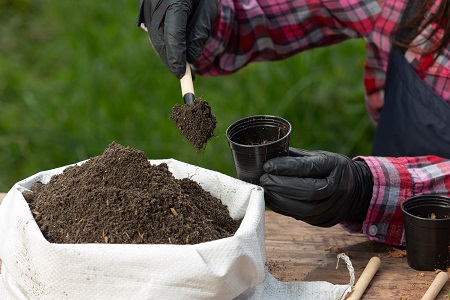
Researchers and graduate students at Shahid Abbaspour University in Tehran have successfully engineered a system that uses catalytic thermal conversion to transform agricultural waste into biochar and bio-oil—an achievement expected to curb pollution, cut greenhouse gas emissions, enrich soil quality, and decrease water usage, reported Ana News Agency.
Bijan Yeganeh, a faculty member in the university’s Faculty of Civil, Water, and Environmental Engineering and a board member of a knowledge-based company, said the team aimed to turn materials typically dismissed as waste in Iran into commercially useful products. “Our objective was to create value-added outputs from biomass residues such as crop waste and similar materials,” he explained.
The device, known as the Thermal Conversion Catalytic System, breaks down organic waste into two primary products: a carbon-rich solid called biochar and a liquid known as bio-oil. Yeganeh noted that these materials not only have broad industrial utility but also offer a practical solution for managing agricultural waste.
As per the news report, one of biochar’s standout features is its porous structure, which enables it to hold and slowly release water. This property, Yeganeh said, allows farmers to reduce irrigation needs by as much as 15 to 30 percent—an advantage of significant importance in a country facing persistent water shortages. Beyond supporting agriculture, biochar can be applied across multiple industries. It can act as a carbon source, be incorporated into filtration membranes, and—after enrichment—serve as an additive in livestock and poultry feed. In nations such as India, 2 to 5 percent of biochar is already included in certain animal feed blends, he added.
Biochar itself is a form of black carbon created by converting biomass—such as wood fragments, plant residues, or manure—into a stable carbon material that aids long-term carbon storage. Black carbon refers broadly to the solid byproducts produced when carbon-based substances undergo thermal or chemical transformation. Because its characteristics depend heavily on the raw material, processing method, cooling stage, and storage conditions, biochar is not a single uniform substance; instead, it encompasses a wide range of black carbon forms with distinct physical and chemical properties.