


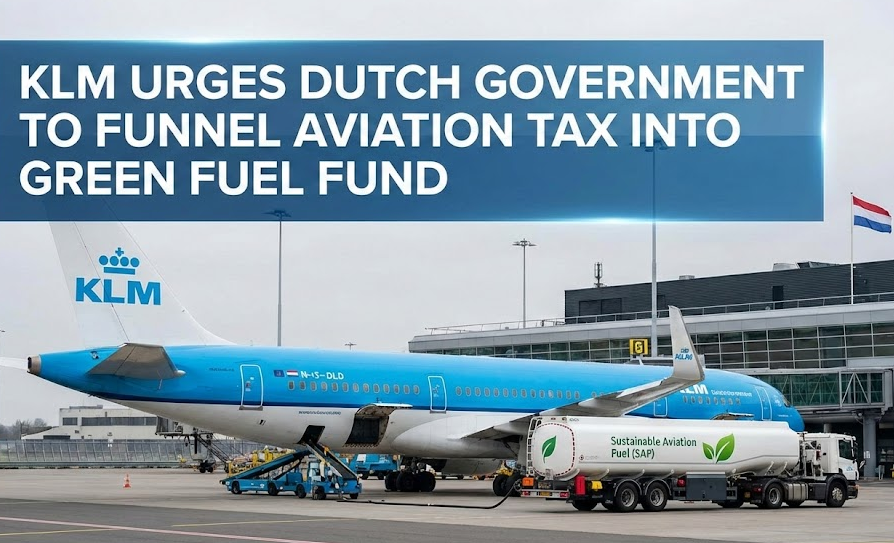
KLM Royal Dutch Airlines has called on the Netherlands government to reinvest revenue from existing aviation levies into a dedicated national fund for Sustainable Aviation Fuel (SAF), arguing that state support is critical to meeting ambitious 2030 climate targets without damaging economic competitiveness.
Endorsing the findings of the recent “Route to Future Prosperity” report led by Peter Wennink, the Dutch flag carrier stated that active government intervention is required to bridge the price gap between conventional kerosene and low-carbon alternatives.
The airline warned that imposing further national restrictions or taxes on the sector would undermine the Netherlands’ position as a global trade hub. Instead, KLM advocates for an incentive-based approach similar to subsidies provided for the wind and solar energy sectors.
“Real progress can only be achieved if government and industry work together,” said KLM CEO Marjan Rintel. “Now is the moment to position the Netherlands as a leader in sustainable aviation.”
Bridging the Cost Gap
Under the proposal, a national SAF fund financed by current aviation taxes would focus on scaling domestic production—dubbed “SAF Made in Holland”—and reducing costs for carriers.
KLM estimates that an annual investment of 60 million euros ($63 million) could increase the SAF blend in the national supply by 1 percent at current prices. This support is viewed as essential to reaching a joint national ambition of a 14 percent SAF blend by 2030.
While KLM noted it currently blends more SAF than mandated by European Union regulations and has committed to a long-term offtake agreement for a planned production facility in Delfzijl, the airline stressed that broader availability requires systemic support. SAF can reduce lifecycle carbon emissions by at least 65 percent compared to fossil fuels.
Strategic Priorities
The airline outlined three key pillars for the proposed fund:
- Incentivizing Usage: Subsidizing the premium cost of green fuels to encourage wider adoption by airlines.
- Infrastructure Development: Improving access to raw materials and removing regulatory hurdles for production facilities.
- Innovation: Funding next-generation technologies, including synthetic (e)SAF, aligning with the European Sustainable Transport Investment Plan (STIP).
KLM maintains that Schiphol Airport’s connectivity is vital for the Dutch economy and that a collaborative funding model would safeguard the country’s innovative ecosystem while accelerating decarbonization.