


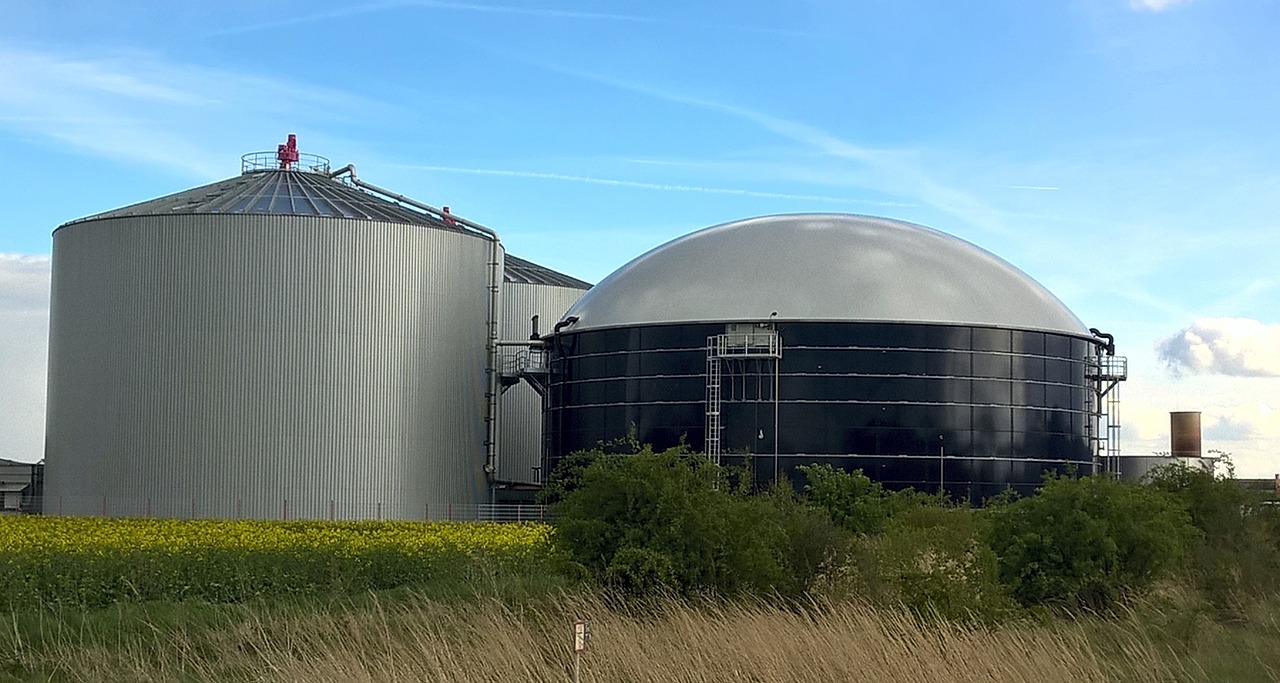
Researchers at the University of Twente have developed a new method to remove carbon dioxide from biogas using a specially engineered clay material, a breakthrough that has led to the creation of a spin-off company called CarbSorbTec.
Biogas generally consists of about 60 per cent methane and 40 per cent carbon dioxide. By selectively capturing the CO₂, the remaining methane can be upgraded into biomethane, a cleaner and more valuable fuel.
The new technology is low-cost and energy-efficient, making it particularly suitable for small-scale operations such as farms and wastewater treatment plants.
According to Professor Frieder Mugele, Chair of Physics of Complex Fluids, the clay’s layered structure can be modified through ion exchange to allow CO₂ molecules to attach, while methane passes through unhindered.
PhD candidate Niels Mendel, along with researchers Igor Siretanu and Wim Brilman, demonstrated the material’s effectiveness and reusability in laboratory experiments.
Pilot trials are scheduled for late 2025 at a farm and a wastewater facility, with the potential for global deployment of the technology. CarbSorbTec has also filed a patent to protect the innovation, with support from Novel-T, the university’s technology transfer office.
The research team is further investigating how captured CO₂ could be repurposed as a feedstock for new chemical processes, aiming to convert what is now a waste gas into a useful resource.