


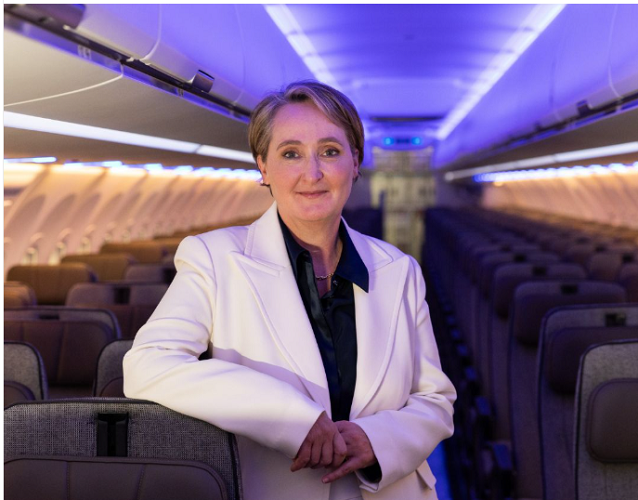
Qantas CEO Vanessa Hudson has urged the federal government to accelerate the development of a local Sustainable Aviation Fuel (SAF) industry, citing it as critical for Australia’s fuel security and capable of generating 13,000 jobs.
Key Takeaways
- Massive Off-take Potential: Qantas currently spends $5 billion annually on fuel, representing a guaranteed market for domestic producers.
- Feedstock Strategy: The airline is targeting North Queensland’s sugarcane ethanol sector as a primary feedstock for aviation fuel production.
- Government Role: While acknowledging the recent $1.1 billion federal funding, Hudson warned that ongoing support is “crucial” for commercial viability.
- Economic Impact: A domestic SAF sector is projected to create over 13,000 jobs while securing national energy independence.
Bridging the Viability Gap: Hudson’s comments come shortly after the Australian federal government announced a $1.1 billion allocation in September to support low-carbon liquid fuels. Despite Australia’s significant agricultural advantages—specifically in sugarcane and oilseeds—the country currently lacks commercial-scale SAF refining capacity. Qantas views local production as essential not only for decarbonization but to insulate the airline from volatile global energy markets.
The Industry Perspective: Hudson highlighted the disconnect between Australia’s agricultural abundance and its lack of refining capability.
“We are a country that should be able to lead technically in this space because we’ve got significant agriculture and feedstock for such an industry,” Hudson stated. “We think there is a great opportunity to work with the Australian government… citing a fledgling north Queensland operation turning sugar cane by-product into ethanol as the basis for aviation fuel.”
She further emphasized the geopolitical angle: “If we think about fuel and fuel security, we think there is a national interest that could come from that as well.”
Bioenergy Business Analysis: For the bioenergy sector, Qantas’s stance validates the “Ethanol-to-Jet” (AtJ) pathway as a priority investment vehicle in the APAC region. While Project Sunrise (long-haul flights to London/New York) drives the immediate need for high-density fuels, the real market signal here is the airline’s $5 billion fuel bill. Investors should view this as a call for infrastructure capital in Queensland; however, Hudson’s emphasis on “ongoing support” suggests that current subsidies may still be too low to make greenfield biorefineries cost-competitive with fossil jet fuel without further policy intervention.
Read also: JC Chemical eyes UCO facility in Malaysia to produce Sustainable Aviation Fuel