


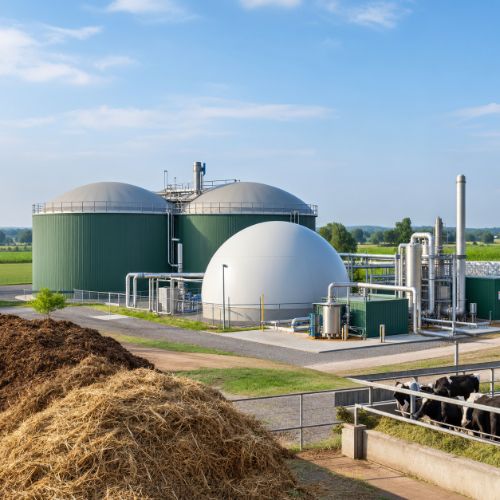
KIS Group and Paras Dairy are planning to invest around ₹10 billion ($105.14 million) to develop 10 BioCNG plants across Maharashtra, Uttar Pradesh, Madhya Pradesh and other states, with the first facility targeted for commissioning in the fourth quarter of 2027. The wider portfolio is expected to be operational by 2029, according to the news report by Mercom.
The proposed development brings together KIS Group’s expertise in biogas and BioCNG technology with Paras Dairy’s role in securing feedstock, land and regulatory approvals. The companies intend to establish a joint venture to develop the facilities.
BioCNG plants to process agricultural and dairy waste
Each facility is expected to process between 65,000 and 85,000 metric tonnes of organic waste annually. Feedstock is expected to include dairy waste, animal manure, Napier grass and agricultural residues.
The planned plants will convert these organic materials into BioCNG, with each facility expected to produce up to 10 tonnes of BioCNG per day. The projects will also generate BioCO2 and fermented organic manure (FOM), including solid and liquid organic fertiliser products.
Farmers are expected to participate as feedstock partners, supplying cattle dung and agricultural residues such as paddy straw, wheat straw, maize waste and vegetable waste. The resulting fermented organic manure is intended to be returned to agricultural applications.
This feedstock model places agricultural and dairy waste collection at the centre of the proposed projects. For BioCNG developers, consistent access to organic waste is an important component of maintaining plant utilisation and establishing commercially viable operations.
KIS Group to lead technology and plant operations
Under the planned partnership, KIS Group will take responsibility for technology, construction and plant operations, while Paras Dairy will manage feedstock arrangements, land and approvals.
KIS Group, which operates from Bengaluru and Singapore, specialises in biogas, BioCNG and BioLNG solutions, with activities across India and Southeast Asia.
KIS Group founder and CEO KR Raghunath said the scale of India’s organic waste resources creates an opportunity for BioCNG development, while highlighting feedstock aggregation and technology as key requirements for scaling the sector.
“The next phase of BioCNG growth will depend on solving for feedstock aggregation and technology together,” Raghunath said.
India’s BioCNG market gains policy support
The proposed investment comes as India expands policy support for biogas and compressed biogas as part of its broader clean-energy and waste-management objectives.
In August 2026, the Union Cabinet approved GOBARdhan, the National Circular Bioenergy Programme, with an outlay of ₹237.31 billion, according to the source report. The programme is intended to support the expansion of compressed biogas production in India.
The KIS Group-Paras Dairy plans also follow other investment activity in India’s waste-to-biogas sector. In March, Netherlands-based investment manager Climate Fund Managers announced a $32.2 million commitment to support Akaia Green Fuels’ waste-to-biogas project in Uttar Pradesh.
For the planned KIS Group and Paras Dairy facilities, the combination of dairy waste, animal manure and crop residues provides a diversified feedstock base while creating an outlet for agricultural waste that might otherwise require disposal or alternative management.
First BioCNG facility targeted for 2027
The companies expect the first plant to become operational in Q4 2027, with the remaining facilities forming part of a wider rollout targeted for completion by 2029.
The proposed 10-plant portfolio would therefore represent a sizeable expansion of BioCNG production capacity, although the final development schedule, individual plant locations and project-level financing arrangements will determine how quickly the planned portfolio moves from announcement to construction and operation.
Bioenergy Business Analysis
The planned ₹10 billion investment by KIS Group and Paras Dairy signals growing interest in scaling India’s BioCNG sector around locally available agricultural and dairy waste. The proposed 10-plant portfolio is particularly relevant because it combines feedstock aggregation with plant development, addressing one of the key practical challenges for commercial biogas projects: securing a reliable and consistent supply of organic waste.
The projects could also strengthen the link between India’s dairy and agricultural sectors and the emerging compressed biogas market, while creating additional value from digestate through fermented organic manure. However, the success of the portfolio will depend on execution, feedstock logistics, project financing and timely regulatory approvals. The first plant, targeted for Q4 2027, will therefore be an important milestone in assessing whether the proposed model can be replicated at scale.
Read also: Noida plans Waste-to-CBG plant to process horticulture waste