


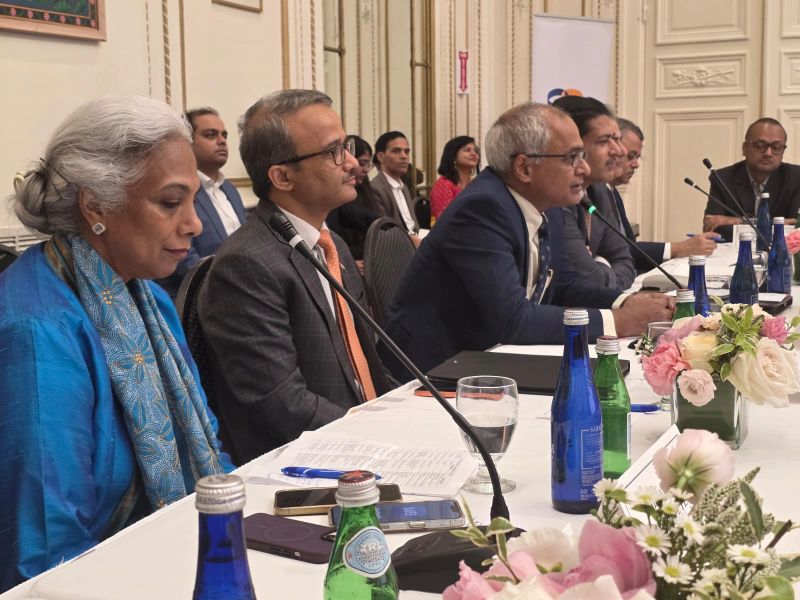
The Global Biofuels Alliance (GBA) has used the New York Climate Week platform to highlight India’s experience with biofuel deployment and call for greater international investment in compressed biogas (CBG), sustainable aviation fuel (SAF) and other renewable fuels.
Neeraj Mittal, Interim Director General of the GBA, delivered a keynote address at the Consulate General of India to representatives of Canadian and US pension funds, multilateral development banks (MDBs) and private equity firms.
The central message was that biofuels can combine energy-transition objectives with economic value, while India’s policy-led expansion of ethanol is being presented as a potential model for wider deployment.
India’s ethanol programme presented as a scale-up model
Mittal highlighted India’s progress towards ethanol blending, pointing to the country’s E20 programme as an example of how policy certainty and predictable demand can support biofuel deployment.
India’s ethanol programme has increasingly linked fuel policy with agricultural feedstocks, particularly sugarcane and other crops, while creating a large domestic market for ethanol blending.
The broader policy approach is relevant to investors because predictable demand can provide greater visibility for biofuel producers and feedstock supply chains.
CBG emerges as another investment frontier
The GBA identified compressed biogas as one of the next areas where India could develop projects at scale.
India’s GOBARdhan National Circular Bioenergy Scheme was approved in 2026 with an outlay of ₹23,731 crore, or about US$2.5 billion. The programme is intended to expand compressed biogas production and runs from FY2026-27 through FY2035-36.
GBA described the scheme as a mechanism aimed at increasing domestic CBG production nearly tenfold over the next decade.
GOBARdhan is designed around the conversion of organic waste and agricultural residues into compressed biogas, creating a link between renewable gas production, waste management and the wider agricultural economy. Recent industry analysis has also identified feedstock availability, project bankability, infrastructure and plant performance as key considerations for scaling India’s CBG industry.
For international investors and technology providers, the development of this ecosystem could create opportunities across project development, biogas upgrading, feedstock processing, compression, logistics and associated infrastructure.
SAF policy creates another investment opportunity
Sustainable aviation fuel was identified by the GBA as a second major investment frontier.
India has approved indicative SAF blending targets for international flights of 1% in 2027, 2% in 2028 and 5% in 2030. The targets have been confirmed by the Indian government and are being developed in the context of the country’s preparations for the international aviation emissions framework.
The policy trajectory provides a progressively larger potential market for SAF production and supply infrastructure. However, India’s SAF market is still developing, with challenges including production capacity, feedstock availability, certification, infrastructure and financing.
The government has also been working on the regulatory and certification framework needed to support SAF deployment. Indian Oil’s Panipat refinery has received ISCC CORSIA certification, while other initiatives are being developed to support the country’s participation in the international SAF supply chain.
GBA expands its international platform
The GBA has also been positioning itself as a platform for international cooperation on biofuels, including policy development, technology exchange and investment.
The alliance was launched in 2023 with the objective of accelerating sustainable biofuel deployment and bringing together governments, international organisations and industry.
The GBA’s current website lists 34 countries and 14 international organisations as members. The alliance had grown to 35 countries and 15 international organisations. Because the alliance’s current official website lists 34 and 14, the higher figures have not been used here as an established current membership count.
The GBA also said it plans to activate its industry pillar in the coming months, with the stated objective of giving private-sector participants a stronger role in shaping future policy discussions.
Bioenergy Business Analysis
The GBA’s New York Climate Week engagement reflects a shift in the biofuels discussion from technology potential towards investment, policy certainty and scalable project platforms. India’s experience with ethanol provides one example of how blending policy can create predictable demand, while GOBARdhan and the emerging SAF framework point towards newer areas where policy support is being used to develop markets.
For investors, the opportunity is closely linked to execution. CBG projects require dependable feedstock, viable offtake arrangements, infrastructure and operational performance, while SAF developers face additional requirements around feedstock sustainability, certification, production economics and aviation-sector demand. India’s ability to address these conditions will influence whether individual projects can develop into replicable platforms.
The GBA’s planned Industry pillar could therefore become relevant as the alliance seeks to connect policymakers with capital providers, technology companies and project developers. Its effectiveness will depend on how this private-sector engagement translates into bankable projects and deployable technologies across different biofuel markets.
The immediate investment areas identified by the GBA are – CBG and SAF alongside established ethanol deployment reflecting three different stages of market development, from a large-scale existing blending market to emerging renewable-gas and aviation-fuel markets.