


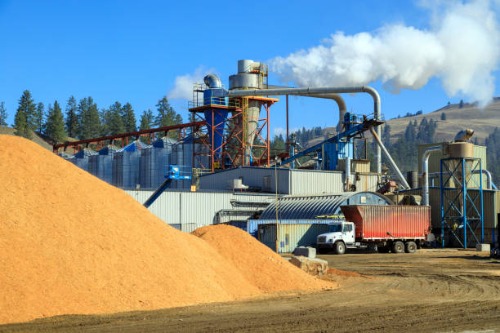
Belledune Joint Venture has secured a long-term biomass supply agreement with NB Power as the utility moves forward with plans to convert the Belledune Generating Station to sustainably sourced advanced wood pellets.
The agreement marks a major development for the proposed Belledune Torrefied Pellet Project, which is being developed at the Port of Belledune in New Brunswick, Canada. The facility is planned to produce up to 150,000 tonnes of torrefied pellets a year from forestry residues and sawmill by-products, with an estimated investment of approximately C$100 million.
The project is being developed by a partnership comprising Pabineau First Nation, Eel River Bar First Nation, Arbec Forest Products and Airex Energy.
Belledune project advances with NB Power agreement
NB Power’s decision to proceed with the conversion of the Belledune Generating Station and enter into a long-term biomass supply agreement provides an important commercial milestone for the joint venture.
The planned pellet facility will supply torrefied biomass fuel for the generating station, supporting the utility’s transition away from coal-fired generation.
The project partners said the development will make use of existing infrastructure and the Port of Belledune’s location within its Green Energy Hub.
The port’s CEO, Denis Caron, said the project demonstrates how existing infrastructure can support emerging clean-energy industries while creating economic opportunities in northern New Brunswick.
Forestry residues to provide project feedstock
The proposed facility is designed to use forestry harvest residues and sawmill by-products as feedstock for torrefied pellet production.
Torrefaction is a thermal treatment process that changes the properties of biomass, producing a more energy-dense and stable solid fuel. The technology is intended to make biomass more suitable for applications where conventional wood pellets or other biomass fuels may not provide the required fuel characteristics.
For the Belledune project, the use of residual forestry material also creates a link between New Brunswick’s forest-products industry and electricity generation.
The project partners said the initiative could provide an additional market for forest residues and sawmill by-products while increasing the value obtained from existing forestry supply chains.
Torrefied pellets planned for power-generation conversion
The project is expected to produce up to 150,000 tonnes of torrefied pellets annually for use in the conversion of the Belledune Generating Station.
The partners describe the project as an industrial-scale advanced-pellet development and say it would support the generating station’s transition away from coal.
The announcement does not provide the converted generating station’s future biomass-firing capacity, expected annual biomass consumption, conversion cost or commissioning date.
Airex Energy said its CarbonFX technology has been developed and operated since 2016 and is being applied to the Belledune project. The company described the development as an important step in the commercialisation of torrefied biomass technology.
Project expected to support forestry employment
The joint venture estimates that the project will create approximately 75 jobs at the facility and across the forestry sector while helping sustain more than 325 additional forestry jobs.
On that basis, the partners estimate that approximately 400 direct and indirect jobs could be created or maintained. The project is also expected to generate activity for local suppliers, contractors and service providers involved in forestry, transportation and energy.
These employment figures are project estimates rather than current jobs created, and their eventual scale will depend on the project’s development and operation.
Emissions reduction linked to coal replacement
The project partners estimate that replacing coal-fired generation with the locally produced torrefied biomass fuel could reduce greenhouse gas emissions by at least 220,000 tonnes annually.
The announcement compares this figure with emissions associated with more than 73,500 passenger vehicles or approximately 94.8 million litres of gasoline consumption.
The partners also expect reductions in other emissions, including sulphur, nitrogen dioxide, ash, heavy metals and polycyclic aromatic hydrocarbons.
These figures are estimates provided by the project and should therefore be distinguished from independently verified operating results. The source does not provide the methodology or assumptions underlying the annual emissions estimate.
Indigenous partnership central to project structure
The joint venture includes Pabineau First Nation and Eel River Bar First Nation, alongside industrial partners Arbec Forest Products and Airex Energy.
Pabineau First Nation Chief Terry Richardson said the partnership provides an opportunity for the community to become an equity owner in the project while contributing to the transition of the Belledune power plant away from coal.
Eel River Bar First Nation Chief Chris George also welcomed the agreement and said the partners intend to continue developing the project together.
The participation of Indigenous communities gives the project an ownership and partnership dimension alongside its role in biomass supply and energy infrastructure.
Belledune project connects forestry and energy markets
The project is positioned at the intersection of two important sectors in New Brunswick: forestry and electricity generation.
By converting forestry residues and sawmill by-products into an advanced solid fuel, the joint venture aims to establish a new market for residual biomass while supplying a renewable fuel to an existing power-generation asset.
For the Port of Belledune, the development also forms part of its wider Green Energy Hub strategy. The partners said community information sessions will be held in the coming weeks, with details on dates and locations to be announced.
Bioenergy Business Analysis
The long-term supply agreement is significant because it links a dedicated biomass-fuel production facility with an identified utility offtake, addressing one of the central commercial requirements for large-scale biomass projects. Rather than developing pellet capacity without a defined market, the Belledune venture is being structured around the conversion requirements of an existing generating station.
The project’s use of forestry residues and sawmill by-products also illustrates the potential role of advanced biomass fuels in connecting Canada’s forest-products and energy sectors. However, the commercial case will ultimately depend on reliable feedstock availability, the economics of producing torrefied pellets at scale, the technical performance of the converted generating station and the long-term terms of the biomass supply arrangement.
The development also highlights the role of Indigenous equity participation in major regional energy and infrastructure projects. With the supply agreement now secured, the next stages of project development, construction and eventual commissioning will determine whether the planned 150,000-tonne annual production capacity and associated economic and emissions benefits are realised.