


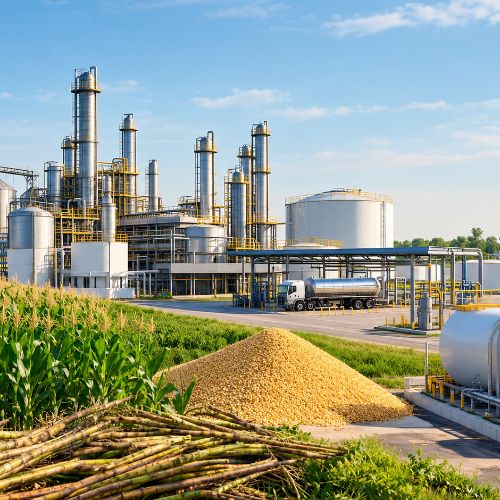
Argentina’s Senate has approved a proposed new biofuel regulatory framework that would raise mandatory blending levels for bioethanol and biodiesel while opening parts of the domestic market to greater competition.
The bill, approved on 17 September by 41 votes to 25, would increase the mandatory bioethanol blend in gasoline from 12% to 15% and the biodiesel blend in diesel from 7.5% to 10%. The increases would take effect 12 months after the law is sanctioned. The proposal now moves to the Chamber of Deputies for consideration.
The proposed framework would replace Argentina’s existing biofuel regime and introduce changes to market allocation, pricing and participation by different categories of producers.
Bioethanol blend proposed to rise to 15%
Under the bill, gasoline would initially retain the existing 12% mandatory bioethanol blend. Twelve months after the law is sanctioned, the minimum would rise to 15%.
The proposed 15% blend would retain dedicated allocations of 6% for sugarcane-derived ethanol and 6% for corn-based ethanol. The remaining 3% would be open to eligible feedstocks.
The framework would also allow higher voluntary blends, subject to applicable fuel-quality and technical requirements.
For producers, the additional 3% open component could create a larger competitive segment within Argentina’s domestic ethanol market, while the existing sugarcane and corn allocations would remain protected under the proposed framework.
Biodiesel mandate to reach 10%
For diesel, the bill establishes a minimum mandatory biodiesel blend of 7.5% initially, rising to 10% 12 months after the law is sanctioned.
The proposed legislation also contains provisions allowing the government to modify mandatory blend levels in exceptional circumstances, including supply constraints and technical or quality considerations.
Certain uses of diesel would be exempt from the mandatory biodiesel blend under the proposed framework, including some applications in shipping, mining, electricity generation and specific cold-weather regions.
Bill seeks to change Argentina’s biofuel market structure
Beyond increasing blending mandates, the legislation proposes a broader restructuring of how biofuels are allocated and traded.
The framework would replace elements of the existing allocation system with competitive mechanisms, including public auctions conducted through an electronic platform managed by an independent entity. Prices would be determined through competitive bidding, with import-parity pricing used as a benchmark.
The proposal also contains a concentration limit for bioethanol. A single producer would not be permitted to account for more than 20% of the annual volume supplied for the mandatory bioethanol blend.
The proposed changes are intended to increase competition among suppliers while retaining regulatory mechanisms for domestic fuel security.
Integrated biodiesel producers could enter domestic market
Another significant element concerns Argentina’s biodiesel market.
The proposed framework would gradually open the mandatory domestic biodiesel market to integrated producers, which have faced restrictions on participating in the mandatory blending market.
The bill maintains a reserved share of domestic demand for non-integrated producers during a transition period while progressively expanding market participation by integrated and non-integrated suppliers through 2036.
This provision has been one of the more contested aspects of the reform, with debate focusing on how greater competition would affect smaller biodiesel producers and integrated companies.
Argentina’s biofuel industry already has significant production capacity
The proposed reforms come against the backdrop of an established biofuel industry.
According to figures cited by Industrial Info Resources, Argentina produced approximately 972 million litres of biodiesel in 2025, representing a 16.4% year-on-year decline. Combined bioethanol production from sugarcane and corn reached almost 1.3 billion litres during the year.
Industrial Info Resources is also tracking 27 operational biofuel plants in Argentina and 76 biofuel-related projects representing approximately US$4.91 billion in investment. The project pipeline includes developments across the country’s biofuel production and associated infrastructure.
The investment pipeline provides a measure of the potential industrial base that could respond to higher mandatory blending requirements if the legislation ultimately becomes law.
Senate approval does not yet make the changes law
The Senate vote represents approval by Argentina’s upper chamber, but the proposed framework has not yet become law.
The bill must now be considered by the Chamber of Deputies. Its final provisions could therefore change during the legislative process.
The Senate vote followed several weeks of debate over the proposed market structure, particularly provisions affecting biodiesel producers. A Senate committee had previously advanced a consolidated proposal covering several competing biofuel bills.
The approved text provides for a 15-year regulatory framework, with the Secretary of Energy designated as the implementing authority.
What the proposed changes could mean for Argentina’s biofuel sector
If enacted in its current form, the legislation would increase domestic demand created by mandatory blending while simultaneously changing the mechanisms through which producers compete for that market.
The increase to 15% ethanol and 10% biodiesel would create additional demand for biofuel feedstocks and production capacity. For ethanol, the structure would preserve defined roles for sugarcane and corn while opening part of the mandatory blend to other eligible feedstocks.
For biodiesel, the gradual opening of the domestic market to integrated producers could alter competitive dynamics across the industry. The transition through 2036 means the effect would be phased rather than an immediate removal of existing market protections.
The proposed auction and pricing mechanisms would also make market access and production economics increasingly dependent on competitive bidding and prevailing fuel-market conditions.
Bioenergy Business Analysis
Argentina’s proposed biofuel reform combines two separate policy changes: higher mandatory blending and a restructuring of market access. The first could directly increase domestic consumption of bioethanol and biodiesel; the second could materially change how that demand is allocated among producers.
The 15% ethanol target is particularly relevant for Argentina’s sugarcane and corn industries because 12 percentage points of the proposed blend remain assigned to those two feedstocks, while the additional 3 percentage points introduce greater flexibility. The biodiesel proposal is more structurally significant because the transition towards greater participation by integrated producers could reshape the relationship between agricultural processing, fuel production and domestic fuel supply.