


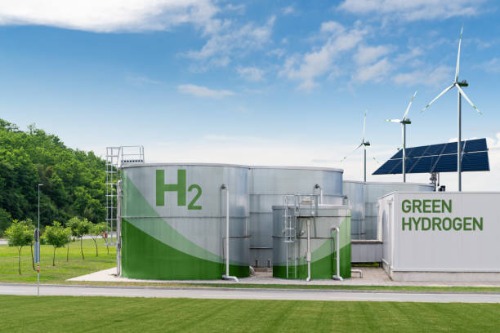
The Bihar Cabinet has approved the Bihar Green Hydrogen Policy, 2026, clearing a state-level framework aimed at promoting green hydrogen production and use, attracting private investment, reducing dependence on imported natural gas and cutting carbon emissions.
As reported by The Hindu, the policy was approved at a Cabinet meeting chaired by Chief Minister Samrat Choudhary on 30 September 2026. The state government had earlier reviewed the draft policy in September as part of efforts to establish a green hydrogen economy in Bihar.
Following the Cabinet decision, Bihar has set an annual green hydrogen production target of 10 lakh tonnes under the new policy. The state estimates that the policy could facilitate investment of around ₹16,000 crore and create approximately 12,000 jobs in the emerging green hydrogen ecosystem.
Policy aligns with National Green Hydrogen Mission
The Bihar policy is intended to complement India’s National Green Hydrogen Mission (NGHM), which seeks to establish India as a global hub for the production, use and export of green hydrogen and its derivatives.
The Union government’s mission includes support for electrolyser manufacturing, green hydrogen production and demand creation in sectors such as fertilisers and refineries. As of March 2026, the Centre said 18 companies had been awarded a cumulative 862,000 tonnes per annum of green hydrogen production capacity under the mission’s incentive scheme.
The National Green Hydrogen Mission has an objective of developing at least 5 million metric tonnes per annum of green hydrogen production capacity by 2030, alongside associated renewable-energy capacity.
Bihar’s new policy places the state-level initiative within this broader national push.
Reducing natural gas import dependence
One of the policy’s stated objectives is to reduce Bihar’s dependence on imported natural gas by encouraging the development and use of green hydrogen.
Green hydrogen is generally produced by splitting water through electrolysis using renewable electricity. Unlike hydrogen produced from fossil fuels without carbon capture, its production pathway can have significantly lower greenhouse-gas emissions when powered by renewable energy.
For Bihar, the policy could therefore create a framework for linking renewable power development with emerging hydrogen demand.
The state government’s September review had specifically examined the roadmap for developing a green hydrogen economy, including targets, incentives and implementation mechanisms.
₹16,000 crore investment potential
The newly approved policy is expected by the state to help attract around ₹16,000 crore of investment into green hydrogen-related activities.
The proposed investment would be associated with the development of production capacity and the wider ecosystem required to support green hydrogen, although the Cabinet announcement does not by itself represent committed investment.
The distinction is important because actual project deployment will depend on factors including renewable electricity availability, electrolyser costs, hydrogen demand, infrastructure, financing and the economics of competing fuels.
The policy also aims to create around 12,000 employment opportunities, according to details released following the Cabinet decision.
BREDA to serve as nodal agency
The Bihar Renewable Energy Development Agency (BREDA) has been designated as the nodal body for implementing the Green Hydrogen Policy, 2026.
The designation gives the state’s renewable-energy agency a central role in coordinating implementation of the policy and supporting the development of the green hydrogen ecosystem.
Further details on project-level incentives, eligibility criteria, implementation timelines and specific support mechanisms will determine how the policy translates into commercial projects.
Bihar seeks role in emerging hydrogen economy
The policy represents an effort to establish green hydrogen as an additional component of Bihar’s clean-energy strategy.
For the state, developing a green hydrogen ecosystem could potentially create new links between renewable power generation, industrial fuel consumption and emerging clean-energy applications.
However, green hydrogen remains more expensive than conventional hydrogen in many applications, and project economics can vary significantly depending on renewable electricity costs, electrolyser utilisation and end-use demand.
The availability of infrastructure for hydrogen production, storage, transport and consumption will also influence the pace at which projects can be developed.
National policy provides broader framework
The Bihar initiative comes as India’s national green hydrogen programme moves from policy formation towards project deployment.
The Union government said in March 2026 that the National Green Hydrogen Mission had awarded 3,000 MW per year of electrolyser manufacturing capacity to 15 companies and 862,000 tonnes per year of green hydrogen production capacity to 18 companies.
The Centre has also identified green hydrogen and its derivatives as potential tools for reducing fossil-fuel dependence and supporting industrial decarbonisation.
Bihar’s state-level policy could therefore provide a framework for attracting projects and aligning local renewable-energy resources and industrial demand with the national hydrogen strategy.
Bioenergy Business Analysis
The Bihar Green Hydrogen Policy 2026 gives the state a formal framework for participating in India’s expanding green hydrogen economy. Its 10-lakh-tonne annual production target is ambitious relative to the state’s current hydrogen ecosystem, while the projected ₹16,000 crore investment and 12,000 jobs indicate the scale of economic activity the government hopes to catalyse.
The next stage will be implementation. Actual project announcements, renewable-power availability, electrolyser deployment, hydrogen offtake agreements and details of financial or fiscal incentives will be important indicators of whether the policy’s production target can translate into operating capacity. The Cabinet approval establishes the policy framework, but the announced investment and employment figures should be treated as policy projections rather than committed outcomes.
Read also: Bihar Green Hydrogen Policy can attract ₹16,000 crore investment