Researchers have developed highly porous bio-based gels using lignin extracted from sugarcane bagasse and sugarcane straw, demonstrating a potential route to convert agricultural processing residues into precursors for advanced carbon materials.
The study, titled Lignin-based gels from sugarcane biomass residues via chemical cascading, reports cryogels with porosity reaching 73.04% and renewable material content exceeding 70%. The researchers also demonstrated that adding nickel ions could reduce the gelation time of commercial lignosulfonate formulations from 24 hours to six hours.
The research combines a kraft pulping-based lignin extraction process with hydrothermal cross-linking to produce two types of porous materials: cryogels, obtained through freeze-drying, and xerogels, produced through conventional atmospheric drying.
The findings highlight a potential higher-value application for sugarcane residues, particularly lignin, which is frequently used as a low-grade fuel in industrial processing.
Sugarcane residues provide an alternative source of lignin
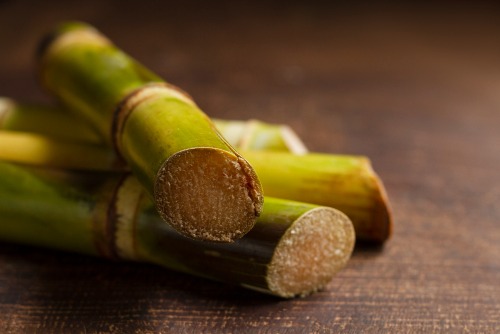
Sugarcane cultivation generates substantial quantities of lignocellulosic residues, including bagasse and straw. Bagasse is the fibrous material remaining after juice extraction and is commonly used as a boiler fuel or in pulp and paper production. Sugarcane straw, also known as field trash, is generally retained in agricultural fields for soil protection and nutrient recycling.
The study refers to an estimated annual global lignocellulosic potential of 495 million dry tonnes from sugarcane cultivation. It also identifies lignin as a significant component of both residues, accounting for approximately 19–32% of bagasse and 17–41% of sugarcane straw.
Despite its potential as a renewable source of aromatic compounds, much of the commercially recovered industrial lignin is still burned for process heat. Its chemical complexity, variable composition and inorganic content have presented challenges for converting it into higher-value functional materials.
To investigate alternative applications, the researchers sourced bagasse and sugarcane straw from Usina Ipiranga Agroindustrial in Descalvado, São Paulo, Brazil.
They extracted lignin using laboratory-scale rotary digesters designed to replicate industrial kraft pulping, an alkaline treatment process that uses sodium hydroxide and sodium sulphide to separate lignin from biomass.
The recovered lignin was precipitated from kraft black liquor using sulphuric acid. Compared with carbon dioxide-based precipitation, this approach increased lignin recovery by up to 2.7 times for bagasse and twice for sugarcane straw.
Chemical characterisation showed that the extracted straw lignin contained 82.84% lignin and 10.02% carbohydrates. Bagasse-derived lignin contained 70.05% lignin and 24.68% residual carbohydrates.
Cryogels achieve up to 73.04% porosity
Measurements of the resulting materials showed that cryogels achieved total porosity of up to 73.04%, compared with a maximum of 50.7% for xerogels.
Microscopic analysis also revealed differences in their internal structures. Bagasse-derived cryogels developed interconnected networks with macropore dimensions ranging from 1.60 to 10.97 micrometres.
The type of cross-linking agent also influenced the material properties. Glutaraldehyde-based formulations achieved renewable material fractions averaging 74.1%, with maximum values of 75%.
PEGDGE-based formulations recorded an average renewable content of 70.54%. However, these gels demonstrated better mechanical elasticity and structural integrity than the more brittle glutaraldehyde-crosslinked materials.
The researchers also observed that sugarcane straw lignin could form cohesive membranes without additional cross-linking agents under the tested hydrothermal conditions. Bagasse lignin, however, did not solidify under the same conditions without chemical assistance.
Nickel addition reduces lignosulfonate gelation time
Another finding concerned the use of nickel sulphate hexahydrate to accelerate hydrogel formation.
In experiments using commercial spruce softwood ammonium lignosulphonate, the researchers found that formulations without metal additives required up to 24 hours to form cohesive gels under the tested conditions.
Adding nickel ions at 1% by weight of the organic lignin content enabled gel formation within six hours.
The researchers associated this improvement with the formation of nickel hydroxide species under alkaline conditions. These species were proposed to provide nucleation sites that facilitate polymer network assembly.
The finding could help address processing time constraints associated with lignosulphonate-based gel production. However, further work would be required to assess the implications of nickel-containing formulations for commercial production and downstream applications.
Carbonisation remains necessary for energy storage applications
The study identifies the resulting gels as potential precursors for porous carbon materials, including materials intended for energy storage applications.
Cryogels could be investigated for supercapacitor electrode production because of their higher pore volumes, while denser xerogels may offer potential as precursors for sodium-ion battery anodes.
However, the researchers noted that the materials require further processing before these applications can be realised. Their relatively low specific surface areas in the uncarbonised state mean that thermal carbonisation and activation are necessary to develop the micro- and mesoporosity required for electrochemical applications.
The study also highlights the need to assess residual chemical content and potential leaching before considering applications such as wastewater treatment or soil amendment.
Overall, the findings demonstrate how sugarcane bagasse and field residues could provide renewable lignin feedstocks for advanced material production. The approach offers a potential route for extending agricultural residue utilisation beyond conventional energy recovery and pulp production, although its commercial viability and environmental performance remain to be established.