


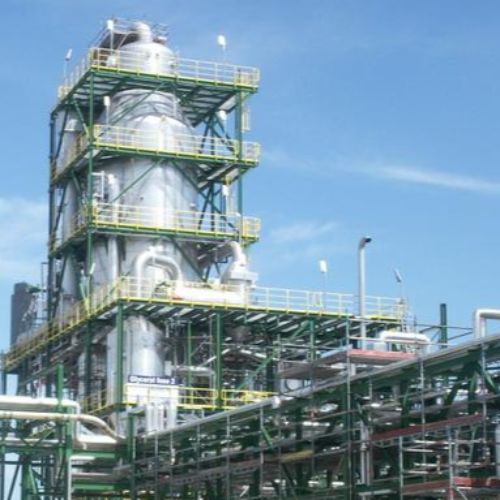
Perpetual Next and Lhyfe have signed a memorandum of understanding (MoU) to explore the potential long-term supply of renewable hydrogen to Perpetual Next’s planned DeltaNor biomethanol facility in Delfzijl, the Netherlands.
The companies will assess whether hydrogen from Lhyfe’s planned DelfzHyl renewable hydrogen production facility can be integrated into DeltaNor’s production process. The potential supply could reach approximately 12,000 tonnes of renewable hydrogen per year, subject to further technical and commercial evaluation.
DeltaNor is being developed as a biomethanol production facility with a planned capacity of 220,000 tonnes per year. The MoU establishes a framework for evaluating the connection between the two projects; it does not confirm a final supply contract or a final investment decision for either facility.
Renewable hydrogen could improve biomethanol production
Biomethanol is being developed as a potential lower-carbon fuel and chemical feedstock, particularly for sectors such as maritime transport and the chemical industry.
In biomass-based production, syngas contains hydrogen and carbon monoxide. Adding renewable hydrogen could provide additional hydrogen for conversion of the biogenic carbon into methanol, potentially increasing biomethanol yields.
The proposed arrangement would therefore link renewable hydrogen production with a biomass-derived fuel pathway. The extent of any production gains at DeltaNor would depend on the facility’s process design, feedstock characteristics and hydrogen integration requirements.
Lhyfe’s planned Delfzijl project under consideration
Lhyfe Delfzijl, a subsidiary of Lhyfe, is developing the DelfzHyl renewable hydrogen production project in the same Dutch industrial cluster. The supplied announcement identifies the project as a planned 120 MW development.
Lhyfe says it has four installed hydrogen production sites in Europe and expects that number to rise to six by the end of 2026. The company is also developing larger on-site projects, with capacities ranging up to several hundred megawatts.
The proposed hydrogen supply to DeltaNor would be assessed alongside the technical and commercial development of the DelfzHyl project. The parties have not disclosed a confirmed start date for supply, a hydrogen price or a final contractual commitment.
DeltaNor forms part of Perpetual Next’s biomethanol pipeline
Perpetual Next is developing DeltaNor in Delfzijl as a 220,000-tonne-per-year biomethanol facility. The company has five biomethanol facilities at various stages of development, including DeltaNor, according to the announcement.
For the project, access to renewable hydrogen at a competitive price is an important development consideration. A potential local supply arrangement could help align hydrogen production with industrial demand in Delfzijl, where hydrogen is already used as a chemical feedstock.
However, the economic case will depend on the delivered cost and availability of renewable hydrogen, the technical requirements of the biomethanol process and the ability of both projects to secure the necessary support and investment.
Perpetual Next CEO René Buwalda said access to competitively priced renewable hydrogen would be an important consideration in DeltaNor’s continued development. He said the MoU provides a framework to evaluate how locally produced hydrogen could support the biomethanol facility while strengthening the development case for both projects.
EU renewable hydrogen rules add to industrial demand
The Netherlands is an established industrial market for hydrogen, and demand for renewable hydrogen is expected to be influenced by European decarbonisation policy.
The revised Renewable Energy Directive, known as RED III, sets requirements for renewable fuels of non-biological origin (RFNBOs) in industry, including targets related to renewable hydrogen use by 2030 and 2035. These requirements are intended to support the shift away from fossil-based hydrogen and other fossil energy inputs.
For projects such as DelfzHyl and DeltaNor, this regulatory framework could help shape future demand for renewable hydrogen. However, policy targets alone do not guarantee project financing, commercial offtake or a viable supply price.
Luc Graré, chief strategy officer at Lhyfe, said the agreement reflects the industrial complementarity between the planned hydrogen project and Perpetual Next’s biomethanol development. He added that the companies would evaluate synergies and strengthen the industrial case for both projects, including in the context of public support schemes needed for their development.
Technical and commercial discussions to continue
The companies will continue evaluating a potential renewable hydrogen supply arrangement, including technical integration and commercial terms. The proposed annual volume of approximately 12,000 tonnes remains a potential supply target rather than a confirmed delivery commitment.
The outcome will depend on further evaluation and the development of the respective projects. No final supply agreement, commissioning schedule or confirmed investment decision was announced in the supplied material.
Bioenergy Business Analysis
The proposed link between DelfzHyl and DeltaNor illustrates how renewable hydrogen could complement biomass-based fuel production. In biomethanol synthesis, additional hydrogen can help convert more carbon monoxide into methanol, potentially improving carbon utilisation and output. The practical benefit depends on process configuration, hydrogen consumption, energy requirements and the cost of the additional input.
The MoU is an early-stage cooperation framework, not evidence that the projects are financed or ready to operate. The potential supply of 12,000 tonnes of hydrogen per year is commercially meaningful, but its value will depend on delivered cost, renewable credentials, project timing and the biomethanol facility’s final design. Public support and the implementation of EU renewable hydrogen rules may influence the development case, but neither guarantees that the proposed supply arrangement will proceed.