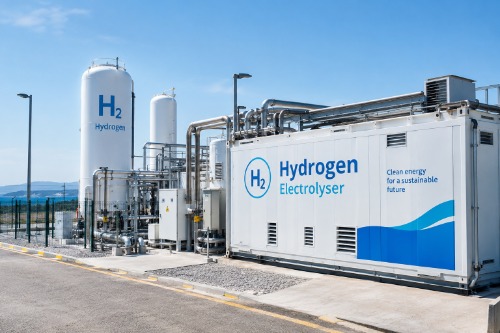
Portugal’s University of Évora is coordinating an international project to develop a renewable hydrogen value chain in the Alentejo region, including plans for a 15-megawatt (MW) electrolyser in Sines and demonstrations of hydrogen use in transport, buildings and energy storage.
The initiative, known as H2tALENT, aims to establish an integrated hydrogen valley linking production, distribution, storage and end-use applications. According to the University of Évora, the project is targeting annual renewable hydrogen production of more than 500 tonnes, with applications across industry, mobility and buildings. The project is funded through the European Union’s Horizon programme via the Clean Hydrogen Partnership.
H2tALENT began in March 2024 and is scheduled to run until February 2029, according to the European Commission’s CORDIS project database. The project has an eligible budget of approximately €9.95 million, including around €8.83 million in EU funding.
Sines to host planned 15 MW hydrogen electrolyser
Sines, in Portugal’s Setúbal district, is a central location in the project’s renewable hydrogen production plans. The proposed 15 MW electrolyser is intended to produce hydrogen using renewable electricity, with the wider initiative examining how the gas can be transported, stored and supplied to different users.
The project envisages testing hydrogen injection into the natural gas grid and/or transportation to end-use locations. This would allow participating organisations to evaluate parts of the hydrogen value chain, from production and distribution to storage and consumption.
Electrolysers use electricity to split water into hydrogen and oxygen. When powered by renewable electricity, the process can produce renewable hydrogen with lower associated emissions than conventional fossil-fuel-based production, depending on the electricity supply and the wider production pathway.
The project’s production target of more than 500 tonnes annually applies to H2tALENT’s stated programme ambitions; it should not be interpreted as the confirmed output of the planned 15 MW electrolyser alone.
Hydrogen demonstrations planned for transport and buildings
H2tALENT includes several proposed applications designed to assess how renewable hydrogen could be used in local energy systems.
In Alandroal, in the Évora district, the project plans to support the conversion of municipal and public-service vehicle fleets to hydrogen-powered systems. Mobility is one of the project’s intended demonstration areas, alongside industrial and building applications.
In the city of Évora, the project is examining hydrogen use for building heating. One planned demonstration involves blending hydrogen with natural gas at a municipal swimming pool, providing an opportunity to assess the technical requirements of using hydrogen in an existing heating application.
These demonstrations are intended to test practical deployment conditions rather than simply assess hydrogen production. Their outcomes will depend on equipment compatibility, safety requirements, operating performance and the availability of hydrogen supply.
Culatra Island to explore hydrogen storage and a renewable energy community
The project also includes plans for a renewable energy community on Culatra Island in the Algarve. The proposed system would integrate hydrogen storage with smart-grid technologies to help manage fluctuations in renewable electricity generation.
Under the concept, surplus electricity generated during periods of strong solar production would be used to produce renewable hydrogen. The hydrogen could then be stored and converted back into electricity when demand is higher and solar generation is lower.
This approach could provide a means of storing energy over time, although overall performance would depend on the efficiency of electrolysis, storage and reconversion, alongside the economics of the system.
The Culatra component extends H2tALENT beyond hydrogen production and industrial supply by examining how hydrogen might support local energy management and renewable electricity integration.
International consortium coordinates hydrogen valley development
H2tALENT brings together 29 partners from seven countries, including universities, companies, municipalities, technology centres and public entities. The University of Évora coordinates the project, which is intended to connect hydrogen production with distribution infrastructure and a range of end users.
The project forms part of a broader effort to demonstrate hydrogen valleys: regional systems that connect production, distribution, storage and consumption rather than developing isolated hydrogen assets.
Its work includes technical and economic assessment, system integration and planning for potential replication of lessons from the project in other regions. The consortium’s results will help determine which applications can progress from demonstration to wider deployment.
Bioenergy Business Analysis
H2tALENT’s approach reflects the growing emphasis on developing integrated hydrogen systems rather than focusing solely on electrolyser capacity. Connecting production with identifiable uses in mobility, buildings and energy storage could help test the practical conditions required to establish a functioning regional hydrogen market.
However, the project’s planned applications face different technical and commercial challenges. Vehicle fleets require suitable vehicles and refuelling infrastructure; building-heating demonstrations must address equipment compatibility and safety; and electricity storage through hydrogen involves conversion losses at both the production and reconversion stages.
The distinction between the project’s overall production target and the capacity of the planned Sines electrolyser is also important. Annual output will depend on operating hours, renewable electricity availability and system performance, while the economics will be influenced by electricity costs, infrastructure and demand from potential users.
The next milestones to watch include progress on the Sines electrolyser, implementation of the transport and building demonstrations, and operational results from the proposed Culatra energy community. These will help establish how much of the planned hydrogen value chain can be delivered within the project period and which elements may be suitable for wider commercial deployment.