


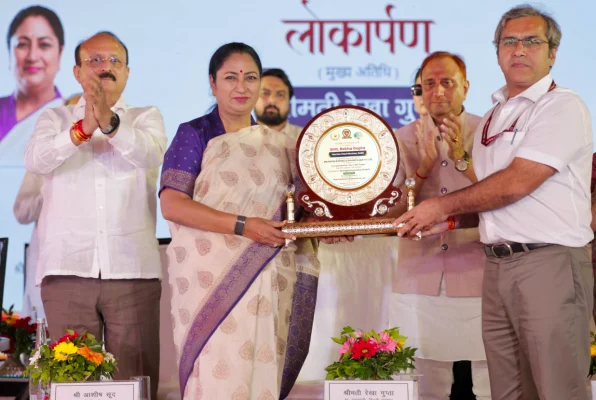
Delhi Chief Minister Rekha Gupta has inaugurated a ₹16 crore biogas plant at Goyla Dairy in southwest Delhi, with the facility designed to process approximately 200 tonnes of cattle dung daily into compressed biogas (CBG) and organic manure.
Located on Main Goyla Dairy Road, the plant is intended to address the disposal of cattle dung generated by local dairies, reduce the flow of animal waste into drains and support the capital’s waste-management and pollution-control efforts.
The project is linked to broader efforts to manage dairy waste under the Centre’s Clean Yamuna initiative. Gupta said Union Home Minister Amit Shah had recently set a target of processing 1,500 tonnes of dairy waste.
The facility is being developed under the Urban Development Fund of the Union Ministry of Housing and Urban Affairs. According to the announcement, it is intended to process cattle dung and municipal solid waste and convert the waste into fuel and organic fertiliser.
The Goyla Dairy facility has been designed to handle around 200 tonnes of cattle dung each day, addressing a waste stream associated with dairy operations in the area.
Improper disposal of cattle dung can contribute to blockages and pollution when waste enters drains. By collecting and processing the material, the project aims to improve local waste management while recovering useful products from organic waste.
Delhi Expands Its Biogas Infrastructure
Gupta said three biogas plants had been commissioned in Delhi over the preceding 18 months, with six additional plants planned.
The Goyla Dairy project forms part of a wider effort to develop infrastructure for processing organic waste within the national capital. Its stated objective combines waste treatment with the recovery of fuel and fertiliser, rather than treating cattle dung solely as a disposal problem.
The project’s original commissioning schedule had targeted September 17. The source report does not establish whether that date was met or provide a revised operational timeline.
Clean Yamuna Initiative Links Waste Treatment with Renewable Fuel Production
The Goyla Dairy plant is part of a broader effort to reduce the amount of untreated dairy waste entering Delhi’s drainage network and, ultimately, the Yamuna river system.
The Municipal Corporation of Delhi (MCD) has been developing dedicated biogas facilities to handle cattle dung generated by dairy clusters. A July 2026 report by PTI, published by ET EnergyWorld, described the Goyla facility as an under-construction compressed biogas plant and reported that MCD had set a September 17 deadline for commissioning.
The reported inauguration now marks a further development in the project’s timeline. Its actual operational throughput, however, will need to be assessed separately from its designed capacity.
The plant’s effectiveness will depend on a reliable collection and transport system, consistent feedstock supply, appropriate waste processing and arrangements for using or distributing the resulting gas and organic fertiliser.
MCD Directs Proper Collection and Transport of Cattle Dung
MCD Commissioner Sanjeev Khirwar had directed the implementing agency to establish suitable arrangements for collecting, transporting and processing cattle dung while preventing it from entering nearby drains, according to the supplied report.
The project therefore involves more than installing processing equipment. Its performance will also depend on the logistics of collecting waste from dairy operations and delivering it to the plant without allowing untreated material to enter the drainage system.
Delhi’s wider waste-management programme includes other organic-waste processing infrastructure. The city has previously commissioned a 200-tonne-per-day facility at Nangli Dairy, designed to convert cattle dung and biodegradable waste into compressed biogas and manure.
The Goyla facility adds another location-specific processing asset to this wider effort, although the supplied announcement does not establish its actual gas output or the volume of waste currently being processed.
Bioenergy Business Analysis
The Goyla Dairy project illustrates how urban waste-management infrastructure can contribute to renewable fuel production while addressing local pollution risks.
Its significance lies in linking three operational objectives: collecting cattle dung before it enters drains, processing the waste through a dedicated facility, and recovering useful products in the form of compressed biogas and organic manure.
Feedstock collection will be critical. A plant designed to process 200 tonnes of dung daily requires a dependable supply chain. Collection coverage, transport capacity and cooperation from dairy operators will influence how closely actual throughput approaches the facility’s rated capacity.
Gas production and utilisation will determine the energy contribution. The announcement identifies compressed biogas as an intended output but does not disclose the plant’s expected daily production, gas quality specifications or offtake arrangements. Those details will be important for assessing the facility’s contribution to renewable fuel supply.
Waste diversion must be measured, not assumed. Preventing dung from entering drains is a stated objective, but the environmental benefit will depend on how much waste is actually collected and treated, alongside appropriate management of process residues and wastewater.
The ₹16 crore investment provides a defined project cost, but it is not sufficient on its own to assess the plant’s economic performance. Operating costs, collection expenses, revenues from gas and manure, and plant utilisation will all affect its long-term viability.
For Delhi, the project offers a practical example of decentralised organic-waste processing. Its success should ultimately be judged by verified waste throughput, reliable biogas production and measurable improvements in waste handling—not solely by its inauguration or installed capacity.


