


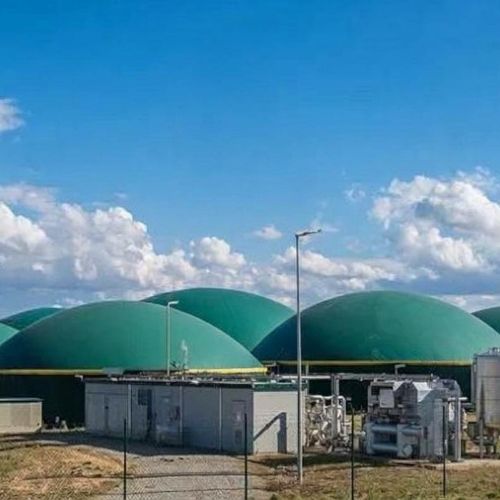
Gujarat has clarified that eligible compressed biogas (CBG) and bio-CNG plants classified under the revised White Category will no longer need separate Consent to Establish (CTE), Consent to Operate (CTO) or No Objection Certificate (NOC) documents from the state pollution control board, potentially simplifying project approvals and registration procedures.
The Gujarat Pollution Control Board (GPCB) issued a general notification on October 28, 2026, implementing the revised White Category classification introduced by the Central Pollution Control Board (CPCB).
The decision removes the requirement for eligible plants to obtain individual exemption letters or consent-related documents from GPCB, provided they use the specified raw materials and satisfy the prescribed conditions.
The clarification is also expected to address documentation requirements imposed by government departments and registration authorities when processing applications for CBG projects, including those submitted through the GOBARdhan Integrated Registration Portal.
Gujarat Implements Revised White Category Classification for CBG Plants
The October 28 notification follows a GPCB circular dated October 23, which published an updated list of 768 industrial activities and products classified under the White Category in accordance with CPCB’s revised classification.
Eligible CBG plants have been included under serial numbers 763 and 768 of the revised list, subject to specified feedstock requirements and other conditions.
Under the updated framework, qualifying units are exempt from obtaining CTE and CTO from the State Pollution Control Board.
Previously, project developers could face additional correspondence with GPCB to obtain individual clarification or exemption letters, even where their activities fell within the exempted category.
The latest general notification seeks to standardise the implementation of the exemption across Gujarat, removing the need for individual units to approach the pollution control board separately for such documentation.
GPCB Clarifies Documentation Requirements for Government Approvals
The notification also addresses requests from government departments, registration authorities and other agencies for CTE, CTO or separate NOC documents during the processing of CBG and bio-CNG project applications.
Such requirements have arisen in connection with registrations on the GOBARdhan Integrated Registration Portal and applications for other government permissions, registrations and financial assistance.
Under the clarification, authorities are not required to separately demand CTE, CTO or NOC documents from GPCB for eligible plants covered by the White Category exemption.
Instead, subject to applicable legal provisions and prescribed procedures, departments can proceed with processing applications on the basis of the required notification submitted to the pollution control board.
This clarification is intended to reduce administrative back-and-forth between project developers, pollution control authorities and government departments.
Eligible Plants Must Continue Environmental Self-Declaration
The exemption from CTE and CTO requirements does not remove the environmental compliance responsibilities of eligible CBG and bio-CNG facilities.
The framework is linked to Notification G.S.R. 703(E), issued by the Ministry of Environment, Forest and Climate Change (MoEFCC) on November 12, 2024. The notification provides for exemptions for specified industrial plants from the application of Section 25(1) of the Water (Prevention and Control of Pollution) Act, 1974.
White Category units must still follow the prescribed procedure for notifying the relevant State Pollution Control Board and submitting a self-declaration confirming compliance with applicable environmental requirements.
The CPCB’s environmental guidelines for compressed biogas plants also specify conditions under which certain plants using agricultural residues or animal waste can qualify for White Category classification. These include requirements relating to wastewater recycling, effluent management and the handling and use of digested slurry and sludge.
Consequently, the exemption is conditional on the plant meeting the applicable classification criteria and environmental safeguards. It should not be interpreted as a blanket exemption for all CBG facilities.
Bioenergy Business Analysis
Gujarat’s clarification could reduce an administrative bottleneck for compressed biogas developers, particularly those navigating multiple government approval and registration processes.
The distinction between regulatory consent requirements and environmental compliance is important. Removing the need for separate CTE and CTO documents can simplify project documentation, but operators must still demonstrate that their facilities satisfy the conditions attached to White Category classification.
However, the practical impact will depend on how consistently the revised requirements are implemented across government departments, registration authorities and financial assistance agencies.


