


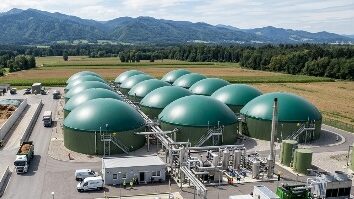
Malaysia-based Mestron Holdings Bhd is expanding its renewable energy operations after its indirect wholly-owned subsidiary, Liziz Biogas Sdn Bhd, received a revised Feed-in Approval from the Sustainable Energy Development Authority Malaysia (SEDA) for its biogas facility in Gua Musang, Kelantan.
Under the revised approval, the plant’s net electricity export capacity will increase by 18%, from 2.00 megawatts (MW) to 2.36 MW. Its approved installed capacity will rise by 13%, from 2.76 MW to 3.12 MW.
The approval also provides for higher feed-in tariffs (FiT), increasing the rate from 39.75 sen per kilowatt-hour (kWh) to 45 sen/kWh for the first 10 years, followed by 43 sen/kWh for the subsequent 11 years.
The revised tariff arrangement is scheduled to take effect from August 17, 2029, providing a 21-year framework for renewable electricity sales.
Mestron Plans Additional 1.5 MW Gas Engine Generator
To support the expansion, Mestron plans to install an additional 1.5 MW gas engine generator at the Gua Musang facility.
The company estimates that the expanded plant could generate annual revenue of approximately RM7.5 million once fully commissioned. The projected revenue will depend on operating performance and the facility’s ability to deliver electricity under the revised approval and tariff arrangements.
Managing Director Por Teong Eng said the approval would strengthen the commercial foundation of the company’s biogas operations and support its diversification beyond steel pole manufacturing.
“With higher approved electricity export capacity and an enhanced tariff structure, we are strengthening the commercial foundation of our biogas operations and creating greater visibility for long-term revenue generation,” he said.
Gua Musang Plant Converts Palm Oil Mill Effluent Into Renewable Electricity
The Gua Musang facility has supplied electricity to Tenaga Nasional Bhd (TNB) since March 2023.
The plant uses methane-rich biogas generated from palm oil mill effluent (POME) to produce renewable electricity for Malaysia’s national grid. POME is a wastewater stream generated during palm oil processing and can be treated through anaerobic digestion to produce biogas.
Capturing and using methane from the waste stream provides a route to generate electricity while reducing the release of methane into the atmosphere. Methane is a potent greenhouse gas, making its capture and utilisation an important component of waste management and emissions reduction strategies.
The expanded facility is expected to contribute to Malaysia’s National Energy Transition Roadmap by adding renewable electricity generation capacity and supporting the utilisation of agricultural and industrial waste streams.
Mestron Looks to Expand Renewable Energy Business
Mestron plans to pursue further opportunities in solar and biogas energy as it develops recurring revenue streams alongside its established manufacturing business.
The revised approval for the Gua Musang facility provides a longer-term framework for electricity sales, while the planned generator addition is intended to increase the plant’s generation capability.
The expansion forms part of the group’s broader effort to build its renewable energy portfolio in Malaysia.
Bioenergy Business Analysis
Mestron’s Gua Musang expansion demonstrates the commercial role of biogas in converting palm oil industry waste into grid-connected electricity. POME treatment can provide both a waste-management solution and a source of renewable energy, particularly in regions with substantial palm oil processing activity.
The revised feed-in tariff structure is an important part of the project’s economics. The increase from 39.75 sen/kWh to 45 sen/kWh for the first 10 years, followed by 43 sen/kWh for another 11 years, offers a defined tariff framework for the approved electricity exports. However, the revised rates are scheduled to take effect in August 2029, so the higher tariff should not be presented as an immediate revenue benefit.
The company’s RM7.5 million annual revenue estimate also needs to be viewed as a projection rather than confirmed income. Actual revenue will depend on electricity generation, plant availability, fuel supply, operating costs and the applicable tariff.


