


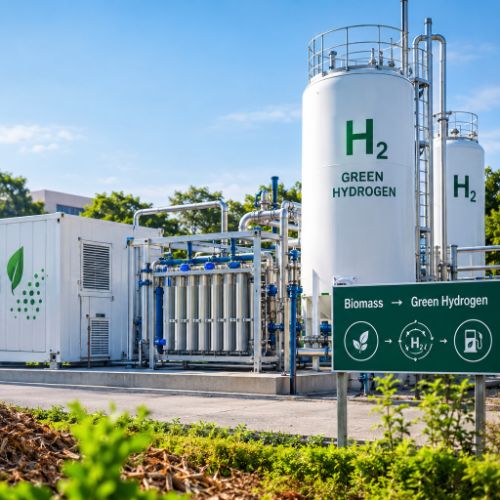
The Castile and León regional government has granted environmental authorisation to Iberhidrógeno, part of the Ibereólica Group, for a 25 MW green hydrogen production facility in Lerma, Burgos, Spain. The project is expected to produce between 2,000 and 4,000 tonnes of hydrogen annually using electricity supplied primarily by planned wind and solar installations.
The authorisation marks a key regulatory milestone for the Iberlerma H₂ project, which will use proton exchange membrane (PEM) electrolysis to produce hydrogen. The regional government published the approval through its Official Gazette, following the project’s earlier environmental assessment.
The proposed facility will occupy a 78.18-hectare site, with a planned constructed area of 13,290 square metres. Its electricity supply will primarily come from a wind farm and a solar photovoltaic installation planned within the project area.
Wind and solar power to support hydrogen production
The project is designed to integrate renewable electricity generation with hydrogen production. Electricity generated by the planned wind and solar facilities will be used directly by the electrolyser for self-consumption, reducing reliance on grid electricity.
The facility will also retain a connection to the electricity grid to cover periods when renewable generation is insufficient. Project documentation additionally considers the possibility of supplementing electricity supply through a power purchase agreement (PPA), depending on the generation capacity of the planned renewable installations.
The hydrogen production system will use PEM electrolysis, a technology in which electricity drives the separation of water into hydrogen and oxygen through an electrolyser containing a proton-conducting membrane.
Plant targets up to 4,000 tonnes of hydrogen annually
The proposed 25 MW installation is expected to produce between 2,000 and 4,000 tonnes of hydrogen per year.
Oxygen will be generated as a byproduct of the electrolysis process, with projected annual production of 31,152 tonnes. According to the environmental documentation, the oxygen could either be released into the atmosphere or packaged for commercial sale.
The plant is expected to consume approximately 87,600 cubic metres of water annually. Its estimated electricity consumption is 133.968 GWh per year.
Ibereólica expands renewable hydrogen project portfolio
The Lerma project forms part of Ibereólica Group’s wider renewable energy development activities. The company has a reported global portfolio exceeding 11 GW across wind, solar photovoltaic and renewable hydrogen-related developments in Spain, Chile, Peru and Brazil.
The group has previously described Iberlerma H₂ as an integrated renewable energy and hydrogen development combining a 25 MW electrolyser with 34 MW of wind generation and 15 MW of solar photovoltaic capacity.
Bioenergy Business Analysis
The Iberlerma H₂ project highlights the growing emphasis on integrating renewable electricity generation directly with hydrogen production. By combining wind and solar assets with a PEM electrolyser, the development is designed to reduce exposure to grid electricity and support the production of renewable hydrogen.
However, the project’s eventual economics will depend on more than its installed electrolysis capacity. The availability and consistency of renewable electricity, electrolyser utilisation, water sourcing, hydrogen storage and access to industrial offtakers will all influence its commercial viability.
The environmental authorisation advances the project through the regulatory process, but does not by itself confirm construction commencement, final investment approval or a secured hydrogen sales agreement. The next important developments will be progress on the associated renewable generation facilities, construction arrangements and identification of industrial customers.


