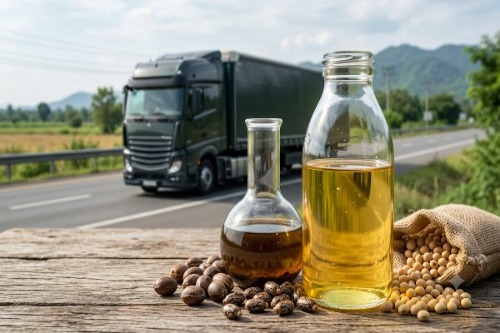
Indian Oil Corporation (IOC), Bharat Petroleum Corporation (BPCL) and Hindustan Petroleum Corporation (HPCL) have invited bids to procure 150 million litres of biodiesel for November 2026 to January 2027, setting a base purchase price of Rs 88 per litre as India seeks to expand the use of domestically produced renewable fuels in the transport sector.
The three state-owned oil marketing companies (OMCs) issued a joint tender on 30 October for 150,000 kilolitres of biodiesel, also known as B100, with bids due by 7 November 2026, according to a report by the Press Trust of India (PTI).
The procurement will cover supplies to 85 OMC locations across India and includes biodiesel produced from used cooking oil (UCO) and other feedstocks. The basic procurement price is Rs 88 per litre, excluding the Goods and Services Tax (GST) and transportation charges.
At the specified base price, the total procurement requirement represents an indicative value of Rs 1,320 crore before GST and freight costs.
Biodiesel procurement targets domestic fuel blending
The latest tender forms part of the oil marketing companies’ efforts to increase the availability and use of biodiesel alongside conventional diesel.
India has achieved its 20% ethanol blending target in petrol and is seeking to expand the role of other domestically produced biofuels in its transport fuel mix. Greater biodiesel adoption could provide another route to reduce fossil fuel consumption and exposure to imported crude oil.
Biodiesel is produced from feedstocks such as vegetable oils, animal fats and used cooking oil. It can be blended with conventional diesel, allowing oil companies to substitute a portion of petroleum-derived fuel with renewable alternatives.
The inclusion of UCO in the procurement also creates a potential market for waste-derived biodiesel. Collecting and processing discarded cooking oil from restaurants, hotels and food businesses can connect waste management operations with renewable fuel production.
The tender does not, however, specify a final biodiesel blending percentage or the individual purchase volumes of IOC, BPCL and HPCL. Actual procurement will depend on eligible bids, allocations and subsequent purchase orders.
Tender specifies two winter-grade biodiesel categories
The procurement includes separate cold-weather specifications to ensure that biodiesel meets the required performance conditions during the November-to-January supply period.
The total requirement is divided into two categories based on the maximum permitted Cold Filter Plugging Point (CFPP).
CFPP measures the temperature at which fuel begins to encounter filter-blocking problems under specified test conditions. The separate limits allow the OMCs to procure biodiesel suited to different climatic and operating conditions across their supply network.
The two categories will be allocated independently. If eligible supplier offers exceed the requirement in either category, the companies can proportionately reduce allocations to match the specified procurement volumes before distributing supplies across their respective locations.
Suppliers face certification and delivery requirements
The tender is open to registered suppliers that qualified through the OMCs’ earlier empanelment process.
Individual bidders must offer a minimum quantity of 100 kilolitres and provide mandatory type certification demonstrating compliance with the latest IS 15607 specifications.
Suppliers offering biodiesel manufactured from used cooking oil must additionally submit certification issued by CSIR-Indian Institute of Petroleum (IIP), Dehradun.
The tender also establishes minimum supply-performance requirements. Vendors must fulfil at least 90% of their prorated monthly purchase order or indent quantity, whichever is lower. Alternatively, suppliers that miss monthly targets must meet at least 95% of their overall prorated procurement requirement during the tender period.
Failure to meet the prescribed thresholds will attract a 3% reduction in the basic price for the short-supplied quantity.
Procurement price, freight and payment conditions
The OMCs have fixed the basic biodiesel purchase price at Rs 88 per litre, excluding GST and transportation costs. Biodiesel attracts GST at 5%, while freight payments will be calculated separately using distance-based slabs.
Other commercial conditions include:
- Security deposit: Suppliers must provide a deposit equivalent to 3% of the basic value of their allocated quantity.
- Transportation and insurance: Vendors are responsible for transportation and transit insurance.
- Payment period: Payments will be made within 21 days of receipt of material and submission of the required documentation.
- Delivery flexibility: OMCs can shift up to 20% of a supplier’s allocated quantity to an alternative delivery location at the applicable delivered cost.
- Additional procurement: Supplies of up to 10% above the original allocation may be accepted by mutual consent.
These provisions establish delivery, quality and financial obligations for participating biodiesel manufacturers and suppliers.
Bioenergy Business Analysis
The 150-million-litre procurement represents a significant near-term opportunity for India’s biodiesel industry, particularly manufacturers with established production capacity and access to reliable feedstock supplies.
The tender is also notable for its inclusion of used cooking oil alongside other biodiesel feedstocks. This creates an opportunity to strengthen the connection between waste management and renewable fuel production. However, expanding UCO-based biodiesel production will depend on the availability of traceable feedstock, organised collection networks, processing capacity and consistent quality certification.
The fixed base price of Rs 88 per litre provides suppliers with a reference point for evaluating the commercial viability of participating in the procurement. At the full tender volume, the indicative base procurement value is Rs 1,320 crore. However, this should not be interpreted as confirmed industry revenue, since actual allocations will depend on qualified bids and subsequent purchase orders.
The winter-grade specifications and delivery penalties also indicate that the OMCs are prioritising consistent fuel quality and supply reliability alongside procurement volumes. These requirements could favour suppliers with established quality-control systems, certification and distribution capabilities.