


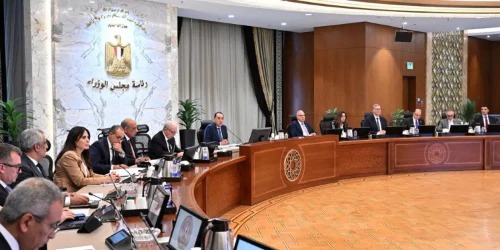
Egypt has approved a one-year extension of its memorandum of understanding (MoU) with Saudi Arabia’s ACWA Power for a planned green hydrogen and ammonia project in the East Nile region, while allocating 12 square kilometres of land in West Zaafarana to India-based ACURE for a 600 MW solar plant linked to its green ammonia development.
The decisions were taken by Egypt’s National Council for Green Hydrogen, chaired by Prime Minister Mostafa Madbouly. ACWA Power’s proposed project targets annual production of 66,000 tonnes of green hydrogen and 500,000 tonnes of green ammonia. ACURE’s solar facility will support the initial phase of a separate project targeting 100,000 tonnes of green ammonia annually.
Both decisions concern project development and cooperation arrangements. They should not be interpreted as confirmation of financial close or construction commencement.
ACWA Power project: From 2022 MoU to a further development extension
ACWA Power first signed an MoU in December 2022 to explore the development of a green hydrogen project in Egypt. In December 2023, it signed a framework agreement with the Sovereign Fund of Egypt, the Suez Canal Economic Zone, the Egyptian Electricity Transmission Company and the New and Renewable Energy Authority.
The 2023 agreement outlined an initial phase targeting 600,000 tonnes of green ammonia annually, backed by an investment exceeding US$4 billion. It also envisaged a possible second phase that could increase the project’s production scale to 2 million tonnes per year.
The latest figures reported for the East Nile project are 66,000 tonnes of green hydrogen and 500,000 tonnes of green ammonia annually. These figures differ from the original 2023 framework’s stated ammonia capacity. The latest announcement does not explain whether the difference reflects a revised project configuration, a change in scope or a different development phase.
The one-year extension is intended to keep the land available under the MoU while the project advances through development. It does not represent a final investment decision.
ACURE’s West Zaafarana project targets one million tonnes of green ammonia
The second decision concerns an Indian developer identified as ACURE in the Egyptian Gas & Energy Association’s report. The National Council for Green Hydrogen approved a 12 km² land allocation in West Zaafarana for a 600 MW solar power plant.
The solar facility will provide electricity for the pilot phase of the associated green ammonia project, which targets annual production of 100,000 tonnes. The wider development is planned to reach one million tonnes per year through successive phases.
The allocation is a project-development milestone, rather than confirmation that the solar plant or ammonia production facility is ready for construction. The available announcement does not specify the project’s investment, electrolyser capacity, expected electricity generation, construction schedule or commissioning date.
Egypt’s low-carbon hydrogen strategy and investment incentives
The latest decisions form part of Egypt’s broader effort to develop a low-carbon hydrogen industry and establish export markets for hydrogen and its derivatives.
Egypt approved its National Low-Carbon Hydrogen Strategy in February 2024. The strategy sets out plans to expand domestic hydrogen use, increase production and develop export opportunities. It also targets a renewable energy share of more than 42% in the country’s electricity mix by 2030.
The government has also introduced Law No. 2 of 2024 to support investment in green hydrogen and derivative production. The framework includes a cash investment incentive equivalent to 33%–55% of eligible income tax paid, VAT exemptions for qualifying project equipment and supplies, and other investment and regulatory benefits.
In February 2024, Egypt announced seven cooperation agreements with international developers for green hydrogen and renewable energy projects. The government estimated that the agreements could attract more than US$40 billion in investment over 10 years, including around US$12 billion for pilot phases and US$29 billion for first phases. These were anticipated investment figures, not confirmed project expenditure.
Bioenergy Business Analysis
The latest decisions show that Egypt continues to advance its green hydrogen and ammonia project pipeline through land allocations and extensions of cooperation agreements. However, these steps should be distinguished from financial close, construction and commercial production.
For ACURE, the proposed 600 MW solar plant is a major part of the renewable electricity supply plan for its initial ammonia production phase. The wider one-million-tonne annual target indicates the intended scale of the development, but its commercial viability will depend on the cost and reliability of renewable power, electrolyser performance, water availability, infrastructure and access to buyers.
For ACWA Power, the one-year extension provides additional time to progress the East Nile project. The difference between the production figures in its 2023 framework agreement and those reported for the latest project scope also makes clarification of the current design and development phases important.



