


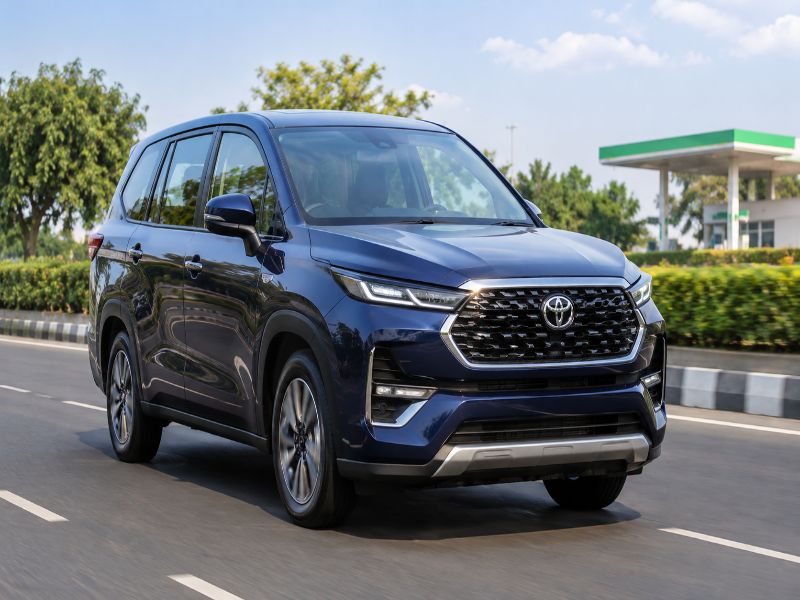
Toyota is set to launch a 100% bioethanol-powered version of its Innova in India on 26 November 2026, Union Road Transport and Highways Minister Nitin Gadkari has announced.
Speaking at the Powering the Next Mile conclave on 4 November, Gadkari said the vehicle would operate entirely on bioethanol and generate nearly 60% of its power through electricity while driving. He also estimated that its running cost could be equivalent to approximately ₹25–30 per litre of petrol.
The announcement adds to India’s efforts to expand the use of domestically produced biofuels in the transport sector and reduce dependence on conventional fossil fuels.
Toyota Innova to operate on 100% bioethanol
According to Gadkari, the upcoming Innova will use 100% bioethanol as its fuel, with an electrified powertrain contributing to its operation.
The minister said nearly 60% of the vehicle’s power would come from electricity while driving. However, the announcement did not provide a detailed technical breakdown of the powertrain, including its engine configuration, electric motor capacity or battery specifications.
The vehicle’s reported launch date is 26 November 2026. Further details on commercial availability, pricing and technical specifications have not been disclosed in the announcement.
Gadkari estimates petrol-equivalent running cost of ₹25–30
Gadkari said the vehicle’s running cost could be equivalent to approximately ₹25–30 per litre of petrol.
The estimate highlights the potential economic benefits of combining bioethanol with electrified vehicle technology. However, this figure should be understood as a petrol-equivalent running-cost comparison rather than the actual selling price of bioethanol.
The announcement did not provide the assumptions or calculation methodology behind the estimate, including fuel consumption, bioethanol pricing or comparative operating costs.
Bioethanol vehicles gain attention in India’s transport transition
The planned launch comes as India continues to promote ethanol blending and the wider use of biofuels in the transport sector.
Bioethanol can be produced from agricultural feedstocks and other eligible biomass-derived materials, offering an alternative to petroleum-based transport fuels.
The development of vehicles capable of operating on high ethanol concentrations could support demand for domestically produced ethanol beyond conventional petrol blending.
Toyota has previously demonstrated electrified flex-fuel vehicle technology in India through an Innova HyCross prototype. The reported November launch represents a further development in the country’s exploration of bioethanol-powered mobility.
The vehicle’s final specifications, commercial availability and performance details will be important in assessing its potential contribution to India’s ethanol-based transport strategy.
Bioenergy Business Analysis
Toyota’s reported launch could mark an important step in expanding ethanol’s role in India’s transport sector beyond conventional petrol blending. The combination of high-ethanol fuel capability and electrified propulsion also brings attention to the potential of hybrid flex-fuel technology.
However, the vehicle’s actual contribution to ethanol demand will depend on its commercial availability, pricing, fuel efficiency, technical performance and consumer adoption. The 26 November launch should provide an opportunity to assess these factors and determine how the technology fits into India’s broader ethanol adoption strategy.



