


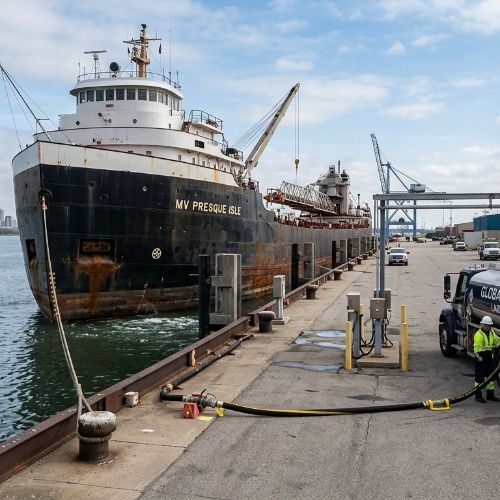
The Great Lakes Alliance for Sustainable Shipping (GLASS) is developing resources to help marine operators identify biodiesel suppliers and available fuel blends across the Great Lakes region, as efforts to expand renewable fuel use in commercial shipping continue.
The initiative includes an interactive map designed to connect shipping companies and vessel operators with fuel distributors offering biodiesel. The platform is expected to provide information on the blends available from individual suppliers, helping maritime businesses assess local fuel options.
Hanna Campbell, who helps manage the alliance through the Michigan Soybean Committee, told Brownfield that the map is being developed by volunteer working groups. The alliance is also preparing a marine biodiesel transition guide to support the sector’s adoption of the fuel.
Campbell highlighted the potential scale of marine fuel demand, noting that biodiesel could account for substantial volumes of fuel supplied to vessels operating in the region. She described its compatibility with existing diesel-powered vessels as an important advantage for maritime operators considering lower-carbon alternatives.
Supplier information and infrastructure development
The supplier map is part of GLASS’s broader effort to improve coordination between the agricultural and maritime sectors. Making information on fuel availability and blend specifications easier to access could help vessel operators identify potential suppliers and assess the practical requirements of switching fuels.
The alliance is also examining opportunities to expand Great Lakes marine infrastructure, particularly facilities and services that could support the movement of agricultural commodities.
Another area of work involves raising awareness of career opportunities in trucking and engaging younger people in the transport sector.
Campbell said the Michigan soybean checkoff welcomes participation from farmers and other stakeholders interested in supporting the alliance’s activities.
Biodiesel adoption in Great Lakes shipping
The mapping initiative comes amid growing interest in biodiesel as an alternative marine fuel. Its use in existing diesel-powered vessels can offer a route to lower lifecycle greenhouse gas emissions without requiring an immediate replacement of vessel fleets. However, the suitability of a particular blend depends on fuel specifications, engine and equipment compatibility, and operating requirements.
Commercial use is already taking place in the region. In an update published in August 2026, the Michigan Advanced Biofuels Coalition reported that Canada Steamship Lines used approximately 16,000 metric tonnes of B100—nearly 4.8 million gallons—across 10 Great Lakes vessels during the 2025 navigation season.
The experience provides an example of biodiesel use at commercial marine scale, although broader adoption will depend on fuel availability, supply logistics, cost and vessel-specific requirements.
By connecting fuel suppliers with shipping companies and supporting infrastructure development, GLASS is seeking to address some of the practical barriers to expanding biodiesel use across the Great Lakes–St. Lawrence Seaway system.



