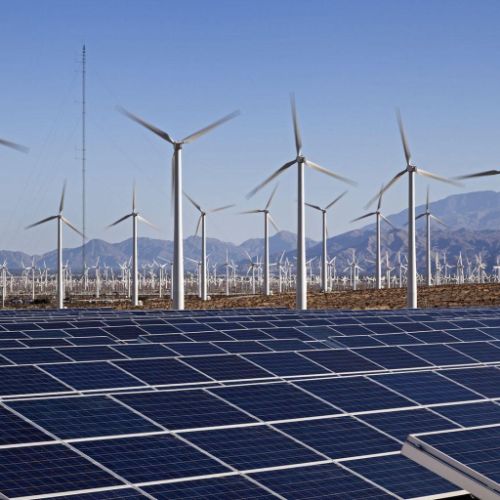
The Multilateral Investment Guarantee Agency (MIGA), part of the World Bank Group, has provided a US$190 million guarantee covering 95% of a US$200 million loan from Germany’s KfW Development Bank to the Development Bank of Kazakhstan (DBK). The financing will support a pipeline of utility-scale wind and solar projects through an open credit facility, as Kazakhstan seeks to diversify its electricity mix and reduce reliance on fossil fuels.
The guarantee-backed loan will enable DBK to provide long-term financing to eligible renewable energy developments in the country. MIGA said the facility is designed to support renewable electricity generation and strengthen Kazakhstan’s energy security amid rising industrial electricity demand.
The announcement was made on 12 November 2026, although MIGA’s project disclosure records that the guarantee was issued on 29 September 2026. The transaction is the first operation under a new three-year cooperation framework between MIGA and KfW, established to coordinate financing and guarantee products for sustainable investments.
KfW Loan to Finance Utility-Scale Wind and Solar Projects
Under the financing arrangement, KfW has extended a US$200 million non-revolving open credit facility to DBK, with MIGA providing a US$190 million guarantee against the non-honouring of financial obligations by a state-owned enterprise.
The guarantee covers 95% of the loan and protects scheduled principal repayments for a period of up to 20 years.
DBK will on-lend the proceeds to qualifying renewable energy projects through the open credit facility. Rather than financing one identified wind or solar installation, the arrangement will support a pipeline of eligible projects as they are identified and financed.
The facility is classified as 100% climate mitigation finance and is aligned with the objectives of the Paris Agreement, according to MIGA’s project documentation.
The financing is intended to mobilise long-term capital for renewable electricity generation while reducing the financial risks associated with lending to a state-owned development institution.
Kazakhstan Seeks to Diversify Coal-Dependent Electricity Mix
The financing comes as Kazakhstan continues to address the dominance of coal-fired generation in its electricity system.
According to Kazakhstan Electricity Grid Operating Company (KEGOC), the country had total installed power generation capacity of approximately 26.8 GW as of 1 January 2026. Thermal power plants accounted for approximately 20.5 GW, including 13.68 GW of pulverised coal capacity.
Wind power accounted for approximately 2.07 GW of installed capacity, while solar power contributed 1.35 GW. Annual report
The country’s electricity demand is also increasing. KEGOC reported that electricity consumption reached approximately 124.6 billion kWh in 2025, representing a 3.8% increase compared with 2024.
The development of additional renewable generation capacity is therefore expected to contribute to the diversification of electricity supply and support the country’s longer-term decarbonisation ambitions.
Kazakhstan has set a target of achieving carbon neutrality by 2060. The MIGA-backed financing is intended to support this objective by expanding access to long-term capital for renewable energy investments.
DBK Commits to Gender Action Plan for Renewable Energy Employment
Alongside renewable energy financing, DBK has committed to implementing a Gender Action Plan aimed at increasing women’s participation in the country’s renewable energy sector.
The plan includes targets for women’s representation in technical and managerial positions, as well as internship opportunities to support skills development and access to employment.
MIGA said the initiative is intended to promote more and better employment opportunities for women as Kazakhstan expands its clean energy industry.
The project also aligns with the World Bank Group’s Country Partnership Framework for Kazakhstan and its Gender Strategy 2024–2030.
MIGA and KfW Establish Three-Year Cooperation Framework
The Kazakhstan financing represents the first operation under a new three-year cooperation framework signed by MIGA and KfW in November 2026.
The agreement establishes a structure for identifying and supporting joint investment projects, sharing information, coordinating activities and exchanging knowledge.
The two institutions intend to coordinate their financing and guarantee products to mobilise private capital and support sustainable investments in developing economies.
The partnership is expected to explore additional opportunities in renewable energy, sustainable infrastructure and private-sector investment in Kazakhstan and other eligible markets.
MIGA Managing Director Tsutomu Yamamoto said the partnership would support Kazakhstan’s carbon neutrality ambitions while helping expand employment opportunities for women.
KfW Senior Vice President for Europe, Asia and Equity Investments Olaf Zymelka described the transaction as an important milestone in cooperation between development finance institutions.
DBK Chairman of the Management Board Marat Yelibayev said the loan would provide additional resources for utility-scale wind and solar developments, helping diversify the country’s electricity mix and strengthen local renewable energy expertise.
Bioenergy Business Analysis
The MIGA-backed financing arrangement highlights the role of development finance institutions in reducing investment risks and mobilising capital for renewable energy expansion in emerging markets.
For Kazakhstan, the US$200 million KfW credit facility provides a financing channel for multiple utility-scale wind and solar projects rather than a single predetermined development. This structure gives DBK flexibility to direct long-term financing towards eligible projects as they progress through development.
MIGA’s US$190 million guarantee is particularly relevant because it covers 95% of the loan against the specified risk of non-honouring of financial obligations by a state-owned enterprise. This risk coverage can strengthen the financing structure and support access to long-term capital.
Related: Türkiye and China sign US$15 billion renewable energy MoU for 7 GW of solar and wind projects