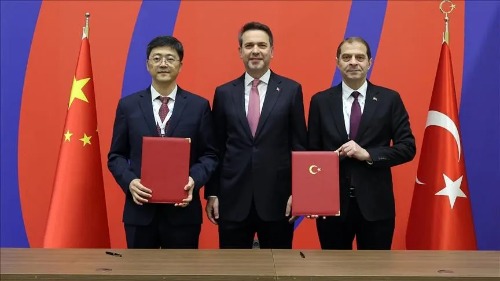
Türkiye and China have signed a renewable energy cooperation memorandum of understanding (MoU) envisaging approximately US$15 billion in investment to develop 7,000 megawatts (MW) of solar and wind power capacity, alongside new energy storage systems and 4,000 MW of electricity transmission infrastructure.
The MoU was signed between Türkiye’s Ministry of Energy and Natural Resources and China’s National Energy Administration on the sidelines of the 31st Conference of the Parties to the United Nations Framework Convention on Climate Change (COP31), held in Antalya, Türkiye.
Energy and Natural Resources Minister Alparslan Bayraktar announced the agreement on 12 November 2026 through a post on X. He said the cooperation would support renewable energy deployment, technology transfer and the development of domestic wind turbine equipment manufacturing.
Türkiye–China MoU targets 7,000 MW of solar and wind capacity
Under the proposed cooperation, the two countries aim to develop a combined 7,000 MW of solar and wind power plants in Türkiye. The framework also includes new energy storage systems and 4,000 MW of electricity transmission infrastructure.
In his statement, Bayraktar said:
“At COP31, a ‘Memorandum of Understanding on Cooperation in the Field of Renewable Energy’ was signed with the National Energy Administration of the People’s Republic of China. Under this agreement, which envisages a massive investment of approximately US$15 billion in our country, we aim to develop a total of 7,000 megawatts of solar and wind power plants, new energy storage systems and 4,000 megawatts of electricity transmission infrastructure.”
The inclusion of storage and transmission infrastructure alongside new generation capacity indicates that the cooperation extends beyond renewable power development to supporting the wider electricity system.
However, the announcement does not specify individual project locations, the split between solar and wind capacity, participating developers, financing arrangements or an implementation schedule. The US$15 billion figure therefore represents the investment envisaged under the MoU, rather than confirmed capital expenditure already deployed.
Agreement includes technology transfer and domestic manufacturing
The cooperation is also intended to support technology transfer and strengthen Türkiye’s domestic renewable energy supply chain, particularly through the local production of wind turbine equipment.
Bayraktar said:
“This cooperation will not only increase our renewable energy capacity but will also facilitate technology transfer, making a significant contribution to the domestic production of wind turbine equipment in our country and the development of our local industry.
“In line with our National Energy 2040 vision, I hope this historic agreement, which will strengthen our energy supply security and accelerate our green transition, brings benefits to our countries.”
The proposed technology transfer and manufacturing cooperation could create opportunities for domestic suppliers as Türkiye expands its renewable energy infrastructure. However, the announcement does not identify specific manufacturing investments, production facilities or technology partners.
Renewable energy cooperation forms part of Türkiye’s energy transition plans
The MoU aligns with Türkiye’s wider efforts to expand renewable generation and strengthen its electricity infrastructure. The proposed 7,000 MW of solar and wind capacity, together with storage and transmission development, would support the integration of additional variable renewable electricity into the grid if the projects proceed.
The agreement also reflects growing cooperation between Türkiye and China in clean energy and related infrastructure. Its eventual impact will depend on how the memorandum is translated into specific projects, financing arrangements, technology-transfer commitments and implementation timelines.
Bioenergy Business Analysis
The Türkiye–China MoU is notable for combining renewable power generation targets with storage, transmission infrastructure and domestic manufacturing ambitions. The proposed 7,000 MW of solar and wind capacity represents the generation component, while the additional 4,000 MW of transmission infrastructure points to the importance of grid expansion in accommodating new renewable electricity.
The key development to monitor will be the transition from the cooperation framework to bankable projects, with disclosed investment schedules, project locations, financing arrangements and delivery responsibilities. Until these details emerge, the US$15 billion figure should be treated as an envisaged investment value rather than a completed investment commitment.
Related: MIGA guarantees US$200 million KfW loan for Kazakhstan renewable energy projects