British hydrogen technology developer HiiROC is exploring potential partnerships with Portuguese industrial and energy companies to assess applications for its Thermal Plasma Electrolysis (TPE) technology, which converts methane into hydrogen and solid carbon.
The company’s patented process is designed to use around one-fifth of the electricity required by conventional water electrolysis, according to HiiROC. It could offer an alternative hydrogen production route for industrial users seeking to reduce emissions and energy consumption.
HiiROC has not announced a project, investment or facility in Portugal. The company is looking to explore potential applications in the country’s industrial and energy sectors.
Thermal Plasma Electrolysis offers an alternative hydrogen route
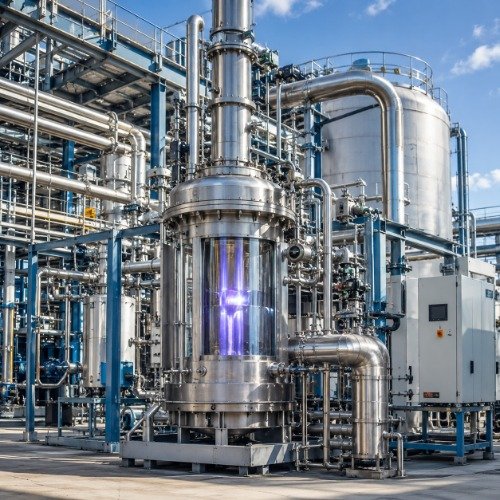
HiiROC’s TPE technology uses plasma torches to separate methane into hydrogen and solid carbon, rather than producing carbon dioxide directly during the methane-splitting reaction.
The approach differs from conventional steam methane reforming, which uses natural gas to produce hydrogen and generates carbon dioxide, and water electrolysis, which uses electricity to split water into hydrogen and oxygen.
According to HiiROC, its process requires substantially less electricity than conventional water electrolysis. The technology also generates solid carbon, which could potentially be used in industrial products such as rubber, plastics, coatings and other carbon-based materials.
The commercial viability of the process will depend on hydrogen production costs, feedstock sourcing, electricity consumption, methane leakage and demand for the solid carbon by-product.
Technology development moves into industrial trials
HiiROC has been testing its technology across industrial applications. In September 2025, it completed a hydrogen-to-power trial with Centrica at Brigg Energy Park in North Lincolnshire, where hydrogen produced using TPE was blended into the fuel supply of an existing gas-fired power plant.
The demonstration used a 3% hydrogen blend for one hour, testing the potential integration of the technology with existing power-generation infrastructure.
The company has also explored biomethane as a feedstock through work with partner EPi. Using biomethane derived from organic materials could potentially support lower-carbon hydrogen production, depending on feedstock sourcing, emissions across the supply chain and the fate of the solid carbon produced.
HiiROC has additionally pursued industrial applications with cement manufacturer Cemex, an industry where hydrogen could potentially contribute to reducing emissions from fuel combustion.
Portugal’s industrial base offers potential applications
Portugal has been developing its hydrogen sector, particularly around industrial hubs such as Sines, while exploring hydrogen’s role in industrial decarbonisation.
Potential applications for HiiROC’s modular technology could include industrial facilities that require hydrogen and have access to methane-based feedstocks. Its modular design could enable hydrogen production closer to the point of consumption, potentially reducing dependence on transportation and storage infrastructure.
The Estarreja chemical complex and wider industrial areas around Porto are among Portugal’s established industrial locations with hydrogen-related activity and manufacturing demand. However, HiiROC has not identified a specific Portuguese site or customer for its technology.
Mark Robertshaw, chairman of HiiROC, said Portugal’s hydrogen development and industrial base made the country an interesting market for the company to explore.
The potential partnership discussions remain exploratory, with no deployment commitments announced.
Commercial scale and emissions performance remain key tests
HiiROC’s TPE technology offers an alternative to conventional hydrogen production by separating carbon from methane in solid form. However, producing solid carbon instead of directly releasing carbon dioxide does not automatically make the process carbon-free across its entire lifecycle.
Its environmental performance will depend on the source of methane, electricity used, control of methane leakage, process efficiency and whether the solid carbon is stored securely or incorporated into products that retain it over time.
The next stage for the technology will be demonstrating that its electricity and emissions advantages can be maintained at commercial scale while establishing viable markets for both hydrogen and its solid carbon output.
Potential partnerships in Portugal could give HiiROC another market to explore as it seeks industrial applications for Thermal Plasma Electrolysis beyond its existing demonstrations.