


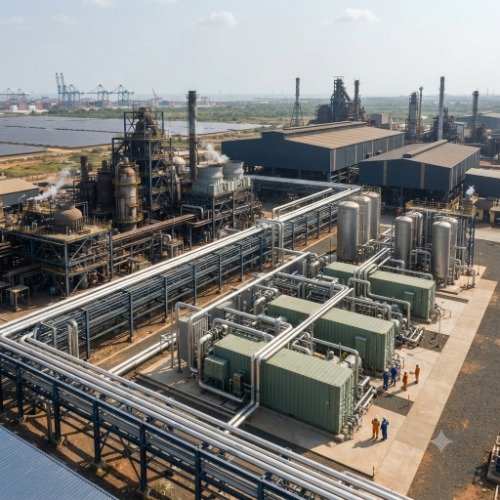
The India Hydrogen Alliance (IH2A) has urged the Government of India to establish a ₹1,400 crore (approximately US$150 million) Contract for Difference (CfD) funding pool to support green hydrogen offtake and accelerate industrial project development.
In a submission to the government dated 19 November 2026, the industry alliance proposed using the funding mechanism to support the offtake of 100,000 metric tonnes of green hydrogen at a proposed support level of US$1.50 per kg. According to IH2A, the framework could help enable an additional 750 MW of electrolyser capacity for domestic industrial projects.
The proposal forms part of a five-point agenda aimed at addressing the slow pace of green hydrogen project development and limited industrial demand in India. IH2A has also called for a review of the National Green Hydrogen Mission (NGHM), with greater emphasis on demand-side incentives and measures to secure long-term purchase commitments from industrial consumers.
CfD mechanism proposed to improve green hydrogen project economics
A Contract for Difference is a financial arrangement designed to reduce the price risk associated with emerging energy markets. Under such a mechanism, a public funding agency can compensate a producer or eligible participant when the market price falls below an agreed reference price, subject to the terms of the contract.
IH2A is proposing this approach to address the cost gap between green hydrogen and conventional hydrogen supplies. The alliance argues that industrial consumers are reluctant to commit to long-term green hydrogen purchases while production costs remain relatively high.
Without reliable offtake agreements, developers can find it difficult to secure financing, reach Final Investment Decision (FID) and place equipment orders. The proposed ₹1,400 crore funding pool is intended to help bridge this commercial gap and encourage early industrial adoption.
The alliance has identified refineries, fertiliser plants, steelmakers and chemical manufacturers as key potential users of green hydrogen.
Five-point agenda targets industrial demand and project development
Alongside the CfD proposal, IH2A has outlined measures to strengthen demand and support the development of India’s hydrogen market.
One recommendation is to introduce a 10% Green Hydrogen Purchase Obligation by 2030 for large industrial units in the refinery, fertiliser, steel and chemical sectors. The proposed obligation is intended to create a predictable market for producers and encourage industrial consumers to move towards lower-carbon hydrogen supplies.
The alliance has also called for support for industrial hydrogen hubs, including the aggregation of procurement by refineries and incentives for early adopters to expand existing projects. Shared infrastructure and coordinated demand could help improve the economics of hydrogen production, storage and distribution.
Another proposal is to introduce a National Low Carbon Hydrogen Standard alongside the existing Green Hydrogen Standard. This would provide a framework for recognising hydrogen production pathways with different emissions intensities.
IH2A has further recommended government-led green steel procurement measures, including minimum green steel thresholds in public contracts. It has also called for a national skills development programme covering hydrogen production, storage, infrastructure and industrial applications.
IH2A identifies offtake as a barrier to project investment
Amrit Singh Deo, IH2A Secretariat lead, said the lack of demand-side incentives and mandates had contributed to slow project development. He argued that without long-term offtake agreements, developers face difficulties reaching FID and progressing to equipment orders.
The alliance has pointed to Japan’s CfD framework as a model that India could consider when designing support for early adopters and industrial hydrogen purchases.
The latest submission builds on IH2A’s earlier calls for greater public funding for the National Green Hydrogen Mission, shared hydrogen infrastructure and the development of hydrogen hubs. In January 2025, the alliance had recommended an additional US$2.5 billion allocation to the mission to support demand-side incentives and infrastructure development.
Operating hydrogen and steel hub highlights industrial applications
IH2A also released a short film titled Water and Steel: India’s Green Hydrogen Story to mark the first anniversary of operations at the Vijayanagar Green Hydrogen and Steel Hub, developed and operated by JSW Energy and JSW Steel.
Prabodha Acharya, Chief Sustainability Officer at JSW Group and an IH2A Steering Group member, said operating the hub had provided experience in integrating renewable energy, hydrogen production and pipeline infrastructure with direct reduced iron (DRI) steelmaking.
He also referred to productivity improvements and carbon reductions at the DRI plant using green hydrogen.
The alliance views operating experience from industrial hydrogen applications as important for developing expertise that can be shared across India’s steel and wider manufacturing sectors.
The proposed CfD fund and policy measures remain recommendations submitted to the government. Their implementation will depend on government decisions, funding arrangements and the design of any future support mechanism.



