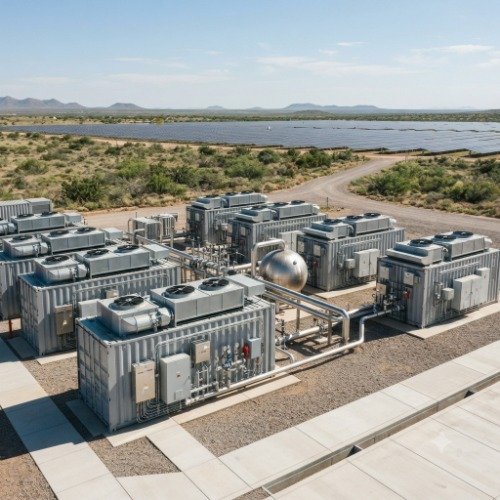
PowerCell Group has secured an order worth SEK 440 million from a US electric cooperative for a utility-scale hydrogen fuel cell installation in the southern United States. The project will have 27 MW of installed fuel cell capacity and deliver 20 MW of rated power, supporting the conversion of stored green hydrogen into electricity.
The agreement was signed through PowerCell’s US subsidiary, PowerCell Inc. The installation will use the company’s containerised PowerPod 3000 platform, with deliveries expected over an 18–24-month period.
The project will form part of the customer’s renewable energy system, which uses surplus solar electricity to produce green hydrogen. The hydrogen will be stored and subsequently converted back into electricity through proton exchange membrane (PEM) fuel cells when solar generation is unavailable or insufficient to meet demand.
Hydrogen storage to extend the availability of solar power
The planned installation is designed to address the intermittency of solar generation by allowing excess electricity to be stored in the form of hydrogen for later use.
During periods of surplus solar generation, electricity will be used to produce green hydrogen through electrolysis. The stored hydrogen will then be supplied to PowerCell’s fuel cell installation, where an electrochemical reaction will generate electricity when required.
This arrangement enables renewable electricity generated during daylight hours to be used beyond the immediate period of production. It also provides dispatchable power during periods of low solar output or increased electricity demand.
The project illustrates how hydrogen-based energy storage can complement other storage technologies, particularly where longer-duration energy storage is required.
PowerCell to supply 27 MW installed fuel cell capacity
The installation will be based on PowerCell’s containerised PowerPod 3000 platform, which integrates the company’s PS190 fuel cell systems with power conversion equipment, cooling systems, DMC and control and Energy Orchestration technologies.
The project combines 27 MW of installed fuel cell capacity with 20 MW of rated power. PowerCell will supply and integrate the fuel cell power generation installation within its agreed contractual scope.
The parties also intend to enter into a dedicated service level agreement before commissioning.
Delivery is expected over 18–24 months. The company announcement does not specify a final commissioning date or provide a detailed construction schedule.
Fuel cells could support water recovery alongside electricity generation
In addition to producing electricity, the fuel cell installation will generate water through the electrochemical conversion of hydrogen and oxygen.
PowerCell said the system could create opportunities to recover and reuse this water within the wider energy installation, potentially reducing its net water requirements.
The practical benefits will depend on the final system configuration, operating conditions, water recovery arrangements and treatment requirements. The company has not disclosed a projected water recovery volume or confirmed specific applications for the recovered water.
The combination of electricity generation and potential water recovery could be relevant in regions where water availability is an important consideration for energy infrastructure.
Power generation becomes a second major growth segment for PowerCell
PowerCell CEO Richard Berkling described the order as an important step in establishing Power Generation as the company’s second major business segment alongside Marine.
He said the project demonstrates the potential of the company’s PEM fuel cell technology, system integration and Energy Orchestration capabilities in utility-scale applications.
The contract represents an expansion of PowerCell’s activities into larger stationary power generation systems, using hydrogen to support renewable energy integration and electricity supply when generation and demand do not coincide.
The project will depend on the delivery and integration of the fuel cell installation, alongside the customer’s hydrogen production and storage infrastructure, to achieve its intended role in the renewable energy system.