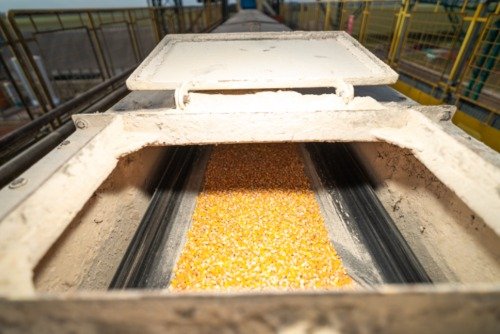
Brazilian state-owned energy company Petrobras has agreed to acquire a 42% stake in corn ethanol producer Neomille S.A. from the CerradinhoBio group in a transaction valued at R$2.8 billion (approximately US$500 million).
Announced on 23 November 2026, the agreement marks Petrobras’ return to Brazil’s ethanol production sector and forms part of its strategy to expand its presence in renewable and low-carbon fuels.
Neomille operates two corn ethanol plants in Brazil’s central-west region, located in Chapadão do Céu in Goiás state and Maracaju in Mato Grosso do Sul. The facilities have a combined annual ethanol production capacity of approximately 800 million litres, with planned expansions expected to increase this to around 1.5 billion litres by 2028.
CerradinhoBio will retain a 58% stake and continue as Neomille’s controlling shareholder, while Petrobras will hold the remaining 42%. Completion of the transaction remains subject to contractual conditions, including approval by Brazil’s Administrative Council for Economic Defence (CADE).
R$2.8 billion transaction includes investment in Neomille
The transaction comprises both a capital injection into Neomille and the purchase of shares held by existing shareholders.
According to Petrobras’ transaction announcement, R$1.8 billion will be invested directly in Neomille through the subscription of newly issued shares. The remaining amount relates to the acquisition of existing shares and includes a contingent earn-out payment of up to R$397 million, subject to agreed conditions and contractual price adjustments.
The partnership will also give Petrobras an active role in Neomille’s management. The companies intend to strengthen commercial cooperation across ethanol, technical corn oil (TCO), diesel, urea and sulphur.
Petrobras said the investment is aligned with its strategy of diversifying its energy portfolio and expanding its participation in lower-carbon fuel markets.
Neomille plans to expand ethanol production capacity
The investment is expected to support expansion projects at both Neomille facilities.
The company plans to increase corn processing capacity at its Chapadão do Céu plant from 1.1 million tonnes to 1.7 million tonnes annually. At the Maracaju facility, processing capacity is expected to rise from 675,000 tonnes to 1.5 million tonnes per year.
Petrobras and CerradinhoBio estimate that the expansion programme could increase Neomille’s ethanol production capacity by approximately 80% over the next two years, taking annual output towards 1.5 billion litres.
In addition to ethanol, the facilities produce corn-processing co-products, including dried distillers grains (DDG) and corn oil. The latter could provide an additional feedstock opportunity for the production of advanced fuels.
Ethanol and corn oil could support future SAF production
The partnership also creates potential links between Neomille’s output and Petrobras’ plans for sustainable aviation fuel (SAF).
Petrobras identified two possible pathways for using products from the corn ethanol production chain. Ethanol could serve as a feedstock for SAF production through the Alcohol-to-Jet (ATJ) pathway, while corn oil, a co-product of the industrial process, could be processed through the Hydroprocessed Esters and Fatty Acids (HEFA) pathway.
The two routes use different feedstocks and conversion processes. ATJ converts alcohols such as ethanol into hydrocarbons suitable for aviation fuel, while HEFA processes lipid-based materials, including oils and fats, into renewable fuels.
Petrobras described the potential combination of these feedstocks as an opportunity to integrate its biofuel supply chain with future demand for sustainable aviation fuels. The company has not, however, announced a specific SAF production project or volumes linked to Neomille’s output.
The company also highlighted the potential use of biogenic carbon dioxide generated during ethanol production. This CO₂ could become a feedstock for future synthetic fuel pathways and other low-carbon energy applications.
Petrobras links ethanol production with logistics expansion
The Neomille investment follows Petrobras’ 12 November 2026 agreement to acquire the remaining 70% stake in Logum Logística, an ethanol transportation and storage company in Brazil.
Petrobras already holds 30% of Logum and has agreed to pay R$620 million for the remaining shares held by Raízen Energia, Copersucar and Uniduto Logística. The transaction would give Petrobras full ownership of the company once completed, subject to conditions including CADE approval.
Logum operates a pipeline network of more than 1,000 kilometres, connecting ethanol-producing regions with storage facilities, distribution centres and export infrastructure.
Petrobras expects the integration of production and logistics assets to improve the movement of ethanol and create operational efficiencies. The two agreements together point to a broader strategy to expand the company’s presence across Brazil’s ethanol value chain, from production to transportation and commercialisation.