


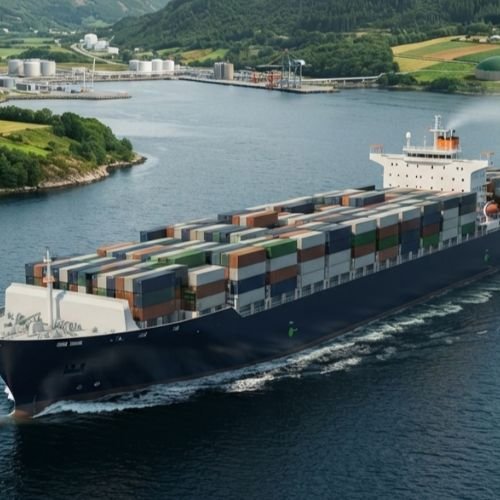
Norwegian shipping company North Sea Container Line (NCL) has extended its bio-methanol supply arrangement with energy company Equinor through 2027, securing continued deliveries of the renewable marine fuel for two of its methanol-capable container vessels.
Under the extended agreement, Equinor will continue supplying bio-methanol to NCL Vestland and NCL Nordland directly from its Tjeldbergodden plant in Norway. The extension follows the existing supply arrangement for 2026.
Equinor produces the bio-methanol using biomethane derived from manure-based biogas. The arrangement connects agricultural waste-based renewable gas production with the production of lower-carbon marine fuel for commercial shipping.
Manure-based biogas supports bio-methanol production
Equinor’s production process uses biomethane obtained from manure-based biogas. The biogas is upgraded to biomethane and injected into the existing natural gas grid.
Equinor subsequently withdraws gas from the grid to produce bio-methanol at its Tjeldbergodden facility under a mass-balance system.
Because the gas grid carries both biomethane and natural gas, the renewable content is accounted for through Europe’s biogas certificate system. This links the biomethane injected into the network with the bio-methanol produced, while preventing the renewable attributes from being counted more than once.
The fuel is certified under the International Sustainability and Carbon Certification (ISCC EU) scheme in accordance with the sustainability criteria of the EU Renewable Energy Directive.
Mass-balance system enables use of existing infrastructure
The mass-balance approach allows renewable gas attributes to be tracked through an interconnected gas network without requiring the physical separation of biomethane molecules from natural gas.
According to Equinor, this model enables producers to use existing facilities and expand bio-methanol production without having to construct dedicated infrastructure.
The approach provides a route for connecting biomethane production with industrial fuel manufacturing, while using certification and accounting systems to verify the renewable share of the resulting fuel.
Equinor expands bio-methanol supply to shipping companies
The NCL extension follows Equinor’s other bio-methanol supply agreements with shipping operators.
In March 2026, Equinor signed a two-year bio-methanol supply agreement with shipping company Wallenius Wilhelmsen. Deliveries began in 2026, with the fuel supplied to the company at the ports of Zeebrugge and Antwerp.
Equinor had also agreed in 2023 to supply Danish shipping company Maersk with bio-methanol for the initial operating period of its methanol-capable vessels. The agreed supply period ran from September 2023 until the end of the first half of 2024.
These arrangements reflect the development of supply relationships between renewable fuel producers and shipping companies seeking alternatives to conventional marine fuels.



