


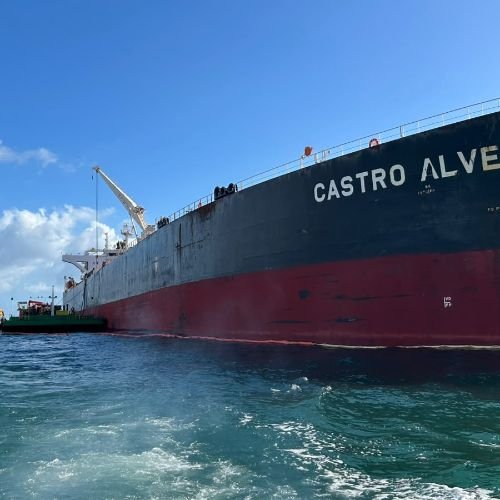
Brazilian logistics company Transpetro has completed the first B30 biobunker supply operation at the Port of Suape in Pernambuco, delivering 520 tonnes of the marine fuel blend to the vessel Castro Alves on 22 November 2026.
The operation marks the entry of the port into Petrobras’ Green Route initiative, which aims to expand the availability of marine fuels containing renewable components. B30 bunker fuel contains 30% biodiesel blended with conventional marine fuel.
The fuel was delivered by barge at Liquid Bulk Pier 3B (PGL 3B), marking the first operation of this type at Transpetro’s Suape Waterway Terminal. The Castro Alves belongs to Transpetro’s own fleet.
Suape begins B30 marine fuel distribution
The first delivery follows the arrival of blending components at Suape on 11 November. The vessel Queen of Doria transported B100 biodiesel from Aratu, Bahia, alongside very low sulphur fuel oil (VLSFO), providing the components required to formulate up to 8,000 tonnes of B30 bunker fuel.
The 520-tonne supply to the Castro Alves was the first completed bunkering operation using the blend at the port. The port authority said a second supply was expected during the week following the initial delivery.
The operation also introduced barge-based bunkering at Liquid Bulk Pier 3B. This provides an additional method for supplying vessels with marine fuel blends containing renewable components.
Petrobras’ Green Route expands to Northeast Brazil
The first supply brings Suape into Petrobras’ Green Route programme, which is intended to expand the infrastructure for distributing marine fuels with renewable content to the company’s fleet.
Following the operation, Suape became the only port complex in Brazil’s North and Northeast regions distributing biobunker and the second port in the country to participate in the programme, according to the port authority.
The wider initiative also envisages participation by terminals at Rio Grande in Rio Grande do Sul, and Santos and São Sebastião in São Paulo state, during 2026 and 2027.
The programme aims to reduce the carbon intensity of maritime transport by incorporating renewable fuel components into marine bunker supplies. The use of biodiesel in the blend provides a renewable component alongside conventional low-sulphur marine fuel.
Fuel operation coincides with growth in Suape cargo handling
Suape’s entry into the renewable marine fuel market comes amid strong cargo-handling activity at the port.
Between January and October 2026, the port handled 24.02 million tonnes of cargo, according to its announcement. Fuels and petroleum derivatives accounted for 16.54 million tonnes, representing 68.8% of the total volume handled during the period.
The existing infrastructure for handling petroleum products and marine fuels provides a foundation for expanding the port’s role in renewable-content bunker distribution.