

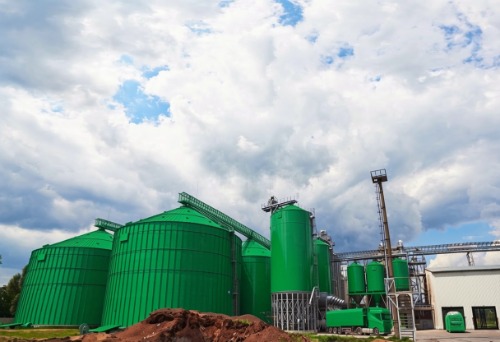
A former waste pre-treatment facility in Northwich, Cheshire, is set to be redeveloped into a biomethane production plant after Cheshire West and Chester Council’s planning committee unanimously approved the project.
The decision, taken on 6 October, clears the way for Northwich Biogas, a subsidiary of Copenhagen Infrastructure Partners (CIP), to convert the existing Lostock Gralam site into a dedicated facility for processing industrial organic and food waste.
CIP acquired the site from Ørsted in 2025.
177,000 tonnes of organic waste to be processed annually
The proposed facility is designed to process up to 177,000 tonnes of industrial organic and food waste a year.
Feedstocks will include food-production effluents, wash waters, fat-trap waste and other organic liquids. The material will be treated through anaerobic digestion to produce biogas, which will then be upgraded to biomethane for injection into the UK national gas grid.
The developer estimates that the resulting biomethane supply will be sufficient to heat more than 10,000 homes annually.
The project is also expected to create up to 25 jobs once operational.
Existing waste site to be converted
The development will involve a comprehensive refurbishment of the existing facility, replacing its current municipal solid waste pre-treatment operation with infrastructure dedicated to biomethane production.
Planned equipment includes a new anaerobic digestion tank, biomethane upgrading systems and carbon capture infrastructure.
In addition to renewable gas production, the facility is expected to capture approximately 28,100 tonnes of biogenic CO₂ annually.
The recovered CO₂ is intended to be supplied to customers in sectors including food and beverage production and manufacturing, creating a second potential output stream from the organic-waste processing operation.
Odour concerns addressed through planning conditions
The movement of waste to the site will take place by road, with the project subject to a limit of 96 heavy goods vehicle movements per day.
Odour was the principal issue raised during the planning consultation, with several parish councils and Northwich Town Council submitting objections.
Planning officers told the committee that mitigation measures would be implemented to manage odour and air-quality impacts. Technical assessments have also been undertaken to establish appropriate operational limits for the facility.
The unanimous approval allows the former waste-treatment site to be repurposed for renewable gas production while retaining an industrial use for the location.
Bioenergy Business Analysis
The Northwich project demonstrates how existing waste-treatment infrastructure can be repurposed into larger-scale biomethane facilities while creating additional value from difficult organic waste streams. Its proposed feedstock mix is particularly relevant because industrial effluents, wash waters and fat-trap waste can require dedicated treatment routes, while anaerobic digestion provides a pathway to recover energy from these materials.
The integration of biomethane production and biogenic CO₂ capture also broadens the project’s potential revenue and decarbonisation profile. Rather than treating the CO₂ separated during biogas upgrading solely as a waste stream, the project plans to supply it to industrial users. The eventual environmental and economic performance will nevertheless depend on reliable feedstock supply, plant utilisation, emissions controls and successful management of the transport and odour issues identified during planning.