


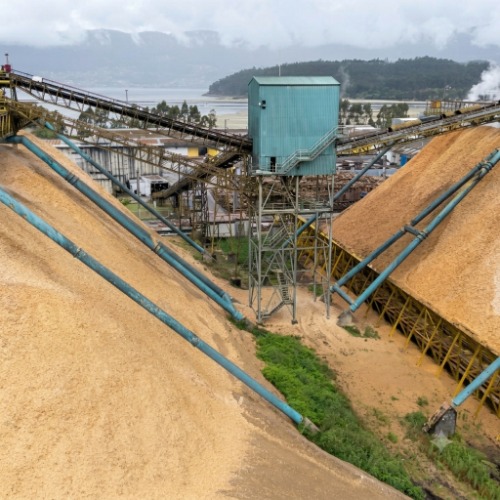
Spanish pulp producer Ence has invested more than €200 million in upgrades at its Navia bioplant in Asturias, including a conversion of its lime kiln from fossil fuels to biomass and a new wood-processing line designed to increase the availability of internally generated biofuel.
The projects are intended to reduce the facility’s fossil fuel consumption, strengthen its biomass supply chain and support the decarbonisation of pulp production. Ence expects the lime kiln conversion alone to reduce annual CO₂ emissions by more than 40,000 tonnes.
Biomass conversion targets lower emissions at Navia
The lime kiln upgrade involves installing new multi-fuel burners to replace fossil fuels with biomass. Ence said the project is intended to fully decarbonise the Navia site, although the company’s stated emissions reduction is specifically associated with the expected annual savings from the kiln conversion.
The investment forms part of a wider modernisation programme at the Asturias facility, where the company is also upgrading wood processing and expanding production capabilities for pulp products.
New wood-processing line increases internal biomass supply
A new wood-processing line at the plant’s wood yard will replace one of the existing lines and increase the amount of bark available for use as fuel.
The installation includes two debarkers and a chipper capable of processing 5,400 cubic metres of wood per day. By generating more bark from its own wood-processing operations, Ence expects to increase the supply of biomass available for combustion in the plant’s biomass boiler.
The company said the upgrade will reduce reliance on externally sourced biomass and reinforce the facility’s circular economy model by making greater use of residues generated within its own operations.
The wood-processing line and lime kiln conversion together represent an investment of €48 million. Of this amount, €13 million has been financed through the energy efficiency programme of Spain’s Institute for Energy Diversification and Saving (IDAE).
Fluff pulp line accounts for the largest investment
The largest individual project in the wider upgrade programme is a new fluff pulp production line valued at more than €160 million. It is intended to supply the European absorbent products market.
Ence describes Navia as the first and only plant in Europe producing fluff pulp from eucalyptus. Qualification processes are under way with more than 70 international customers, according to the company.
Fluff pulp is used in absorbent hygiene products, including products that require materials with high liquid-absorption capacity. The new line expands Navia’s product offering beyond its existing pulp operations.
Moulded pulp project targets plastic packaging
A separate €12 million moulded-pulp project is also progressing on schedule, Ence said. The project is intended to provide a fibre-based alternative to plastic packaging used in the food sector.
While the biomass and wood-processing investments focus on fuel substitution and resource efficiency, the moulded-pulp and fluff-pulp projects expand the company’s range of pulp-based products for European markets.
Bioenergy Business Analysis
Ence’s Navia upgrade illustrates how biomass integration at a pulp mill can connect decarbonisation with operational resource efficiency. The lime kiln conversion targets fossil fuel substitution, while the new wood-processing line is designed to increase the use of bark generated on site. Together, these measures could reduce both fossil fuel demand and exposure to externally sourced biomass, although the extent of those benefits will depend on actual fuel consumption, biomass availability and operating performance.
The expected reduction of more than 40,000 tonnes of CO₂ annually is a company-reported projection rather than a verified outcome. The announcement does not provide the kiln’s baseline emissions, the projected biomass consumption or a breakdown of the wider site’s remaining emissions. Those figures would help establish how much of Navia’s overall decarbonisation target the conversion is expected to deliver.


