


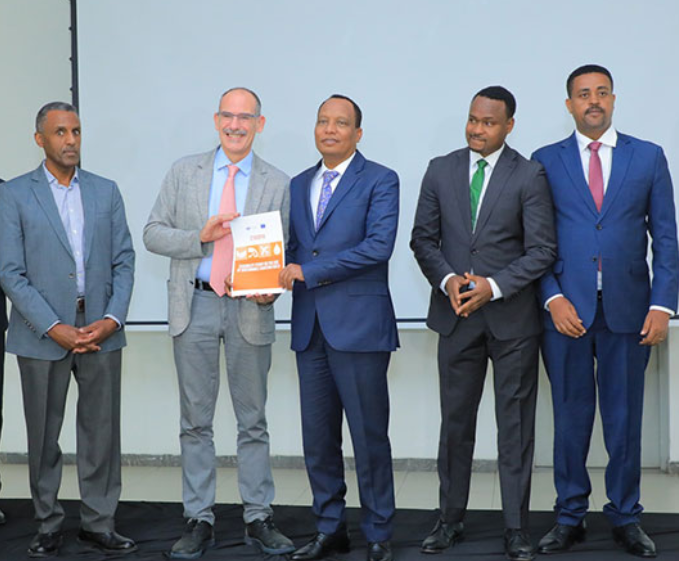
Ethiopia has officially confirmed its capability to enter the global market for Ethiopia SAF production following the conclusion of a comprehensive national feasibility study presented in Addis Ababa on Thursday, November 27.
The validation marks a critical step for the East African nation, positioning it to become a key supplier in the emerging global aviation fuel market. The study concluded that the country possesses both the necessary land availability and renewable energy capacity to support a robust sustainable aviation fuel (SAF) industry.
Feasibility Study Highlights Local Resources
The findings were unveiled during a high-level multi-stakeholder validation workshop held at the Skylight Hotel. Experts presenting the data demonstrated that Ethiopia SAF production is commercially viable due to an abundance of diverse feedstocks.
According to the study, the nation can leverage several local resources to produce low-carbon aviation fuel, including:
- Local agricultural crops.
- Municipal waste streams.
- Sugar byproducts (molasses/bagasse).
- Existing renewable energy infrastructure.
These inputs allow for the production of fuels that significantly reduce carbon emissions compared to conventional jet kerosene, aligning with global decarbonization targets for the aviation sector.
International Backing and Stakeholder Engagement
The initiative represents a collaborative effort between the Ethiopian government and international bodies. The study was funded by the European Union (EU) through the International Civil Aviation Organization (ICAO), underscoring the global interest in African bioenergy potential.
The final validation workshop was attended by a broad spectrum of decision-makers, including international consultants, donors, and private investors. On the domestic front, senior representatives from the Ministry of Transport and Logistics, the Ministry of Agriculture, and the Civil Aviation Authority reviewed the data.
This cross-ministerial involvement suggests a unified government approach to developing the regulatory and industrial frameworks required to attract investment into the sector.
Timeline of the Initiative
This validation is the culmination of a year-long process to assess business readiness. The feasibility study was originally launched in December 2024 with a national workshop.
Following the launch, the project moved through several critical phases, including field consultations and a major stakeholder conference in March 2025. During these sessions, Ethiopian officials engaged deeply with technical experts to review data and evaluate the practical logistics of domestic production.
With the study now concluded and validated, Ethiopia is expected to move toward the next phase of development: attracting technology partners and securing financing to build the infrastructure necessary to turn these findings into fuel.