


Chapleau Cree First Nation and Commercial Bioenergy Inc. have established Chapleau District Heating Company Inc. to develop a planned 3 MW thermal biomass district heating plant in Chapleau, northern Ontario, Canada.
The proposed facility would supply heat to institutional buildings through a centralised system fuelled by wood residues from the GreenFirst sawmill in the township. The project aims to replace fossil-fuel heating with locally sourced biomass while reducing heating and maintenance costs for participating institutions.
The new company intends to own and operate the plant as a for-profit utility, selling heat to customers on a kilowatt-hour basis. The partners have not specified a commissioning date in the announcement.
Biomass district heating to use local sawmill residues
The planned facility would convert residual wood from local forestry operations into thermal energy for public institutions. By using an existing regional resource, the project seeks to connect forestry operations with local heat demand and reduce dependence on fossil fuels.
According to the partners, a centralised heating system could help participating institutions lower operating and maintenance expenditure, extend the service life of existing boilers and avoid some of the capital costs associated with replacing individual heating installations.
The utility model would allow customers to purchase heat rather than independently manage every aspect of their heating infrastructure. The partners also expect local fuel procurement to support forestry businesses, regional employment and economic activity in Chapleau.
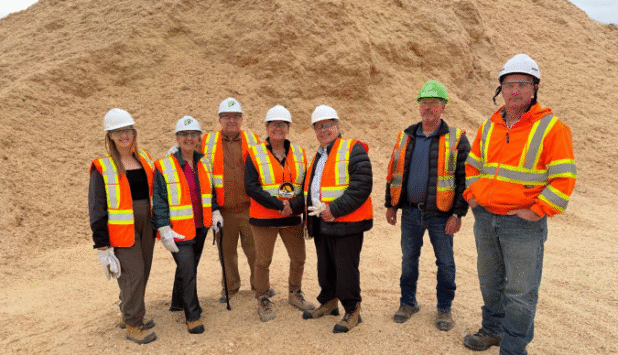
The project was presented at GreenFirst’s Chapleau sawmill, highlighting the connection between the region’s forestry resources and the proposed energy infrastructure.
Indigenous ownership at the centre of the project
The joint venture places Indigenous participation in project development and ownership at the centre of the proposed heating system.
Keith Corston, Chief of Chapleau Cree First Nation, said the partnership reflects a broader view of energy as a means of supporting economic development, community resilience and long-term sustainability in Indigenous and northern communities.
Corston said the partners aim to develop a solution suited to local needs while keeping the resulting benefits within the region. The first project is intended to demonstrate biomass heating through buildings used by the wider community.
Robert Manseau, President of Commercial Bioenergy, identified lower heating bills, reduced maintenance costs and longer boiler service life as potential benefits for participating institutions.
“Biomass gives Northern communities an opportunity to turn a challenge into an economic asset,” Manseau said, pointing to the potential to build an energy system around existing local resources, businesses and expertise.
Further district heating opportunities under consideration
Chapleau District Heating Company also plans to explore additional opportunities in Chapleau Cree First Nation and the neighbouring Township of Chapleau.
Potential areas of development include further district heating systems, energy efficiency measures and other initiatives designed to reduce fossil-fuel dependence and strengthen local energy security.
Ryan Bignucolo, Mayor of the Township of Chapleau, described the planned installation as the township’s first project of its kind. He said the initiative could provide a model for other communities considering biomass as a heating resource.
Bignucolo also highlighted the potential for Indigenous communities to participate substantively in the development, ownership and operation of future projects, allowing them to share in the economic benefits of energy infrastructure.
He linked the initiative to the availability of residual wood from the forestry sector, developments in northern Ontario’s energy industry and growing interest in alternatives to fossil-fuel heating.
The partners aim to combine local resources, knowledge and commercial expertise to develop an approach that could be adapted for other rural and remote communities across Canada.
Regional forestry and economic development
The project has also received support from federal and provincial representatives.
Gaétan Malette, Member of Parliament for Kapuskasing–Timmins–Mushkegowuk, welcomed the partnership and highlighted the potential to use sawmill residues as a renewable energy resource while supporting the modernisation of northern Ontario’s forestry industry.
Bill Rosenberg, Member of Provincial Parliament for Algoma–Manitoulin, pointed to potential benefits for local forestry businesses, biomass companies, institutions and families. He also highlighted the prospects for lower operating costs, entrepreneurship and long-term regional economic development.
For the partners, the initiative is intended to demonstrate how collaboration between Indigenous communities, energy companies and local industries can support community-led energy projects.
Bioenergy Business Analysis
The proposed Chapleau project illustrates how biomass can serve a local heating market while creating a commercial outlet for forestry residues.
The proposed 3 MW plant’s commercial performance will depend on factors including the cost and consistency of wood-residue supplies, plant efficiency, distribution-network investment, customer demand and the price institutions pay for heat. The expected savings will need to be assessed against the capital and operating costs of the complete system.
The venture’s Indigenous ownership structure is another significant element. If the project advances as planned, it could provide a practical example of Indigenous participation in the ownership and operation of local energy infrastructure, alongside potential benefits for regional forestry businesses.
The next milestones will be the development of the heating system, confirmation of participating customers and demonstration of its operating and financial performance. These factors will help determine whether the Chapleau model can be replicated in other northern and remote communities with suitable biomass resources and concentrated heat demand.


