


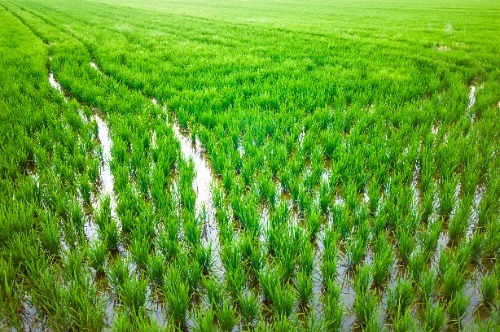
Verra has approved the first carbon credits under its methodology for reducing greenhouse gas emissions from rice cultivation, with the credits generated by an agricultural project in India that has reported more than 210,000 tonnes of avoided carbon dioxide equivalent (CO₂e).
The credits were issued under the Verified Carbon Standard (VCS) programme for the Core Carbon Sustainable Rice Productions 01 project, listed as Verra Project 3243. The project applies improved water and crop management practices in flooded rice fields in Telangana, a major rice-producing state in southern India, according to the supplied announcement.
The milestone brings agricultural methane reduction into focus as a potential source of verified carbon credits. Rice paddies can generate methane when soils remain flooded, creating oxygen-poor conditions that favour methane-producing microorganisms. Changes to irrigation practices can help reduce these emissions while allowing rice cultivation to continue.
Alternate wetting and drying reduces methane emissions
The project uses alternate wetting and drying (AWD), an irrigation approach in which rice fields are allowed to dry periodically before being flooded again.
Unlike conventional continuous flooding, AWD introduces intervals during which oxygen can enter the soil. This changes the conditions under which soil microorganisms operate and can reduce methane formation.
To help farmers implement the approach, project developer Core CarbonX Solutions provides field water tubes, farmer training and technical support. The company also shares revenue from carbon credit sales with participating farmers, according to the announcement.
The approach links agricultural practices with carbon finance: farmers adopt changes intended to reduce emissions, while the resulting verified reductions can generate credits for sale in the voluntary carbon market.
Actual emission reductions depend on field conditions, irrigation management, soil characteristics and the baseline against which project performance is assessed. Effective implementation therefore requires appropriate monitoring and verification rather than relying on the irrigation method alone.
VM0051 establishes a framework for measuring rice-sector emission reductions
The credits were issued under Verra’s VM0051 Improved Management in Rice Production Systems methodology. The framework is designed to quantify greenhouse gas emission reductions associated with improved rice cultivation practices.
Beyond water management, the methodology supports approaches such as using improved rice varieties and methanotrophic bacteria, which can help consume methane under suitable conditions.
A standardised methodology is important because carbon credits depend on demonstrating that claimed emission reductions are measurable and supported by an appropriate accounting framework. For rice projects, this requires accounting for emissions associated with cultivation practices and assessing reductions against the applicable baseline.
The first credit issuance under VM0051 marks a practical application of the methodology. However, the issuance alone does not establish that all rice-based carbon projects will achieve similar reductions or financial returns. Results will depend on project design, local agronomic conditions, monitoring quality and the methodology’s applicable requirements.
The project’s validation and verification body was VKU Certification Private Limited, according to the announcement.
Rice cultivation offers opportunities for agricultural methane reduction
Flooded rice cultivation is a significant source of agricultural methane emissions worldwide. Methane is a potent greenhouse gas, and reducing emissions from rice production is one route to lowering agriculture’s climate impact without necessarily replacing rice with another crop.
The project in Telangana demonstrates how changes in irrigation management can be linked to carbon market participation. By providing equipment, technical guidance and a share of carbon credit revenue, the project developer is seeking to support farmer adoption of practices that may otherwise require additional knowledge, labour or changes to established cultivation routines.
The Verra Registry lists 13 other projects using VM0051 that are under development or undergoing validation, according to the supplied source. These projects span India, Brazil, Vietnam, the Philippines, Indonesia, Thailand, Malaysia, Myanmar and Madagascar.
This pipeline suggests that interest in methodology-based rice emission reduction projects extends beyond India. However, projects at the development or validation stage should not be counted as completed projects or as having issued credits.
Carbon finance could support more sustainable rice production
Carbon revenue can provide an additional financial incentive for farmers to adopt improved water and crop management practices. Under the Telangana project, Core CarbonX Solutions shares proceeds from carbon credit sales with participating farmers, potentially linking the value of verified emission reductions to on-farm implementation.
The commercial outcome will depend on the volume of credits generated, carbon prices, project development and monitoring costs, and the proportion of revenue reaching farmers. The announcement does not disclose the project’s credit sale price, total revenue or the amount distributed to participants.
Agronomic performance also matters. AWD must be managed carefully to suit local growing conditions and avoid compromising crop productivity. Reliable access to irrigation infrastructure, field-level guidance and farmer participation will therefore be important to the approach’s wider adoption.
The first issuance under VM0051 provides an example of how carbon standards can support agricultural methane mitigation. Its longer-term significance will depend on the project’s measured performance and whether similar initiatives can demonstrate robust climate benefits alongside viable outcomes for farmers.
Bioenergy Business Analysis
Verra’s first credit issuance under VM0051 is a relevant development for agricultural carbon markets because it moves a rice methane methodology from the framework stage into an issued-credit project. It also demonstrates how carbon finance can be connected to farming practices rather than relying solely on industrial emissions-reduction projects.
The issuance should not be interpreted as proof that every rice project using AWD will achieve the same level of emission reductions. Credibility depends on the methodology’s accounting requirements, baseline assumptions, monitoring and verification. It will also be important to distinguish credits issued from credits sold and to understand how much carbon revenue reaches farmers.
The 13 additional projects reported as being under development or validation indicate a possible pipeline for expanding this approach across several rice-producing countries. The key indicators to watch will be subsequent credit issuances, independently verified emissions performance, farmer-level economic outcomes and evidence that projects can sustain adoption over multiple growing seasons.


