


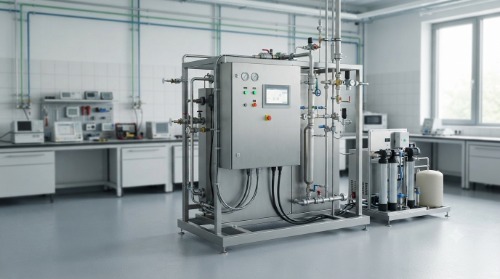
Shanghai Qingrui Technology Co., Ltd. has won a procurement contract for a 10 Nm³/h proton exchange membrane (PEM) electrolyser for the North China Electric Power Test and Research Institute, part of China Datang Corporation Science and Technology Research Institute Co., Ltd.
The procurement covers one DQ-10/3.2 PEM electrolyser, with a reported transaction value of RMB 1.696 million. According to the source announcement, the equipment will support hydrogen-production technology research and testing at the Datang research institute.
PEM electrolyser to support hydrogen research and testing
The procurement project, identified by procurement number P-XJ-26-00017421, centres on Shanghai Qingrui’s DQ-10/3.2 PEM electrolyser.
The unit has a stated hydrogen production capacity of 10 Nm³ per hour. The source said the equipment is intended for scientific research and testing applications, including verification of PEM electrolysis hydrogen-production technology and system performance testing.
Unlike alkaline electrolysis, PEM electrolysis uses a proton-conducting membrane as the electrolyte and is generally suited to applications requiring rapid operational response. This characteristic can make PEM systems relevant to hydrogen production linked to variable renewable electricity, although performance and economics depend on the specific system configuration and operating conditions.
Procurement adds to Qingrui’s PEM electrolyser deployment
Shanghai Qingrui described the successful bid as recognition of its PEM electrolyser products by the scientific research platform of a major Chinese state-owned energy group.
The company said its equipment will be used in hydrogen-production testing and related research activities at the North China institute. The source did not disclose whether the procurement forms part of a larger hydrogen demonstration programme or whether additional electrolyser units are planned at the site.
The transaction also provides a commercial example of PEM electrolysis equipment being procured for research and testing rather than for a large-scale commercial hydrogen production facility.
PEM technology gains role in green hydrogen development
PEM electrolysis is one of the principal technologies being developed for renewable hydrogen production. Its ability to respond rapidly to changes in electricity input is particularly relevant to systems connected with intermittent renewable generation.
Hydrogen produced through electrolysis is generally considered renewable or green hydrogen when the electricity used meets the applicable renewable-energy criteria. However, the source material does not specify the electricity source for the Datang research application, so the procurement itself should not be treated as confirmation that the unit will produce certified green hydrogen.
For research institutes and energy companies, electrolyser procurement can provide a platform for testing operating performance, system integration and control strategies before technologies are deployed at larger scales. The actual research objectives and test programme associated with this procurement were not disclosed in the supplied source.
China continues to develop hydrogen technology capabilities
The procurement comes within China’s broader development of hydrogen technologies, including electrolyser manufacturing, renewable hydrogen production and system integration.
For equipment manufacturers, research and demonstration projects can provide opportunities to validate electrolyser performance under different operating conditions and generate operational experience. For research organisations, such systems can support technology testing before potential deployment in larger projects.
The RMB 1.696 million procurement should therefore be viewed specifically as an equipment purchase for the stated research and testing application. The source does not provide evidence that it represents the value of a larger hydrogen project.
Shanghai Qingrui plans further PEM development
Shanghai Qingrui said it intends to continue developing its core PEM electrolysis technology and expanding its electrolyser product range.
The company also said it plans to serve hydrogen-production testing and demonstration projects involving major state-owned energy enterprises and research institutions.
Bioenergy Business Analysis
The procurement highlights an important part of the hydrogen technology market that sits between equipment development and large-scale commercial deployment. Research and testing installations allow electrolyser manufacturers and energy-sector research organisations to evaluate equipment performance and system integration before committing to larger applications.
For the PEM technology segment, the key significance of this procurement is therefore its research and validation role rather than its relatively small hydrogen-production capacity. The next indicators to watch would be the results of the testing programme, subsequent equipment deployments and whether research-platform procurement translates into larger commercial orders.