


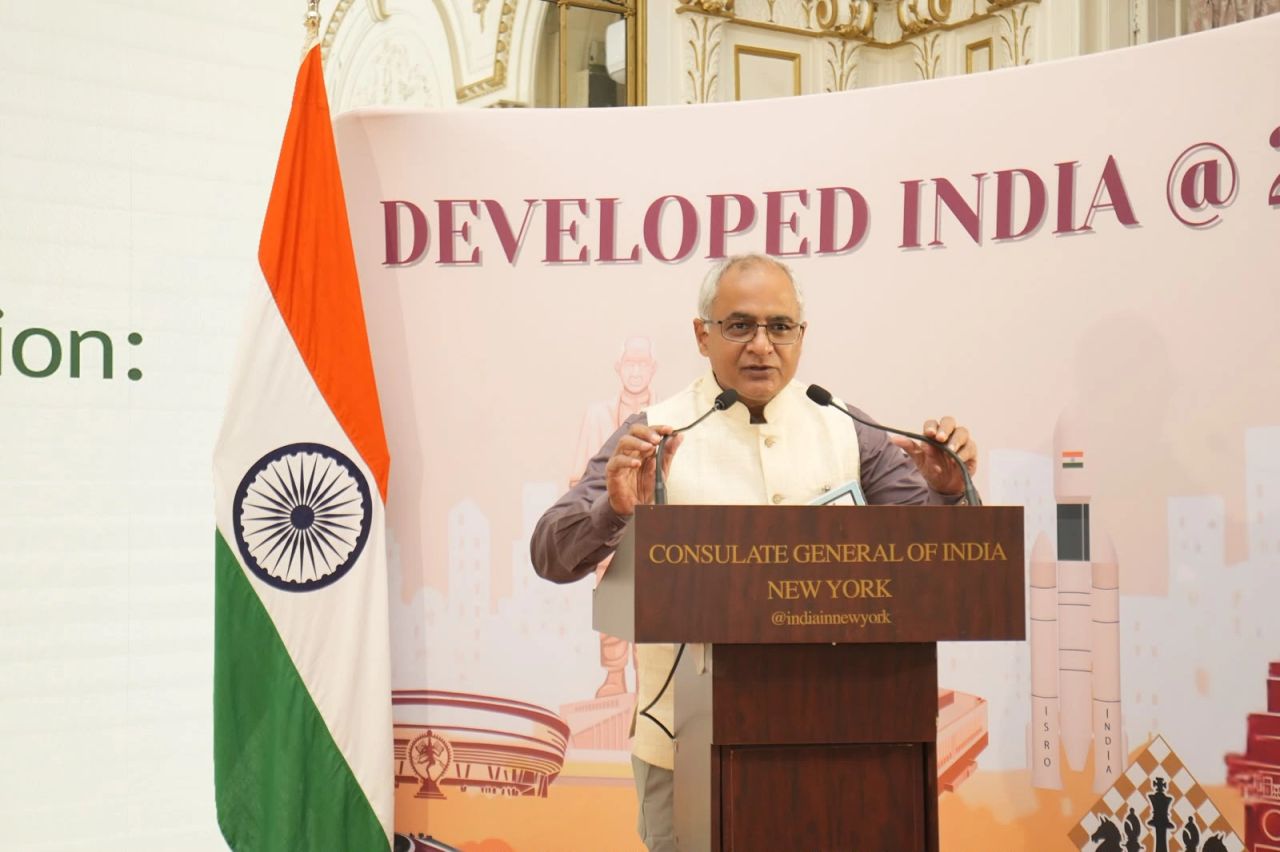
The Global Biofuels Alliance (GBA) has stepped up its international membership and investment outreach with a diplomatic roundtable in New York, bringing together representatives from 10 countries as the alliance seeks to deepen cooperation on sustainable biofuels.
The dialogue, titled “Advancing Global Biofuels Cooperation: Key Priorities and Partnerships,” was convened by the GBA and the Consulate General of India in New York on 21 September 2026 during New York Climate Week.
A subsequent account by the Consulate General of Serbia in New York confirmed the meeting and said participants discussed the development and use of sustainable biofuels, national energy and development priorities, and areas for future cooperation with the GBA.
According to the GBA, the meeting involved 18 attendees representing 10 countries, alongside participants from industry and financial institutions. Three countries that are not currently members expressed interest in joining the alliance and are expected to work with their respective capitals on the required membership process.
GBA targets policy, technology and finance cooperation
The New York discussion focused on how international cooperation can help countries develop national pathways for sustainable biofuels.
Areas identified for potential GBA support included policy development, technology cooperation, standards, market development and financing. The dialogue also sought to strengthen bilateral engagement between participating countries and the alliance.
The emphasis on financing reflects one of the practical challenges facing biofuel deployment. Moving from national targets to commercial-scale projects requires access to capital alongside feedstock availability, technology, infrastructure, policy certainty and credible sustainability frameworks.
The GBA has previously positioned capacity building, technical support, policy knowledge-sharing, technology advancement and internationally recognised standards as core elements of its mandate. Its foundation document also recognises that countries have different national circumstances and policy frameworks for sustainable biofuels.
Membership expansion gains momentum
The latest outreach comes as the GBA continues to expand beyond its original group of participating countries.
The alliance was launched on the sidelines of the G20 Leaders’ Summit in New Delhi in September 2023 as a multi-stakeholder platform involving governments, international organisations and industry.
The GBA’s current website lists 34 countries and 14 international organisations as members.
The potential addition of three more countries would therefore further broaden the alliance’s geographic reach, although the New York discussions represent expressions of interest rather than completed membership.
That distinction is important because joining the GBA involves a formal process rather than participation in an individual dialogue automatically conferring membership.
Energy security remains a central theme
The New York meeting also placed sustainable biofuels within the wider debate over energy security.
Biofuels can provide an alternative source of liquid transport fuel while allowing existing internal-combustion-engine infrastructure and vehicle fleets to continue operating. Their potential role varies considerably by fuel type, feedstock, technology and national circumstances.
The GBA’s founding framework identifies energy security, affordability and accessibility as shared objectives and describes sustainable biofuels as one component of broader low-carbon development pathways.
Recent international analysis has likewise highlighted the role of biofuels in reducing dependence on imported fossil fuels, while noting that feedstock sustainability and competition with food and agricultural resources need to be addressed as production expands.
For emerging bioeconomies, the policy challenge is therefore not simply to increase biofuel output but to establish supply chains that can meet sustainability requirements while remaining commercially viable.
Investment and technology cooperation gain prominence
The participation of financial institutions and industry representatives in the New York dialogue adds an investment dimension to the GBA’s international engagement.
The alliance has increasingly focused on areas that extend beyond policy coordination, including sustainable aviation fuel, biomethane and compressed biogas, and investment in sustainable biofuels. Its website currently features dedicated work on SAF, biomethane/CBG and sustainable-biofuel investment.
Such cooperation could be relevant for countries seeking to establish domestic biofuel industries without having to develop every element of the value chain independently. Technology partnerships, standards cooperation and access to financing can help countries assess which pathways are compatible with their feedstock resources, infrastructure and domestic fuel demand.
The GBA’s stated role is to act as a platform for knowledge exchange and technical cooperation rather than impose a single biofuel pathway on participating countries. Its foundation document explicitly recognises differences in national circumstances and strategies.
India prepares for next major GBA ministerial event
The New York engagement also forms part of preparations for the GBA’s next major ministerial gathering, planned alongside India Energy Week 2027.
The alliance’s expanded diplomatic outreach provides an opportunity to identify countries interested in joining before the ministerial event and to move discussions from general support towards concrete areas of cooperation.
For the GBA, that could mean developing more structured partnerships around policy frameworks, project development, technology deployment, standards and investment.
Bioenergy Business Analysis
The New York dialogue marks a shift in emphasis from establishing the GBA as an international platform towards expanding its practical network of participating countries and institutions.
The reported interest from three non-member countries is significant as an indicator of potential expansion, but it should not be treated as completed membership. The next step will be the formal engagement between those governments and the alliance.
The broader challenge will be converting diplomatic interest into commercially viable biofuel activity. Policy alignment and knowledge exchange can reduce some barriers, but projects still depend on sustainable feedstock availability, technology maturity, infrastructure, offtake arrangements and access to finance.
The GBA’s current membership of 34 countries and 14 international organisations gives it a broad base for this work. Its effectiveness will increasingly be measured not only by membership growth, but also by whether cooperation produces bankable projects, compatible standards, stronger supply chains and measurable deployment of sustainable biofuels across different markets.