


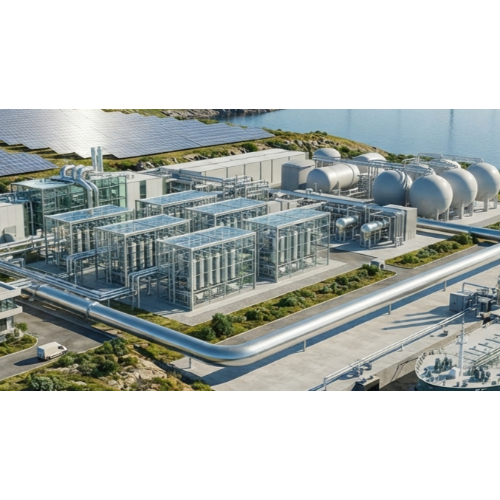
India is developing a 150-tonne-per-day (TPD) e-methanol production facility at Kandla Port in Gujarat, with the project planned as a joint initiative between Deendayal Port Authority (DPA) and Assam Petro-Chemicals Ltd (APCL).
The project is being positioned as part of India’s efforts to develop domestic green marine fuel production and support the decarbonisation of international shipping.
According to ETEnergyWorld, citing an official statement, the facility will use renewable power, water and biogenic carbon dioxide to produce e-methanol for vessels operating on the Asia-Europe International Trade Corridor.
The government announced the partnership between APCL and DPA in January 2026, when the two entities signed an MoU for a 150 TPD e-methanol facility at Kandla. The official announcement put the initial capital investment at more than ₹1,200 crore and said the project could create around 3,500 direct and indirect employment opportunities.
Kandla project to be developed in phases
According to the project plan supplied for this report, the full 150 TPD facility will involve an estimated investment of ₹2,300 crore.
The development is expected to be divided into two phases:
- Phase I: 50 TPD capacity, with an investment of ₹1,200 crore
- Phase II: Additional 100 TPD capacity, with an investment of ₹1,100 crore
- Total planned capacity: 150 TPD
- Total reported investment: ₹2,300 crore
The phased approach is intended to allow the facility to expand through modular additions.
The reported ownership structure gives DPA a 76% share and APCL 24%. DPA’s contribution is expected to include equity, land, water and renewable-energy inputs.
The January government announcement separately said DPA would provide pipeline connectivity, storage and fuel-handling infrastructure at the port, while APCL would establish the green methanol production facility within the port area.
E-methanol to support green shipping
E-methanol, also known as electro-methanol when produced from renewable hydrogen and captured carbon dioxide using renewable electricity, is being developed as an alternative marine fuel.
Its potential use in shipping is linked to the industry’s need for lower-emission fuels for vessels and routes where direct electrification is difficult.
At Kandla, locating production alongside port infrastructure could allow the fuel to move directly into storage and bunkering systems, reducing the need for separate inland transportation.
The Ministry of Ports, Shipping and Waterways has identified Kandla as part of India’s broader development of alternative marine-fuel infrastructure. The port already has methanol-handling infrastructure and has been progressing towards dedicated methanol bunkering capabilities.
Kandla advances methanol bunkering infrastructure
The e-methanol project is being developed alongside wider efforts to establish Kandla as a green-fuel hub.
In April 2026, Kandla completed a shore-to-ship methanol bunkering trial involving Deendayal Port Authority and industry partners including Stolt Tankers, J M Baxi, Aegis Vopak and Indian Oil Corporation. The trial was intended to validate fuel-transfer procedures, safety systems and regulatory protocols.
The port was assessed at Port Readiness Level 6 for methanol bunkering by DNV Maritime Advisory Services.
The government has also said Kandla is working towards making approximately 500 KTPA of RFNBO-compliant e-methanol available by 2028-29 for deep-sea dual-fuel vessels operating on the Asia-Europe trade corridor.
This broader supply target is separate from the 150 TPD production facility described in the project announcement.
Renewable hydrogen and carbon dioxide form the feedstock base
E-methanol production combines renewable hydrogen with a carbon source.
In the Kandla project, the government has described e-methanol as being produced using green hydrogen and captured carbon dioxide, with renewable electricity providing the energy input.
This creates an integrated pathway linking renewable electricity, hydrogen production, carbon utilisation and marine fuel supply.
The development also fits into Kandla’s wider hydrogen infrastructure plans. The port has commissioned a 1 MW electrolyser-based green hydrogen plant and has allotted land for green hydrogen and green ammonia projects.
India targets a broader green shipping fuel ecosystem
The Kandla development is part of a wider effort by India’s ports to prepare for alternative marine fuels.
Government initiatives include the Harit Sagar Green Port Guidelines, renewable-energy deployment at ports, alternative marine fuels and the development of ports as energy and industrial hubs.
Kandla’s existing methanol infrastructure and its location on major international shipping routes provide a potential platform for integrating fuel production with bunkering and storage.
The development of such infrastructure will also become increasingly relevant as shipping companies evaluate dual-fuel vessels and lower-carbon alternatives to conventional marine fuels.
Bioenergy Business Analysis
The Kandla project illustrates how e-methanol can connect renewable hydrogen with the maritime fuel market. Rather than producing hydrogen solely for direct use, the project converts renewable hydrogen and captured carbon dioxide into a transportable liquid fuel that can be handled through existing or upgraded port infrastructure.
For India, the combination of production capacity and bunkering infrastructure is significant because commercial demand for alternative marine fuels depends not only on fuel availability but also on the ability to store, handle and deliver those fuels to vessels.
The reported ₹2,300 crore investment should therefore be viewed alongside Kandla’s wider green-fuel infrastructure programme. The project’s eventual commercial impact will depend on construction and commissioning, the availability and cost of renewable hydrogen and carbon dioxide, fuel offtake, bunkering demand and the economics of e-methanol compared with conventional and other alternative marine fuels.