


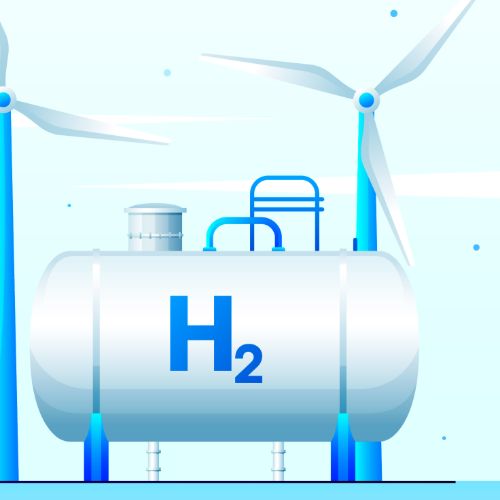
Deloitte Romania has supported OMV Petrom in developing and implementing two green hydrogen projects at its Petrobrazi refinery in Romania, backed by funding from the country’s National Recovery and Resilience Plan (NRRP).
The projects are expected to establish 55 MW of green hydrogen production capacity at the refinery, creating one of Romania’s major renewable hydrogen facilities and supporting the production of lower-emission fuels including sustainable aviation fuel (SAF) and hydrotreated vegetable oil (HVO).
The hydrogen projects are expected to produce approximately 8,000 tonnes of green hydrogen annually, according to Deloitte.
Green hydrogen to support SAF and HVO production
The planned hydrogen capacity will be integrated into Petrobrazi’s production system to support the manufacture of sustainable fuels using vegetable oils and waste oils as feedstocks.
SAF and HVO produced through the integrated process are intended to provide lower-emission alternatives to conventional aviation and road fuels. Deloitte said the fuels can deliver at least 65% lower CO₂ emissions across their life cycle compared with conventional fossil-based alternatives.
The projects are therefore positioned as part of OMV Petrom’s wider effort to expand renewable and lower-carbon fuel production while strengthening Romania’s domestic clean-energy value chain.
Deloitte provides funding and implementation support
Deloitte Romania provided support throughout the projects’ development, from preparation and submission of applications for non-reimbursable funding through evaluation and contracting.
Its role also extended into the implementation phase, including multidisciplinary advisory services and assistance with procurement procedures and contract management.
The Deloitte team involved in the projects included Partners Alexandru Reff and Ovidiu Popescu, Senior Managers Livia Kicsi and Adrian Coman, Manager Adriana Holdon, and Consultant Liliana Stan.
Ovidiu Popescu, Partner at Deloitte Romania and Energy and Sustainability Practices Leader for Deloitte South-East Europe, said the projects demonstrate how European financing can support value-added investments in the clean-energy sector when funding is combined with investment and implementation capacity.
He described the Petrobrazi projects as a significant development for Romania and the wider regional energy landscape and said they could encourage further investment in clean and economically viable energy technologies.
Petrobrazi links renewable hydrogen with sustainable fuels
The projects highlight an emerging model in which renewable hydrogen is integrated directly into industrial fuel-production systems rather than being developed solely as a standalone energy carrier.
For OMV Petrom, the 55 MW hydrogen capacity is intended to support downstream production of SAF and HVO, linking renewable electricity and hydrogen with alternative-fuel manufacturing.
The use of vegetable oils and waste oils as feedstocks also places the projects within the wider transition towards renewable carbon sources for transport fuels. Their ability to use existing infrastructure could further support integration into established fuel supply chains.
Bioenergy Business Analysis
The Petrobrazi projects illustrate the growing convergence between green hydrogen and renewable fuels. Hydrogen is not necessarily the final product in such projects; instead, it can serve as an important process input for producing lower-carbon fuels such as HVO and SAF. This makes the economics and availability of renewable hydrogen particularly relevant to the future expansion of sustainable-fuel production.
The reported 55 MW capacity and approximately 8,000-tonne annual hydrogen output also indicate that the project is moving beyond small-scale demonstration towards industrial deployment. However, the overall emissions performance of the resulting fuels will depend on factors including the source of renewable electricity, feedstock sustainability and the full life-cycle methodology used to calculate emissions reductions. The projects’ progress will therefore be relevant not only to Romania’s hydrogen strategy but also to the development of integrated European SAF and renewable diesel supply chains.