


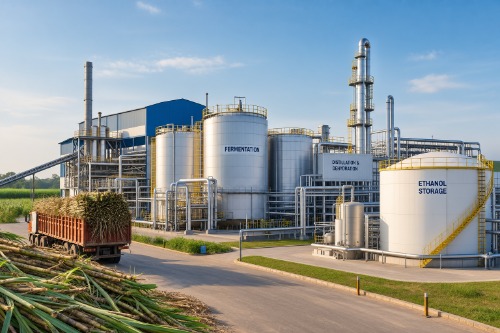
Potential restrictions on ethanol production from sugarcane juice and B-heavy molasses could put Rs 16,000-20,000 crore of Maharashtra ethanol investment under financial pressure, former state minister Rajesh Tope has warned, arguing that lower production could weaken distillery cash flows while fixed costs and debt obligations remain unchanged.
According to India Today report, Tope said Maharashtra’s sugar industry has made substantial investments in distilleries following the Centre’s E20 ethanol-blending policy. He cautioned that limiting access to key sugar-based feedstocks could reduce plant utilisation and make it more difficult for sugar factories to service bank loans and cover operating costs.
“Maharashtra has around 179 operational distilleries, including 143 sugar or molasses-based units and 36 grain-based projects. The investment in sugar industry-based distilleries in Maharashtra is estimated at Rs 16,000-20,000 crore,” Tope said.
Maharashtra’s ethanol capacity faces feedstock concerns
According to Tope, sugar industry-based distilleries in Maharashtra have combined annual ethanol production capacity of approximately 3.8 billion litres, while grain-based distilleries account for another 1.04 billion litres of annual capacity.
The former minister said production could decline if distilleries were required to rely predominantly on C-heavy molasses. At the same time, costs such as salaries, maintenance, insurance, environmental compliance and bank instalments would continue regardless of production levels.
A sustained reduction in output could therefore increase the cost of producing each litre of ethanol, Tope argued. He said this could place additional pressure on sugar factories’ cash flows, particularly cooperative mills that already have significant debt obligations.
The concerns come as India’s ethanol programme continues to rely on multiple feedstocks, including sugarcane-derived materials and grains, to support the country’s blending objectives.
Tope proposes dual-feed distilleries
Tope called for existing sugar-based distilleries to be converted into dual-feed facilities capable of processing both sugar-based feedstocks and grain.
Such flexibility, he said, could help distilleries respond to changes in feedstock availability while Maharashtra also expands grain-based ethanol production. He stressed that the state would need to ensure sustainable availability of the raw materials required by these plants.
The proposal comes against the backdrop of competing demands on Maharashtra’s sugar sector. Tope said the state needs to balance three priorities during the 2026-27 season: maintaining sugar supply and prices, ensuring sufficient ethanol for E20 blending, and protecting the financial viability of existing distillery investments.
By-products could provide additional revenue
Tope also called for greater value addition from ethanol production by-products, including distillers dried grains with solubles (DDGS), maize oil and carbon dioxide.
He further suggested that sugar factories should explore biogas and compressed biogas production from wastewater, potentially creating additional value from streams generated within the sugar and ethanol production process.
For integrated sugar complexes, this approach could broaden the revenue base beyond ethanol and sugar by linking distillery operations with other bioenergy and by-product markets.
E20 policy drove major distillery investment
The investments highlighted by Tope were made in the context of India’s Ethanol Blended Petrol Programme (EBPP) and the national push towards higher ethanol blending in petrol.
According to the Union government, the programme is intended to strengthen energy security, support farmers and reduce the environmental impact associated with conventional transport fuels. The government has also stated that domestically produced ethanol procured at stable, pre-agreed prices can help reduce consumers’ exposure to fluctuations in global crude oil prices.
The scale of Maharashtra’s existing distillery capacity means feedstock policy has implications beyond individual plants. Changes affecting the availability or use of sugarcane-derived feedstocks could influence plant utilisation, ethanol output and the economics of existing investments, although the source does not quantify the potential reduction in production.
Bioenergy Business Analysis
The central issue raised by Tope is the potential mismatch between fixed distillery costs and variable feedstock availability. Ethanol plants require significant capital investment, and a reduction in operating throughput could increase unit costs if expenses such as debt servicing, maintenance and compliance remain broadly fixed. His Rs 16,000-20,000 crore investment estimate should, however, be treated as a statement from Tope rather than an independently verified industry figure based on the supplied source.
The proposal to increase dual-feed capability also highlights the importance of feedstock flexibility as India’s ethanol market develops. For Maharashtra’s sugar mills, the ability to switch between sugar-based feedstocks and grain could provide greater operational flexibility, but the source does not establish the cost or feasibility of converting existing facilities.
More broadly, the debate illustrates the challenge of balancing ethanol availability with the economics of the sugar sector. Policymakers and plant operators will need to consider feedstock allocation, distillery utilisation and the financial sustainability of existing capacity alongside national blending objectives.
Tope has urged Maharashtra to protect the viability of its existing ethanol investments while maintaining adequate supplies for E20 blending. His recommendations include dual-feed distilleries, greater grain-based ethanol production and increased value recovery from DDGS, maize oil, carbon dioxide and wastewater-derived biogas or compressed biogas.
The source does not indicate whether any proposed restrictions on sugarcane juice or B-heavy molasses have been formally adopted or provide a government estimate of their potential financial impact.
Read also: Kushinagar’s 100,000-litre ethanol plant stalled over sugarcane supply