


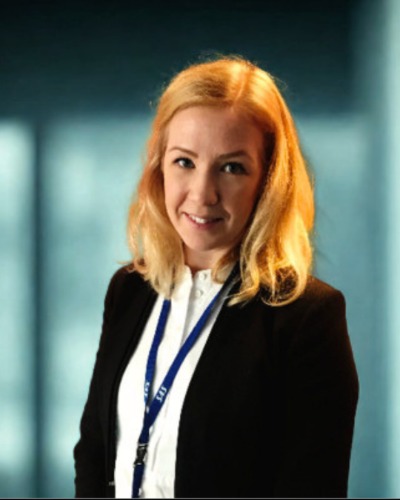
Scandinavian Airlines (SAS) has appointed Isabelle Nordin as its new Head of Sustainability, placing an experienced company executive in charge of sustainability governance, regulatory compliance and initiatives to reduce the airline’s climate impact.
Nordin brings more than 13 years of experience at SAS, including responsibility for sustainability projects, reporting and governance since 2021. Her appointment comes as European aviation faces increasing pressure to reduce greenhouse gas emissions, expand the use of sustainable aviation fuel (SAF) and meet evolving sustainability disclosure requirements.
SAS carried 28.3 million passengers in fiscal year 2025 and operates a fleet of approximately 140 aircraft serving more than 150 destinations, according to the supplied source material. The scale of its operations makes fuel procurement, emissions management and regulatory compliance important considerations for its wider sustainability strategy.
Nordin to Lead SAS Sustainability Governance and Compliance
Nordin announced her appointment through LinkedIn, highlighting collaboration as an important part of the airline’s sustainability ambitions.
“I’m happy to share that I have stepped into the role of Head of Sustainability at SAS.”
Her responsibilities include sustainability governance, coordination of cross-functional initiatives, regulatory compliance and preparation for requirements under the European Union’s Corporate Sustainability Reporting Directive (CSRD).
These functions place sustainability considerations within the airline’s broader corporate decision-making framework. For an airline, environmental strategy can affect fuel purchasing, fleet planning, operational efficiency, emissions reporting and exposure to climate-related regulation.
The effectiveness of Nordin’s role will depend on how these priorities are translated into measurable operational outcomes and integrated into the airline’s commercial planning.
More Than a Decade of Experience Within SAS
Nordin joined SAS in 2013 as a Pricing Manager after beginning her career at Statoil Fuel & Retail, now Circle K. She started at Statoil in 2011 as a Product Coordinator and became Product Manager in 2012.
At SAS, she moved into strategic development, becoming Global Concept Development Manager in 2016. In that role, she led the airline’s five customer concepts and contributed to its commercial strategy.
Between 2019 and 2021, she served as Project Leader for SAS’s Olympic Partnership Project, associated with the Tokyo 2020 Olympic Games.
Nordin moved into sustainability leadership in 2021, taking responsibility for projects related to environmental performance, reporting and governance. Her experience across commercial operations and sustainability provides a basis for coordinating environmental objectives with business priorities.
The appointment also provides continuity in the airline’s sustainability function as European companies navigate evolving disclosure rules and climate-related regulatory obligations.
EU SAF Mandates and Carbon Costs Shape Airline Priorities
Nordin’s appointment comes amid regulatory changes affecting fuel choices and emissions management across European aviation.
Under the European Union’s ReFuelEU Aviation regulation, the minimum share of SAF supplied at covered EU airports began at 2% in 2025 and is scheduled to increase to 6% in 2030. The requirements are intended to expand the availability and use of lower-emission aviation fuels over time.
For airlines, these targets create longer-term considerations around fuel procurement, availability, pricing and the emissions performance of alternative fuels. The pace at which airlines can increase SAF use will depend partly on production capacity, supply agreements and the cost differential between conventional jet fuel and eligible alternatives.
The EU Emissions Trading System (EU ETS) also affects the cost of covered aviation emissions. Together, the fuel requirements and carbon-pricing framework increase the importance of emissions measurement, fuel strategy and regulatory planning.
For SAS, sustainability performance will depend on a combination of lower-emission fuel availability, operational efficiency, fleet decisions and coordination with fuel suppliers and other industry partners.
Sustainability Reporting Becomes a Governance Priority
Nordin’s remit includes readiness for the Corporate Sustainability Reporting Directive, which establishes sustainability disclosure requirements for companies within its scope.
Preparing for applicable reporting obligations can involve collecting consistent environmental data, defining internal responsibilities, documenting reporting methods and strengthening oversight of sustainability-related information.
These processes are relevant to airlines because emissions performance extends beyond aircraft operations to fuel supply chains and other activities covered by applicable reporting frameworks. Reliable data can help management assess risks and communicate progress, although reporting improvements alone do not guarantee reductions in actual emissions.
For investors and other stakeholders, the central question will be whether SAS can translate its sustainability commitments into verifiable progress while managing fuel costs, regulatory exposure and the capital requirements of aviation decarbonisation.
Bioenergy Business Analysis
Nordin’s appointment highlights the growing importance of sustainability leadership within airline management as emissions regulation, alternative fuel procurement and corporate reporting become increasingly interconnected.
For the bioenergy sector, one of the most significant developments is the expanding role of SAF in aviation’s decarbonisation strategy. ReFuelEU Aviation provides a regulatory framework for increasing SAF supply, but meeting rising requirements will depend on whether producers can bring sufficient volumes to market at competitive prices and demonstrate compliance with applicable sustainability criteria.
Airlines such as SAS face a practical challenge: integrating lower-emission fuels into their operations while maintaining commercial resilience. SAF availability, production costs, lifecycle emissions and the credibility of environmental claims will all influence procurement decisions. Leadership responsible for sustainability must therefore coordinate with finance, operations, procurement and regulatory teams rather than treat emissions reduction as a standalone reporting function.
Nordin’s experience in commercial strategy and sustainability governance could support that coordination. However, the appointment itself does not establish that SAS will increase SAF consumption or achieve specific emissions reductions. Those outcomes will need to be assessed against future procurement commitments, fuel-use data and independently verifiable performance disclosures.
For SAF developers and investors, the broader implication is that airline sustainability strategies are becoming an increasingly important part of the demand environment for lower-carbon aviation fuels. The strength of that demand will ultimately depend on regulation, fuel economics, supply availability and the ability of airlines to demonstrate measurable progress.