


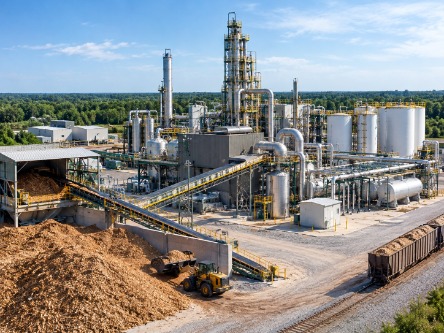
CarbonCore Inc. is advancing development of a commercial-scale sustainable aviation fuel (SAF) project in southwest Georgia, with Bainbridge and Decatur County identified as the focus for its first production site.
The proposed GeorgiaSAF facility is intended to convert sustainably sourced woody biomass into aviation fuel for markets across the southeastern United States and the wider country. According to the company announcement dated 7 October, the development concept includes two production trains targeting a combined capacity of approximately 20,000 barrels per day at full planned capacity.
That figure is a development target, not installed capacity or confirmed production. CarbonCore says work is continuing on site assembly, infrastructure, rail access, utilities, engineering, feedstock logistics and commercial arrangements, with these activities progressing in parallel.
The project would link Georgia’s forestry sector with aviation fuel demand, but its eventual scale and delivery will depend on the outcome of development work and the project’s ability to secure the infrastructure and commercial conditions required for construction and operation.
GeorgiaSAF’s proposed biomass-to-fuel pathway
CarbonCore’s development concept uses thermochemical conversion to turn woody biomass into synthesis gas, followed by Fischer–Tropsch synthesis and fuel upgrading. The company describes the approach as part of a broader platform intended to support repeatable SAF production facilities in different US regions.
The pathway is intended to produce lower-carbon aviation fuel, but its actual emissions performance will depend on feedstock sourcing, plant energy requirements, conversion efficiency, transport and the lifecycle assessment used.
Site development and supply-chain requirements
Bainbridge and Decatur County are the focus of development because of the area’s forestry resources, rail connections and existing industrial and logistics infrastructure. CarbonCore is working with local and regional stakeholders on site assembly and technical diligence.
The proposed facility would need a dependable supply of suitable woody biomass alongside transport, utilities, fuel-processing infrastructure and access to buyers. Establishing a long-term feedstock system will be particularly important if the plant is to operate at the scale targeted by the developer.
CarbonCore has not announced a construction start or operating date. Site control, engineering, permitting, financing, feedstock arrangements and commercial agreements remain among the project milestones that must be addressed before construction and operation can proceed.
Bioenergy Business Analysis
GeorgiaSAF brings together two established parts of Georgia’s economy—forestry and aviation—in a proposed biomass-to-fuel project. If developed, it could create an additional industrial market for woody biomass and add to the range of feedstocks being considered for sustainable aviation fuel.
The proposed 20,000-barrel-per-day target is a major headline figure, but it must be read in context: it describes planned capacity at full development, not fuel currently being produced or capacity that has reached financial close. The project’s next meaningful indicators will be progress on site control, engineering, permitting, financing, feedstock contracts and fuel offtake arrangements.
The technical pathway also warrants scrutiny. Fischer–Tropsch conversion is an established route for producing hydrocarbons from synthesis gas, but commercial success depends on the complete system—not just the conversion process. Feedstock consistency, gasification performance, energy use, product yields, capital costs and the ability to meet aviation-fuel specifications will all influence viability.
The sustainability case will require evidence beyond the use of woody biomass as a feedstock. Relevant questions include whether the material comes from forestry residues, by-products or other sources; how its removal affects forest carbon stocks and competing uses; and what lifecycle emissions result from processing and transport. Those factors will be important in determining whether the finished fuel qualifies under relevant SAF programmes and delivers credible emissions reductions.
.


