


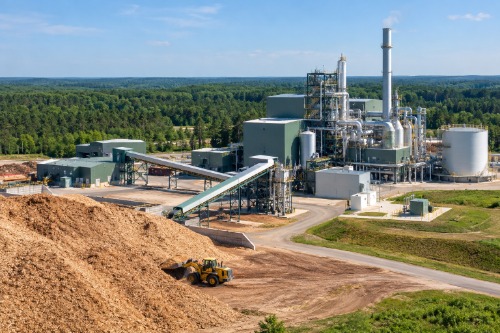
US energy investor Pacolet Milliken has acquired Georgia Renewable Power (GRP), adding 116 MW of woody biomass power capacity across two plants in northeast Georgia and expanding its portfolio to three biomass facilities in the state.
The acquisition, financed by Manulife, substantially expands Pacolet’s biomass generation business. The company entered the sector in 2024 by acquiring Piedmont Green Power (PGP), a 55 MW biomass power plant in Barnesville, Georgia. Financial terms of the GRP transaction were not disclosed.
The deal brings GRP’s facilities in Franklin and Madison counties into Pacolet’s portfolio. Both plants sell electricity to Georgia Power under long-term power purchase agreements (PPAs) and generate renewable energy credits that are sold on the open market.
Acquisition expands Pacolet’s biomass generation footprint
Pacolet’s biomass portfolio began with its acquisition of Piedmont Green Power in January 2024. The Barnesville plant has a generating capacity of 55 MW and uses woody biomass to produce electricity.
With GRP’s two facilities adding 116 MW, Pacolet’s three Georgia plants now represent approximately 171 MW of combined biomass generating capacity, based on their stated capacities. That is slightly more than three times the capacity of its original 55 MW asset.
The company said operating three facilities within the same state could create operational synergies. Lance Jordan, co-head and chief investment officer of Pacolet Power and Infrastructure, also indicated that the firm intends to continue evaluating renewable energy investments across the United States.
Long-term power contracts support plant revenues
The Franklin and Madison county facilities sell their electricity to Georgia Power under long-term power purchase agreements. Such agreements establish a contractual route to market for the plants’ output, although the financial terms and remaining duration of the contracts were not provided in the announcement.
The facilities also sell renewable energy credits (RECs) on the open market. These credits represent the renewable attributes associated with eligible electricity generation and can provide a separate source of revenue, depending on market conditions and applicable rules.
Manulife provided financing for the acquisition. The lender also financed Pacolet’s earlier purchase of Piedmont Green Power, extending an existing financing relationship between the companies. Neither the acquisition price nor the financing amount was disclosed.
Bioenergy Business Analysis
The transaction illustrates how investment in existing biomass power plants can expand a renewable electricity portfolio without relying solely on new-build projects. By acquiring two operating facilities alongside its existing Barnesville asset, Pacolet increases its generating capacity while consolidating operations within one state.
The presence of long-term power purchase agreements may offer a degree of revenue visibility, while the sale of renewable energy credits provides another potential income stream. However, the financial impact of the acquisition cannot be assessed fully without information on the purchase price, debt structure, plant operating costs, contract terms and remaining asset life.
The environmental case for woody biomass also requires careful assessment. Although the facilities qualify as renewable power sources under applicable standards, that classification alone does not establish their full lifecycle emissions performance. Feedstock origin, forestry practices, transport distances, combustion efficiency and the time required for forest carbon stocks to recover can all affect the climate outcome.
Pacolet’s expanded portfolio therefore represents both a consolidation of operating renewable generation assets and a reminder that renewable classification, commercial performance and climate benefits are distinct questions. The acquisition’s longer-term significance will depend on how reliably the plants operate, the economics of their contracted electricity sales and the sustainability of their biomass supply chains.


