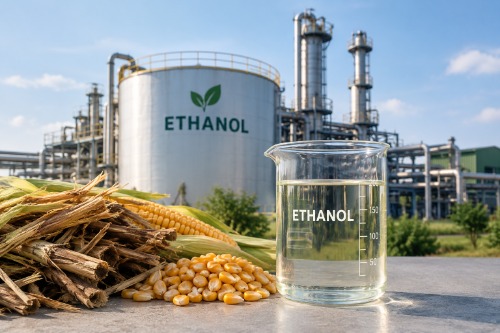
Pasupati Acrylon Ltd has received approval from the Uttar Pradesh Excise Department to increase its ethanol production capacity at Thakurdwara in Moradabad district to 240 kilolitres per day (KLPD), up from 180 KLPD.
The company disclosed the approval to stock exchanges on 13 October 2026. The expansion will add 60 KLPD of capacity, representing a 33.3% increase, through debottlenecking the existing distillery rather than constructing a new plant.
The company’s board approved the project on 25 May 2026, with an estimated investment of ₹25 crore. The expenditure is expected to be funded through internal accruals, and completion is targeted by the end of December 2026.
Pasupati Acrylon Builds on Earlier Ethanol Capacity Expansion
The latest approval follows an earlier clearance from the Uttar Pradesh Excise Department in May 2026, which enabled Pasupati Acrylon to increase the distillery’s capacity from 150 KLPD to 180 KLPD through efficiency improvements.
The proposed expansion to 240 KLPD continues the company’s efforts to increase output from its existing infrastructure. Debottlenecking typically involves identifying and addressing operational constraints in a facility to improve throughput without undertaking an entirely new plant construction project.
Pasupati Acrylon, headquartered in New Delhi, also manufactures acrylic fibre at its Thakurdwara facility. Its ethanol production is supplied to oil marketing companies (OMCs) for use in India’s Ethanol Blended Petrol (EBP) programme.
The company has stated that its ethanol plant operates at full capacity, subject to allocations from OMCs. The additional capacity could therefore provide scope to increase production volumes, depending on the commissioning of the expansion and the availability of purchase allocations.
Ethanol Capacity Expansion Supports India’s Blending Programme
India’s ethanol blending programme is designed to increase the incorporation of ethanol into petrol, supporting the use of domestically produced fuel and reducing reliance on conventional petrol. Distillery capacity, feedstock availability, production economics and procurement by OMCs are among the factors that influence ethanol supply.
Expanding an existing facility through debottlenecking can allow producers to add capacity without the cost and construction requirements associated with developing a new distillery. However, actual production and sales depend on the plant’s operational performance and market demand.
Pasupati Acrylon’s planned increase to 240 KLPD will raise its potential daily production capacity by 60,000 litres, subject to operational conditions and the completion of the project.
Bioenergy Business Analysis
Pasupati Acrylon’s proposed expansion highlights how incremental capacity additions can contribute to India’s ethanol supply infrastructure. Rather than building a new distillery, the company is using debottlenecking to increase the output potential of its existing facility, with a planned investment of approximately ₹25 crore.
The project’s significance will depend on whether the company completes the expansion by its targeted December 2026 deadline and converts the additional capacity into actual ethanol production and OMC sales.
The company’s disclosure that plant utilisation depends on OMC allocations also underscores an important distinction in the ethanol sector: installed capacity does not automatically translate into equivalent sales volumes. Procurement allocations, operating efficiency and the availability of suitable feedstock will influence how effectively the additional capacity supports the EBP programme.
The expansion will therefore be worth tracking alongside commissioning updates and subsequent disclosures on production and ethanol supplies to oil marketing companies.