


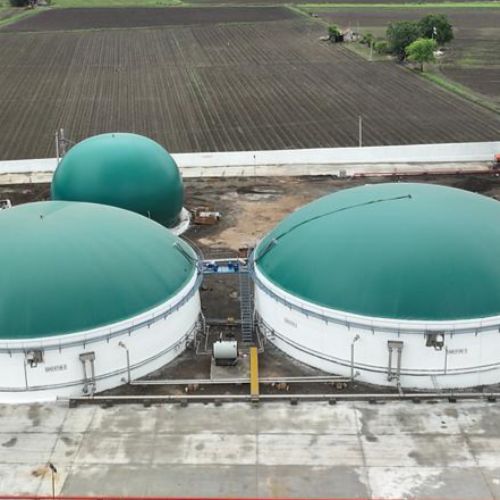
Mahanagar Gas Ltd (MGL) has signed a memorandum of understanding (MoU) with Organic Recycling Systems Ltd (ORSL) to evaluate opportunities across the compressed biogas (CBG) value chain in Maharashtra and Karnataka, with a focus on converting agricultural residues, food waste and other organic materials into fuel.
The proposed collaboration will cover project feasibility assessments, techno-commercial evaluations, project development and potential CBG offtake arrangements. The partnership brings together MGL’s city gas distribution expertise and ORSL’s capabilities in organic waste processing and compressed biogas project development.
The agreement establishes a framework for exploring potential projects rather than committing either company to specific investments or construction schedules.
Partnership Targets Organic Waste-to-Biogas Opportunities
Under the MoU, MGL and ORSL will assess opportunities to develop CBG projects using a range of organic feedstocks, including agricultural waste, organic food waste and other suitable biodegradable materials.
The feasibility work is expected to examine the technical and commercial viability of potential projects, alongside development requirements and possible arrangements for selling or utilising the resulting CBG.
Compressed biogas is produced by processing biogas generated from the anaerobic digestion of organic materials, followed by purification and compression. Depending on its quality and the applicable standards, CBG can be used as a gaseous fuel and can potentially be supplied through suitable gas distribution infrastructure.
For the proposed partnership, the availability and consistency of feedstock, processing economics and viable routes to market will be important considerations in determining which opportunities can progress beyond the evaluation stage.
Combining Gas Distribution and Waste Processing Capabilities
MGL operates in the city gas distribution sector, while ORSL focuses on organic waste processing and CBG project development. The companies intend to assess how their respective capabilities could support the development of commercially viable projects across the two states.
Potential offtake arrangements will form part of the evaluation. These arrangements can be important to project economics because they help establish how the gas produced could be sold or utilised.
However, the announcement does not identify specific project locations, planned production capacities, investment amounts or expected commissioning dates. These details will depend on the outcome of feasibility studies and any subsequent agreements.
MoU Is Non-Binding, With Investments Subject to Further Evaluation
The MoU is non-binding and does not specify consideration or establish a definitive investment commitment by either party.
Any subsequent commercial arrangements, including engineering, procurement and construction (EPC) contracts, will be subject to feasibility studies, due diligence, mutual agreement, necessary approvals and definitive agreements, where applicable.
The next stage will therefore depend on whether the companies identify projects that meet their technical, commercial and regulatory requirements.
For a separate operating example of organic residuals being converted into energy, PurposeEnergy’s Minster facility supplies biogas for industrial process heat. That project illustrates a different market and end use from the CBG opportunities under evaluation here.
Bioenergy Business Analysis
The proposed collaboration reflects an opportunity to connect organic waste management with India’s expanding compressed biogas sector. Agricultural residues and food waste can serve as feedstocks for CBG production, potentially creating additional uses for organic materials while generating a gaseous fuel.
For Mahanagar Gas, exploring CBG projects could provide an opportunity to assess additional sources of gas supply and diversify its activities beyond conventional city gas distribution. For Organic Recycling Systems, the collaboration could create potential avenues for applying its waste-processing and project-development capabilities.
However, the commercial viability of individual projects will depend on several factors, including reliable feedstock supply, collection and transportation costs, plant utilisation, digestate management, gas purification requirements and access to buyers. Potential offtake arrangements will also be important in determining whether projects can secure predictable revenues.
The non-binding nature of the MoU is a key distinction. The announcement establishes an intention to evaluate opportunities, not a confirmed project pipeline. Investment commitments, plant capacities, construction schedules and expected CBG output have not been disclosed in the supplied material.
For the wider Indian CBG sector, the partnership is worth monitoring as the companies evaluate opportunities across Maharashtra and Karnataka. The next meaningful indicators of progress will be the identification of specific sites, disclosure of proposed capacities, completion of feasibility assessments and execution of definitive project or offtake agreements.


