


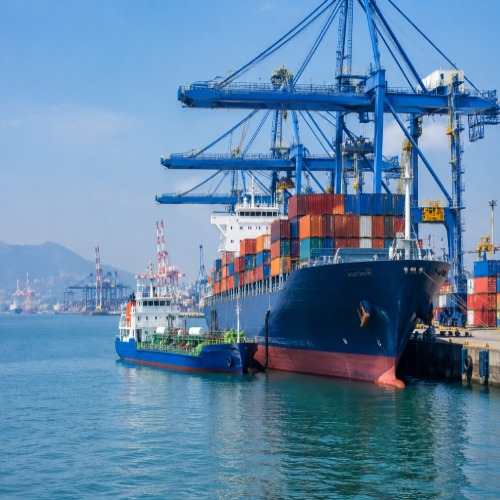
India has identified Mundra, Jawaharlal Nehru Port (JNPT), Chennai and Tuticorin as priority locations for developing alternative marine fuel bunkering, with potential demand projected to reach 113–293 petajoules (PJ) by 2047 under different scenarios.
The findings are outlined in the Study on Potential Demand and Pricing of Alternative Marine Fuels in India, prepared by DNV under the International Maritime Organization’s (IMO) GreenVoyage2050 programme in collaboration with India’s maritime administration and the Ministry of Ports, Shipping and Waterways (MoPSW).
The study assesses whether India can develop into a regional hub for low- and zero-carbon marine fuels. It examines vessel traffic, current and projected fuel demand, alternative fuel prices, cost competitiveness and the infrastructure and operational requirements for bunkering.
According to the Directorate General of Maritime Administration (DGMA), projected demand could reach 42–65 PJ by 2035 and 113–293 PJ by 2047, depending on the scenario.
Four ports identified for green shipping infrastructure
The four identified ports provide a potential starting point for developing India’s alternative marine fuel supply network. The proposed approach involves establishing initial bunkering operations, expanding infrastructure and services, and developing the safety and regulatory frameworks required to support wider adoption.
The study’s phased roadmap covers 2026–2047. The initial phase focuses on developing operations at selected ports, followed by expansion into regional clusters and the longer-term development of multi-fuel bunkering capabilities.
The IMO’s GreenVoyage2050 programme has highlighted the importance of building demand around vessels that already call at Indian ports, rather than relying primarily on ships diverting from established international routes. Container vessels operating on regular schedules are identified as a particularly promising early market because their port calls are more predictable.
This approach could help ports and fuel suppliers establish demand before committing to larger infrastructure investments.
Fuel costs and infrastructure will determine competitiveness
India’s potential to become a regional bunkering hub will depend on more than port location and shipping volumes. Ship operators will compare the delivered cost of alternative fuels, port charges, operational reliability and the impact of bunkering on voyage time.
Infrastructure requirements will also vary by fuel. Different alternatives can require dedicated storage, handling systems, safety procedures and trained personnel. Investment decisions will therefore depend on expected demand, fuel availability and the readiness of ships to use each fuel.
The study examines a range of alternative marine fuels rather than relying on a single pathway. Biofuels and methanol could support earlier adoption in suitable applications, while wider use of other options, including ammonia, will depend on technology readiness, fuel supply, safety frameworks and vessel compatibility.
For India, developing a competitive market will require coordination among ports, shipowners, fuel producers, bunker suppliers and regulators. Reliable supply and competitive pricing will be essential if shipping operators are to choose Indian ports for alternative fuel bunkering.
Ethanol and biofuels in India’s marine fuel transition
The wider policy context includes efforts to introduce lower-carbon fuels into marine operations. The study’s demand scenarios and port roadmap should be distinguished from fuel-use requirements imposed through separate regulatory instruments.
Ethanol-blended marine fuel should not be treated as interchangeable with biodiesel or other marine biofuels: fuel specifications, engine compatibility, storage and handling requirements differ.
More broadly, biofuels could form part of a multi-fuel pathway for shipping, particularly where they can be introduced into suitable existing operations. Their climate benefits depend on factors including feedstock sourcing, production methods, lifecycle emissions and the characteristics of the fuel blend.
The development of bunkering infrastructure at selected ports could help create the supply systems needed to support alternative fuels, provided that demand and fuel availability develop in parallel.
Marine Environmental Management Report 2026 highlights compliance priorities
DGMA also released its Marine Environmental Management Report 2026 at the Mumbai workshop, which was jointly organised with the Indian Register of Shipping (IRS).
Drawing on environmental data for 2025, the report reviews emissions from Indian shipping, fuel consumption trends, green shipping initiatives, restrictions on single-use plastics, port reception facilities and ballast water management.
According to DGMA, the report identifies areas requiring further attention to improve environmental performance and regulatory compliance across the maritime sector.
The two publications address complementary aspects of the transition. The alternative marine fuels study considers the market, pricing and infrastructure needed to support lower-carbon shipping, while the environmental management report reviews broader environmental performance and pollution-prevention measures.
A separate example of an emerging transport-fuel pathway is Hebei Shoulang’s certification of ethanol made from steel mill waste gases, which concerns fuel-market eligibility rather than bunkering infrastructure.
Bioenergy Business Analysis
India’s alternative marine fuel opportunity will depend on turning projected demand into commercially viable bunkering operations. Identifying priority ports provides a starting point, but investment will require credible demand forecasts, dependable fuel supply, clear safety rules and prices that shipping operators can justify.
The focus on vessels already calling at Indian ports offers a practical route to building early demand. Regular shipping services could provide a more predictable foundation for investment than relying on vessels to change established routes solely to refuel.
For biofuel producers, alternative marine fuel suppliers and port operators, the roadmap could create opportunities to develop supply chains and infrastructure around suitable fuels. However, the projected demand ranges are scenarios rather than guaranteed consumption, and different fuels will face different technical and economic barriers.
The next phase will be implementation: translating the study’s recommendations into port-level plans, fuel supply agreements, safety standards and pilot operations. If these elements progress together, India could strengthen its position in the emerging market for lower-carbon marine fuels while supporting the wider decarbonisation of shipping.


