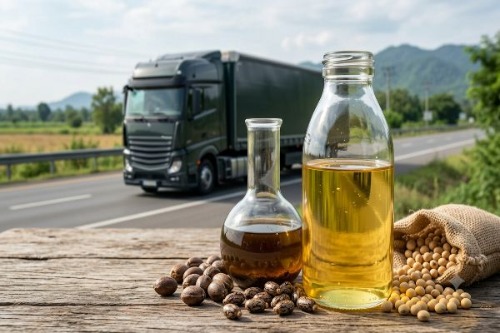
Thailand’s daily consumption of B20 biodiesel has increased to approximately 9 million litres from 5–6 million litres following a government excise tax reduction, Prime Minister Anutin Charnvirakul said on 7 November 2026. The government is encouraging wider use of the palm-derived fuel blend to reduce dependence on imported oil and support domestic oil-palm farmers.
Speaking on the programme “Talk with the Anutin’s Cabinet”, Anutin said the lower tax had made B20 almost THB10 per litre cheaper than conventional diesel, encouraging greater uptake among consumers.
The government introduced a temporary excise tax reduction for B20 diesel on 28 October 2026. The measure lowered the rate from THB5.953 to THB0.431 per litre and is scheduled to remain in effect until 27 January 2027. The reduction is part of a wider package that also covers E20 petrol.
Thailand targets higher B20 consumption to reduce oil imports
Anutin said Thailand currently consumes approximately 50 million litres of diesel per day. He outlined a scenario in which consumption of biodiesel-blended fuel could increase to around 20 million litres daily, creating greater demand for domestically produced palm-derived biodiesel.
According to the Prime Minister, expanding B20 consumption could reduce the country’s reliance on imported crude oil by approximately four million litres per day and generate annual import savings approaching THB100 billion.
These figures represent the government’s projected outcome rather than realised savings. Anutin said the shift towards domestically produced biofuels could redirect a greater share of energy expenditure towards Thailand’s agricultural sector, particularly oil-palm growers.
The government is also considering further bioenergy policies involving agricultural feedstocks such as sugar cane and cassava. Anutin said these could create additional markets for farmers and provide more consistent demand for agricultural produce.
Excise tax reduction supports B20 price competitiveness
Thailand’s Cabinet approved the temporary tax reduction on 27 October as part of measures to ease pressure on consumers amid higher and volatile international energy prices.
Under the revised tax structure, the excise rate on B20 diesel was reduced by THB5.522 per litre, from THB5.953 to THB0.431. The rate reduction applies for three months, from 28 October 2026 to 27 January 2027.
The Excise Department said the measure was intended to lower household energy costs, reduce transport and business expenses and support agricultural producers supplying feedstocks for alternative fuels.
The government has also sought cooperation from refineries and introduced other measures to manage domestic fuel prices. Anutin said Thailand continued to have access to oil supplies from multiple regions, while international price volatility remained a concern.
Palm oil demand linked to Thailand’s agricultural economy
Anutin presented wider biodiesel adoption as a way to strengthen the connection between domestic agriculture and energy supply. Greater demand for palm-derived biodiesel could create an additional market for oil-palm production, allowing more revenue to remain within the domestic economy rather than being spent on imported fossil fuels.
He said the government wanted to provide farmers with reliable markets and sustained income, reducing their exposure to agricultural price fluctuations and reliance on temporary support measures.
The Prime Minister also linked Thailand’s food production capacity to its broader economic resilience, arguing that the country’s distributed agricultural production and domestic markets could help it manage international supply-chain disruptions.
Bioenergy Business Analysis
Thailand’s push to increase B20 consumption demonstrates how fuel taxation can be used to influence biofuel demand while supporting domestic agricultural feedstocks. By widening the price advantage of biodiesel-blended diesel, the government is seeking to encourage consumers to switch towards a fuel that incorporates domestically produced palm-derived biodiesel.
The reported increase to nine million litres per day suggests a rise in demand following the tax reduction, although the longer-term impact will depend on how consumers respond once the temporary measure expires in January 2027.
The government’s proposed increase to 20 million litres per day would represent a further expansion of the market. However, the projected THB100 billion in annual import savings remains a government estimate and will depend on actual consumption, biodiesel blending volumes, feedstock availability and international oil prices.